"We are drowning..." - From Lisbon, Milan to Tirana, "The Guardi...
/ 2026-10-18 23:13:32Focus


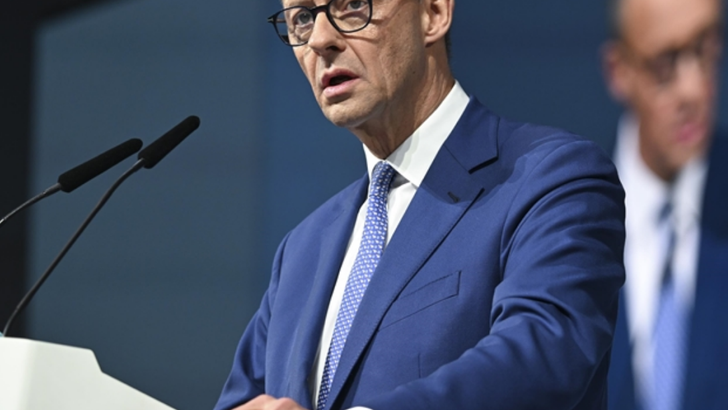
Friedrich Merz, a former banker who has never been a government minister, seems almost certain to be Germany's next chancellor after his conservative CDU/CSU alliance won the majority of votes (according to polls) in Sunday's crucial federal election.
During the campaign, his decision to win a vote in parliament by relying on the support of the far right proved a historic and highly controversial turn of events, although he has since insisted that he would never breach Germany's "firewall" by going into coalition government with the anti-immigration Alternative for Germany.
Yet as testing as the domestic political and economic landscape is, many of Merz's most pressing challenges may come from outside Germany. The man once hailed for claiming he could simplify the lives of millions by cutting taxes now faces a far more complex reality.
Merz, a keen aviator and father of three whose wife prevented him from buying his own private jet until his children were adults (he now reportedly owns two), will be looking to make his mark right from the start…
What's waiting for him on the workbench?!
Relations with the US
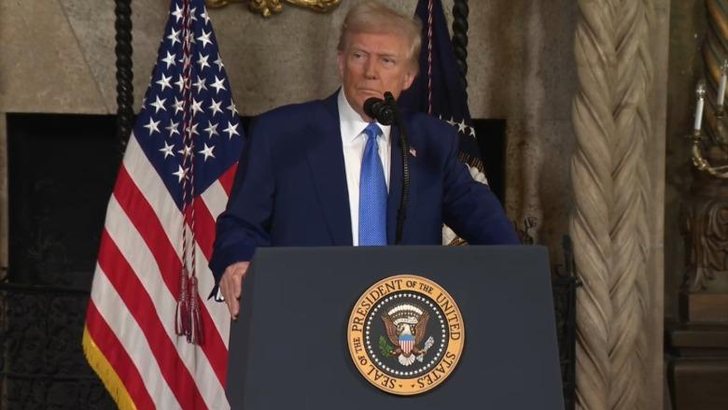
Presenting himself early in the election campaign as a strong businessman who would be willing to make a face-to-face deal with Donald Trump, Merz was forced to change his stance within hours after the US president turned the tables on Russia's attack on Ukraine.
Merz did nothing to hide his shock after Trump's statements blaming Ukraine for the war while calling it "a classic reversal of the perpetrator-victim narrative."
"This is how Putin has presented it for years and frankly I'm kind of shocked that Donald Trump has now made these statements," he said, referring to Trump as "an admirer of autocratic systems."
"The only thing we can do if we have a different idea about ... democracy ... is to unite our actions in Europe as soon as possible," he added.
Yet the challenge is great. The overnight breakdown in relations between Washington and Berlin, described by Merz in vague terms as an “epochal split,” is likely to become the chancellor’s defining element.
He will surely dominate what was already an overcrowded table. As leader of Europe's largest economy, his handling of the crisis will be crucial to how the continent faces a new world order.
The economy, another challenge
Europe's largest economy is in dire need of a revival. The challenges are numerous, from crumbling infrastructure to high energy costs, chronic labor shortages and an aging population. Many Germans say there is an urgent need for investment in everything from the country's defense to its infrastructure.
But in doing so, Merz is likely to relax a constitutionally protected rule known as the “debt brake,” which for years has been used by Berlin to claim its much-vaunted status as an exemplar of fiscal discipline.
Under the curbs introduced in 2009 by Angela Merkel to show that Germany was committed to balancing its accounts after the banking collapse, the federal government is required to limit annual borrowing to 0.35% of GDP.
Merz could mitigate this and in turn free up the funds needed for investments in everything from housing to rail infrastructure, which more than half of Germans support.
ukraine
Ukraine is already a major bone of contention in Germany. There is a clear divide in the population between those who believe that supporting Kiev brings the threat of war closer to Germany, a more powerful claim made by the “conservative left” movement, and those who believe that not supporting it and showing weakness in the face of Vladimir Putin is even more dangerous.
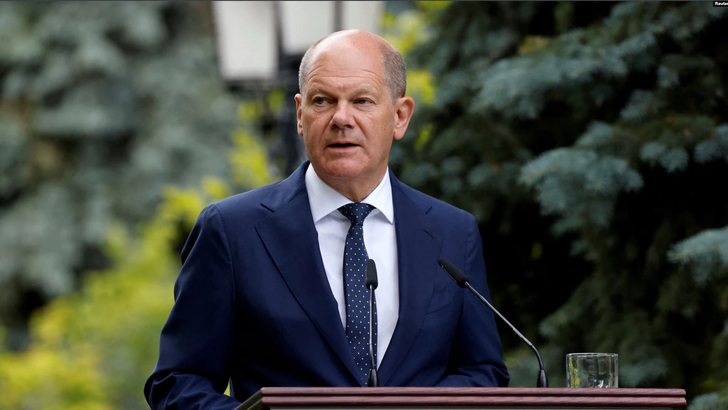
Merz clearly belongs to the second camp. He warned Scholz against adopting “an appeasement policy” towards Russia and visited Kiev even before the then-chancellor.
Germany is the second-largest provider of military supplies to Ukraine, and Merz has been a passionate supporter of this, saying he would like to go further by providing Ukraine with Taurus long-range cruise missiles. He could also face calls to send German troops to Ukraine as part of a deterrent or peacekeeping force, a discussion that Scholz has described as “completely premature.”
The German far right
The question of who Merz will seek to enter a coalition with, and whether he will continue to rule out the possibility of forming a government with the far-right AfD, is uppermost in the minds of the electorate.
Merz's decision in January to signal an acceptance of the AfD's support for a non-binding "five-point plan" for stronger border controls was a turning point in the election campaign.
Since then he has repeatedly insisted that a CDU-AfD coalition is not in the plans.
But many fear that the unstable and fractured coalition will lead to a repeat of the stalemate and conflict that defined the ill-fated “traffic light” administration.
And the fear is that this could inadvertently pave the way for a CDU-AfD coalition under a new leader.
Dealing with Merkel, Merz was sidelined by the former chancellor when he tried to break into the upper echelons of the CDU in the early 2000s.
He has been hailed by his supporters as a "back to basics" candidate, in a way Merkel never was.
He has made his thoughts on Merkel's 16 years clear, referring to her leadership as "empty" and claiming a "fog" was over her "open door" policy for refugees in 2015.
In her memoirs published last year, Merkel said she recognized in him "an unconditional desire for power."
But then, in January, came a rare public rebuke, after the former chancellor criticized Merz's 'flirtation' with the AfD. Merkel still commands a lot of respect among many Germans, so her assessment of his future leadership is worth bearing in mind. /Adapted from The Guardian Top Channel