"The fate of the homeland is in our hands" - An appeal by Ismail...
/ 2026-10-18 16:09:54Focus


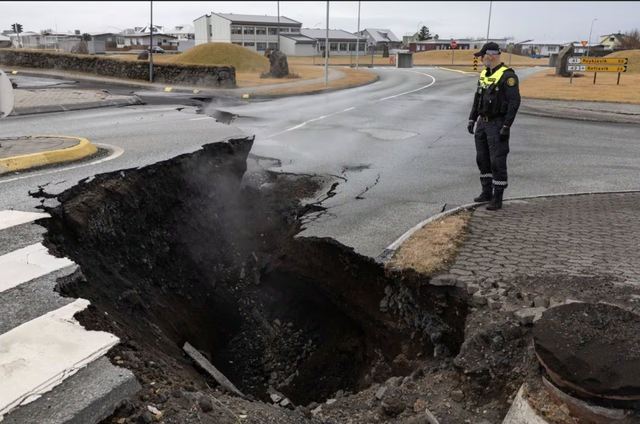
Police decided to evacuate the Icelandic town of Grindavik after seismic activity in the area intensified and moved south.
Monitoring by the Icelandic Meteorological Office shows that a corridor of magma, or semi-molten rock, currently lies just beneath the city.
The city has 4,000 inhabitants and is located on the Reykjanes peninsula, about 50 kilometers south-west of the capital, Reykjavik.
"At this stage it is not possible to determine exactly if and where the magma may reach the surface," the Met Office said in a statement.
"After an 800-year hiatus, eruptions on the Reykjanes Peninsula started again in 2021, which may mark a new eruptive cycle. We could see volcanic eruptions along the peninsula," warns Matthew Roberts of the Icelandic Meteorological Office. He adds that this instability could last for decades.
Authorities have also raised the air alert to orange, due to the increased risk of a volcanic eruption.
Volcanic eruptions represent a major danger to aircraft because they can release highly corrosive ash into the atmosphere, with the risk of jet engine failure, damage to flight control systems, and a significant reduction in visibility.
A major eruption in Iceland in 2010 – that of the Eyjafjallajökull volcano – caused widespread disruption between Europe and North America with the cancellation of more than 100,000 flights. Airlines suffered about $3 billion in damages.
The evacuation of Grindavik was decided after hundreds of small earthquakes were recorded in the area for more than two weeks.
Concerns about a possible eruption grew in the early hours of Thursday, when a 4.8-magnitude earthquake struck.
Even the famous Blue Lagoon - the geothermal area which is one of the most visited places in Iceland - has decided to close temporarily.
The seismic activity began in an area north of Grindavik, where there is a network of 2,000-year-old craters, explained geology professor Pall Einrrson.
The magma corridor is about 10 kilometers long and very wide. "The biggest earthquakes started there, under this old series of craters, but since then the magma corridor has extended, passed under the urban area of Grindavik and is going even further towards the sea," he said.