Protests, violence, curfews: From France to Albania, why Europe'...
/ 2026-10-20 23:47:20Focus


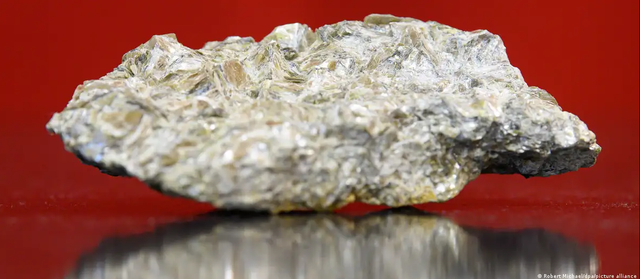
There are large deposits of lithium in the ore mountains of the Czech Republic. The government hopes that the "white gold" will advance the economy of the Czech Republic and develop the region of Usti. But not everyone is enthusiastic.
The town of Cinovec on the German-Czech border has a treasure under it. In the underground of the country, which is located about 100 kilometers from Prague, there are thought to be 3 to five percent of the world's lithium reserves. Light metal has gained a lot of importance in recent years. This is because lithium is used, among other things, in the production of batteries, without which it is impossible to imagine energy transformation and electric mobility. Lithium prices are so high that it would be profitable for the Czech Republic to open mines now.
According to a study by the Czech Chamber of Commerce, the Czech Republic has exhausted all sources of economic growth. Therefore, in the coming years, the country is threatened by an economic stagnation. Lithium mining could give the Czech economy a new boost, Prime Minister Petr Fiala hopes. When he presented his vision for the development of the Czech Republic in the next thirty years, in early September 2023, he listed six areas in which the Czech Republic should make strategic investments, among them lithium mining and processing.
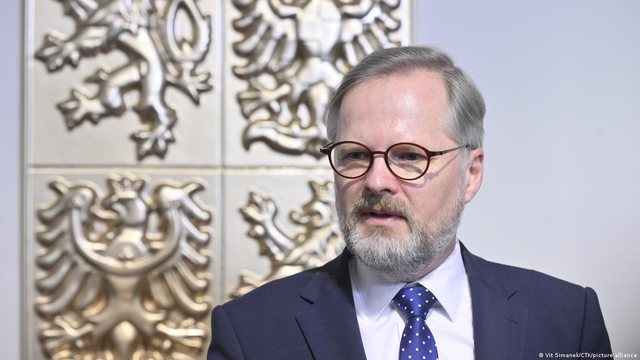
"Lithium is a key raw material for electric mobility, especially for battery production. This is the reason why we are working to open the mines as soon as possible, possibly as early as 2026," said Fiala.
Lithium for 1 million electric cars
The village of Cinovec is located in the middle of a mining region. The first explorations done in the 2010s have shown that the region contains significant levels of lithium. Most of it is in the Czech Republic, but a small amount is also located in Zinnwald, Germany. The Czech Republic has already signed a cooperation agreement with Saxony for the extraction of Lithium. On the Czech side, the lithium mines will be operated by the state-controlled Czech Energy Company (CEZ).
It is estimated that 2.25 million tons of ore are produced annually at Cinovec, which would enable the production of almost 30,000 tons of lithium hydroxide. According to current estimates, the amount of ore mined should be enough to produce almost one million car batteries per year.
The Czech Republic plans to produce the batteries itself, in a gigafactory. "We can cover the entire chain from mining, processing, battery manufacturing, chip manufacturing to the final production of cars," Fiala said. He hopes that lithium mining can become an economic engine for the region.
Lithium region and no longer a coal region?
The Ústí region is one of the poorest in the Czech Republic. Until the 1990s, the region received its main income from lignite. But the end of fossil energy production has left huge structural problems and scarred landscapes, more than 100 settlements were then devoured by diggers.
It is estimated that the 25-year run of lithium would create jobs for thousands of miners. The plan to build a gigafactory for the production of electric car batteries would also bring jobs and income to the region. CEZ is optimistic that the mines can start operating in the next four years.
The Usti Region will support mining investments, only if they are as environmentally friendly as possible. "I see the possibility of lithium mining as an opportunity," says Jan Schiller, the region's district administrator and member of the opposition ANO party. "But a lot depends on the framework conditions that are negotiated. We still have vivid memories of the negative consequences of coal mining in the region. Any damage and deterioration of living conditions should be compensated to the appropriate extent," the district administrator told DW.
New prospects or mining again?
The Usti region receives EU money from the Single Transition Fund to finance the cessation of coal mining and to change the structure of the local economy. Part of this money will now be used to further develop the lithium project. However, some experts warn that after the decline of lignite mining production, the Ust region does not want to simply move on to the next mine. Instead, they recommend investing money in education and a general restructuring of the region's economy.
Michal Kolecko, professor at the Jan Evangelista Purkyne University in Ústí nad Labem, is an outspoken opponent of lithium mining. "I don't think lithium is the way to go. If we want to change the region and give it a new future, we must choose a fundamental change. We must focus on areas that have potential and not only give the region an economic future, but also change the social composition and educational level of the population," Kolecko told DW.
Fear of environmental consequences
Ashtu si me çdo nxjerrje të lëndëve të para jo të ripërtëritshme, minierat e litiumit kanë gjithashtu një ndikim në mjedis. Në Amerikën e Jugut, ku në të ashtuquajturin “trekëndësh litiumi” midis Bolivisë, Kilit dhe Argjentinës ndodhen rreth 70 për qind e rezervave të litiumit në botë, ka rënë ndjeshëm niveli i ujërave nëntokësore për shkak të shëllirave të litiumit. Në disa raste të pakujdesisë së kompanive minerare janë kontaminuar edhe ajri, uji dhe toka. Në Cinovec, litiumi do të nxirrej nga shkëmbi. Kjo metodë e nxjerrjes kërkon shumë ujë – dhe është shumë më e shtrenjtë se me shëllirë.
According to the energy company CEZ, the approval process for lithium mining will start at the end of 2023. However, the company seems to have few doubts about the completion of the proceedings: it has already bought a plot of land for a lithium processing plant, for one billion Czech koruna - about 40.8 million euros. /DW