Is this police force professional and capable of handling violen...
/ 2026-10-16 18:54:07Focus


Former British Prime Minister Tony Blair, widely regarded as a divisive figure and branded a "war criminal" by many in the Arab world and in the UK itself for invading Iraq in 2003 on false claims of weapons of mass destruction, has once again found himself at the centre of a controversial plan for the Middle East.
According to Israeli and Western media, Blair has been involved in preparing so-called "day after" plans for Gaza and could be appointed head of a new international transitional authority that will administer the Palestinian territory after Hamas leaves.
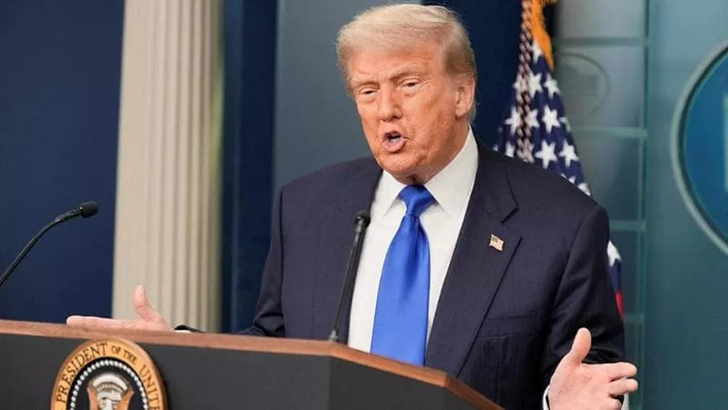
This role is envisaged in US President Donald Trump's 21-point plan, presented last week on the sidelines of the UN General Assembly in New York, before Arab and Muslim leaders.
What does Trump's plan foresee?
The plan, presented as a way out of the devastating war in Gaza, proposes:
-the release of the remaining 48 hostages in exchange for the opening of humanitarian corridors and the release of a number of Palestinian prisoners from Israeli prisons;
-a ceasefire and freezing of the front lines;
-the disarmament of Hamas, with amnesty for fighters who renounce violence and guarantees that those who refuse to leave will be able to remain in Gaza;
-special emphasis that no one will be forcibly expelled from Gaza and that anyone who leaves "voluntarily" will have the right to return.
This element is seen as a strong turn for Trump, who just a few months ago had surprised the world by openly speaking about the "ethnic cleansing" of Gaza and the idea of permanently displacing its more than two million inhabitants.
The plan also claims to offer a "credible path" towards the creation of a Palestinian state - a topic that the Republican president has so far avoided, but which has received growing support from countries such as Britain, France and Canada.
However, according to reports, the US and Israel intend to keep the controversial GHF organization, which they founded to bypass the UN and traditional humanitarian agencies, at the center of aid distribution. It is near its centers, where food was distributed to starving Palestinians, that hundreds of civilians were killed by Israeli soldiers and American mercenaries.
Tony Blair's role
In this plan, Blair is seen as a candidate to head the Gaza International Transitional Authority (GITA), a structure that would take over the temporary administration of the territory for several years, until a reformed Palestinian government is established.
The GITA would seek a UN mandate, as the Arab states are demanding, while the Palestinian Authority would initially be left out of the game. Only after constitutional reforms and new elections were carried out could the PA resume its role in Gaza.
An international stabilization force, mainly from Arab and Muslim countries, would be deployed to maintain security and train Palestinian forces. Indonesian President Prabowo Subianto declared at the UN that his country was ready to send thousands of peacekeepers to Gaza, ending his speech with the word “shalom.”
Blair has not commented on the new plan. His institute, the Tony Blair Institute for Global Change, says it aims to "turn bold ideas into reality."
Why is it so divisive?
After leaving office as British prime minister in 2007, Blair was immediately appointed as the Quartet's special envoy for the Middle East. His official role was to support Palestinian institution-building and economic development. He remained in this position until 2015, but many Palestinians accuse him of failing to stop Israeli settlement expansion and, instead, of hindering the prospect of statehood through his ties to Israel.
In the Arab world and in Britain, Blair remains closely associated with the invasion of Iraq, which resulted in hundreds of thousands of deaths and long-term destabilization of the region. For this reason, he is unacceptable to many as a figure who can manage the future of Gaza.
A dangerous plan or temporary compromise?
Critics say Blair's involvement and Trump's plan itself resemble a neocolonial project to take control of Gaza, with no guarantee that the Palestinians will ever have the full right to govern themselves.
Israel, for its part, has stressed that it will maintain “security control” over the territory, regardless of any international plan. Meanwhile, the reality on the ground: daily bombings, mass starvation, and the destruction of infrastructure, makes any discussion of the next administration uncertain.
Against this backdrop, the return of the name of Tony Blair, a thoroughly contested figure, makes any proposed solution for post-war Gaza even more controversial.
Taken with abbreviations from Al Jazeera