Protests, violence, curfews: From France to Albania, why Europe'...
/ 2026-10-20 23:47:20Focus


Determined to stay out of the war in Iran, but fearful of the risk of being drawn in against their will and with memories of past betrayals... this is how the Iraqi Kurds are experiencing the next crisis hitting their region.
"Leave the Kurds alone! We are not hired guns," declared Shanaz Ibrahim Ahmed, the wife of Iraqi President Latif Rashid, both of Kurdish origin.
"Many times in history, including recently in Syria, we have been used by the Americans and their allies to achieve objectives that were not ours, only to be forgotten later and left alone to pay the consequences," say senior sources in the regional government in Erbil.
These sources, according to Corriere della Sera, comment on news spread in recent days according to which the US would like to mobilize both Iranian Kurdish opposition groups and some of the "brothers" in Iraq, to incite a civil war in Iran and help strike against the ayatollahs' regime.
Reality on the ground
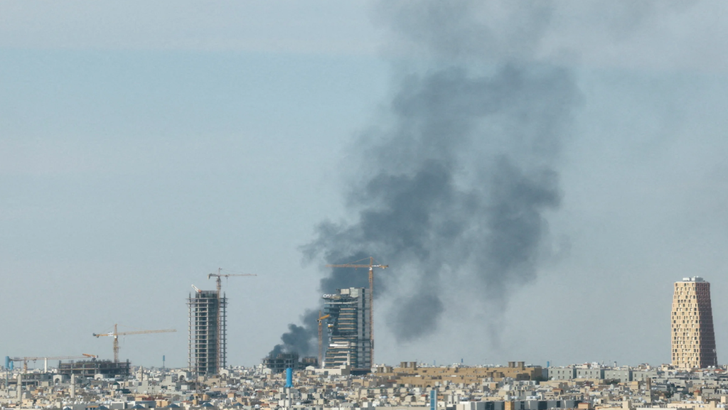
In fact, the Iraqi Kurds are not moving and are desperately hoping that the Iranians will also remain calm. Erbil is a city in waiting. The roads are light with traffic, the airport closed, the checkpoints tighter than usual, tension at its peak and Iraqi Shiite militias positioned on the road to Mosul. Meanwhile, the chronicles of drone and missile attacks targeting American and Iranian Kurdish bases continue.
"Even today the Iranians hit us with two missiles and three drones. We are on alert, they could return at any moment," says Aman Zibai, displaced 25 years ago from the Iranian city of Mahabad, who now lives in the Koia refugee camp, about 40 km from Erbil. He adds that telephone connections with his family have been blocked since the Israeli-American attacks began on February 28.
Western diplomatic sources point out that within a week of war, the Kurdish province has been hit at least 140 times, not only by the Iranians, but also by the Iraqi Shiite militias of the PMF (Popular Mobilization Forces), allies of Tehran. Last night, a hotel was also hit in Erbil.
Main objectives
One of the favorite targets is the American base near the international airport, next to which about 320 Italian soldiers are stationed. Another group of 80 Italian soldiers is in Sulaimaniyah, where attacks are rarer. The Italian representatives, like the Germans, French, British and Dutch, prefer to keep a low profile. Diplomats say the American air defense system is functioning well and so far there have been no casualties among international troops or civilians.
The situation is different with the bases of the PAK and PDKI, the two main formations of the Iranian Kurdish armed resistance, which number about 15 thousand fighters. There are casualties there and attacks are frequent, especially in the Sulaimanya area and along the border, but the data remains secret.
Respect for agreements
"We don't believe that Trump necessarily wants to overthrow the Iranian regime. But we know that he would incite the Iranian Kurds to revolt, and that automatically puts us under pressure in Iraq," say government sources in Erbil, where no one intends to break the 2023 agreement between Baghdad and Tehran, according to which Iraq committed not to attack Iran.
"In this ocean of uncertainties, we have two certainties. First, the Iranian regime is by no means defeated: its militias remain strong and can crush any internal revolt with blood. Second, if we were to decide to participate in the war against Iran, we would be attacked by Iraqi Shiite militias and this would bring about a civil war with catastrophic consequences for us."
Iraqi Kurdistan is home to about 6.5 million people, a minority among the 47.6 million Shiite-dominated Iraqis. Their territory is 46,000 km², just over a tenth of the country.
In Erbil they hint that the Pentagon has sent weapons and is ready to give more: if Trump insists, it would be impossible for the Kurds to refuse, but today they really want to be left out./ Corriere della Sera