"We are drowning..." - From Lisbon, Milan to Tirana, "The Guardi...
/ 2026-10-18 23:13:32Focus


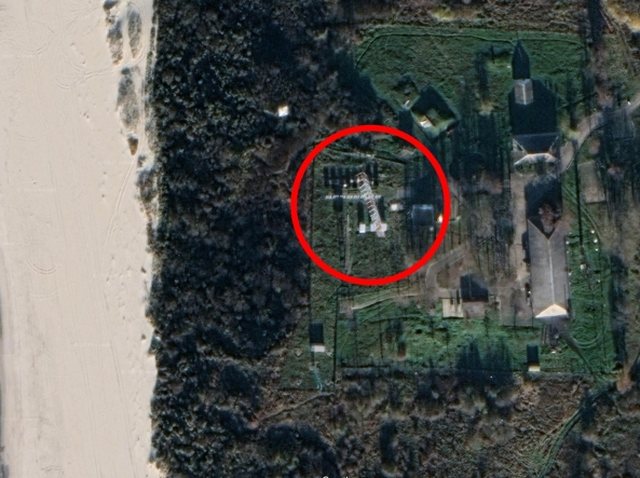
Leonard Barber – Corriere della Sera
A 40-meter maxi-antenna in Okunevo, near Kaliningrad, has caused thousands of interferences in the navigation systems of civilian aircraft and ships since 2022, after the beginning of the Russian invasion of Ukraine. The facility is located just 98 km from Gdansk, in European Union territory.
International experts have used triangulation (a method of finding the location of an object) and satellite imagery to locate the antenna.
In Brussels, several European generals have proposed between 2023 and 2024 that it be destroyed or deactivated, mainly as a political signal, but the idea has been rejected, partly due to American opposition and fears of escalating the conflict.
The Russian network
The antennas in Okunevo are not the only ones. Other points have been identified in Baltiysk and Yantarnyy, near St. Petersburg and the border with Ukraine, as well as about 20 km from the border with Estonia. All these posts, fixed or mobile, are mainly controlled by the 16th Brigade in Kursk and the 218th Regiment, which specializes in electronic warfare.
Hundreds of planes flying between Europe and the Middle East are facing problems receiving and transmitting satellite data. Officially, Russia claims the aim is to disrupt Ukrainian drones, but the effects also affect the global GPS system for civilian use.
Statistics
According to Stanford University, 90-150 aircraft per day reported serious problems last August. OpsGroup reports that a year ago 1,400 flights per day lost GPS signal in Europe, the Middle East and Russia. IATA reports that cases of signal loss have increased by 220% between 2021 and 2024, or 56.3 cases for every 1,000 flights.
Types of interference
Experts talk about signal jamming and changing position data. These have forced flight path changes, temporary airport closures and airline cancellations, such as Ryanair's cancellation of flights from Vilnius in January, or Finnair's cancellation of flights to Tartu, Estonia. Jesper Rasmussen from EASA explains that the interferences are evolving in frequency and complexity. At high altitudes, problems have arisen with navigation systems, aircraft clocks or radars.
Due to geopolitical tensions, experts believe the situation is unlikely to be resolved soon. Airlines are seeking intervention from ICAO, the UN's civil aviation agency.