"The fate of the homeland is in our hands" - An appeal by Ismail...
/ 2026-10-18 16:09:54Focus


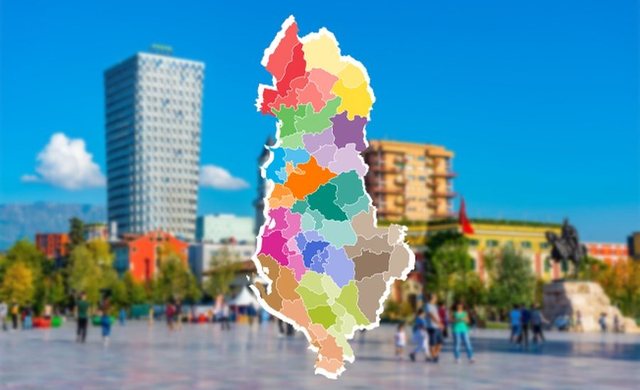
Albania and the country's rural areas have great unmet infrastructure needs.
In most administrative units, there are no asphalt roads connecting them to national axes, electricity networks are weak, and water supply is inadequate.

Despite the great needs, local government in our country cannot realize even the few funds it has available for investments.
The Ministry of Finance reported that at the end of the 8-month period, the country's 61 municipalities had realized only 21.8% of the investment plan.
Of the 49.8 billion planned this year, only 10.8 billion lek were realized during January-August, just four months before the end of the year.
The Municipality of Tirana has the weakest performance, also due to the size of the budget.
For 2025, the investment budget for the capital's municipality is 19.9 billion lek, or 40% of the total fund, but by the end of the 8-month period, only 16.6% of the planned funds had been spent.
This low implementation rate is an indicator of the weaknesses of local government structures, causing the majority of funds intended for local roads, water supply, public lighting and environmental projects to remain unspent.
The municipality of Durrës also had a very poor performance.
With the rapid development of tourism, this municipality has more needs for investments in road infrastructure, environment, water and energy. The budget for investments in the municipality of Durrës is 3.7 billion lekë this year, but by the end of August only 924 million lekë have been spent, or only 25% of the annual plan.
At the national level, the largest municipal investment in the first 8 months of 2025 is the construction of the northern transport terminal in Tirana with an amount of 324 million lek or 3.2 million euros, and the reconstruction of individual housing, also in Tirana, with 278 million lek or 2.7 million euros.
Of the municipalities with a regional center, the Municipality of Kukës has the best implementation with 80% of the annual plan, while the Municipality of Vlora has the worst implementation with only 10%.
The experience of past years shows that municipalities tend to focus project implementation in the last months of the year, increasing the risk of inefficient use of funds.
But, despite all this effort, more than half of the funds in this item are still "burned", like last year, when only 43% of the investment plan was realized.
If the current trend continues, many municipalities risk having realizations below 20% of the annual investment plan, which will negatively affect the economy of local communities./ Monitor