"The fate of the homeland is in our hands" - An appeal by Ismail...
/ 2026-10-18 16:09:54Focus


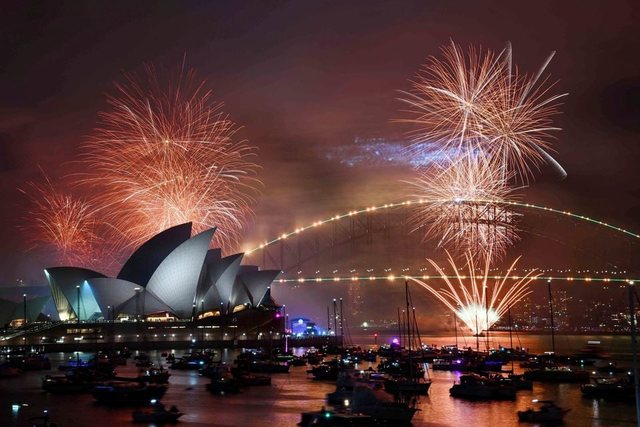
From Kiritimati to Samoa, the global transition from 2025 to 2026 will take 26 hours, not 24.
Midnight, which will mark the beginning of 2026, will begin as usual from Kiritimati or Christmas Island (so named because it was discovered by Captain Cook on December 25, 1777), in the Pacific Ocean, otherwise the easternmost inhabited island.
Kiritimati, which is part of Kiribati and, more generally, the Equatorial Sporades, juts out of the ocean to the east of the Kiribati archipelago and two time zones east of the line marking the global date line, 13 time zones ahead of Europe.
Christmas Island kicked off the holiday yesterday.
And even Sydney, which has long proclaimed itself the "New Year's Capital of the World," will have to wait another four hours after Christmas Island to pop the champagne and set off the fireworks.
The International Date Line, which zigzags slightly from north to south and only partially follows the 180th meridian, antipodes of Greenwich, has had a pronounced eastward deviation since 1995, cutting across two time zones, including, among others, the archipelago of Kiribati, Samoa and Tonga.
From Kiritimati, flying southwest for about 2,500 kilometers, you arrive at the Samoan islands, which will be the last to celebrate New Year's Eve, 26 hours later.
By the time midnight passes, the tiny island of Tutuila, the westernmost Samoa, Midway Island and even Hawaii, the New Year will have engulfed the entire planet.
The country with the most "New Year's Eves" is undoubtedly Russia, which stretches across 11 time zones from the Baltic enclave of Kaliningrad to the Chukotka Peninsula, which borders Alaska across the Bering Strait.
Since the International Date Line passes through the Bering Strait, Russian Chukotka and American Alaska, despite being separated by only a few kilometers of sea, celebrate 24 hours apart.