How Belinda Balluku is fabricating the rumor about Top Channel's...
/ 2026-10-19 16:19:00Focus



Only one in six million people has the Rhesus null or invalid blood type, known as “golden blood” because of its extraordinary value in medicine. So far, only about 50 people with this blood type have been identified worldwide. Now researchers are trying to produce it in the laboratory in the hope that they can save lives.
By Jasmin Fox-Skelly - BBC
Blood transfusions have transformed modern medicine. If we are ever unlucky enough to be injured or need surgery, donated blood from others can be life-saving. But not everyone can benefit from this extraordinary process. People with rare blood types have difficulty finding donated blood that matches their own.
Because the Rh null blood type is so rare, if one of these people has an accident that requires a transfusion, their chances of receiving blood are slim. Therefore, people with Rh null are encouraged to freeze their blood for long-term storage.
But, besides the fact that it's so rare, this blood type is highly prized for other reasons. Within the medical and research community, it's sometimes called "golden blood" because of the way it can be used.
It could also help create universal transfusions, as scientists look for ways to overcome the immunity problems that currently limit the use of donated blood.
Your blood type is classified based on the presence or absence of certain markers on the surface of your red blood cells. These markers, known as antigens, are made up of proteins or sugars that stick out from the cell surface and can be detected by the body's immune system.
“If you receive a blood transfusion from a donor who has different antigens than your own blood, you will produce antibodies to that blood and attack it,” says Ash Toye, professor of cell biology at the University of Bristol. “If you receive a transfusion with that blood again, it can be life-threatening.”
The two blood group systems that elicit the greatest immune response are ABO and Rhesus (Rh). A person with blood type A has A antigens on the surface of their red blood cells, while a person with blood type B has B antigens. Type AB has both A and B antigens, while type O has neither. Each group can be Rh positive or Rh negative.
People with O negative blood are often described as universal donors, as their blood does not contain A, B, or Rh antigens. However, this is a bit of an exaggeration.
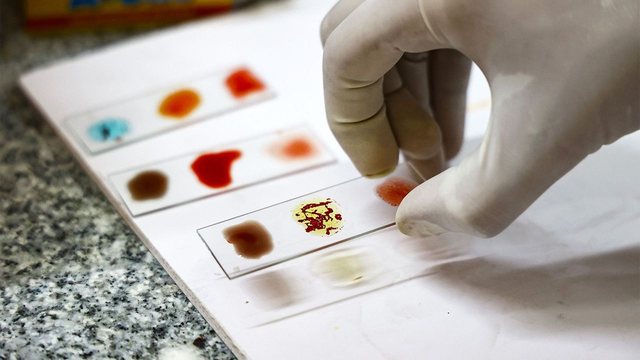
First, there are currently 47 recognized blood groups and 366 different antigens, as of October 2024. This means that a person who receives an O negative blood donation may still have an immune reaction to any of the other antigens present, although some antigens provoke more of an immune reaction than others.
Second, there are over 50 Rh antigens. When talking about Rh negative, we usually refer to the Rh(D) antigen, but their red blood cells still contain other Rh proteins. There is also a great diversity of Rh antigens around the world, which makes it difficult to find true matches for donors, especially for people from ethnic minorities in a given country.
People with Rh null blood, however, do not have any of the 50 Rh antigens. Although these people cannot receive from any other blood group, Rh null blood is compatible with all other Rh groups. This makes O Rh null blood extremely valuable, as most people can receive it, including individuals with all ABO variants. In emergencies where the patient's blood group is unknown, O Rh null blood can be given with low allergic risk. For this reason, scientists around the world are looking for ways to reproduce this "golden blood."
“Rh antigens trigger a huge immune response, and if you don’t have either, there’s basically nothing to react to,” says Toye. “If you’re type O and Rh null, then it’s almost universal. But there are still other blood types you have to consider.”
In a 2018 study, Toye and his colleagues at the University of Bristol recreated Rh-null blood in the lab. To do so, they took a cell line, a lab-grown population of immature red blood cells. They then used the gene-editing technology Crispr-Cas9 to delete genes that code for antigens from five blood group systems that are responsible for most transfusion incompatibilities. This included the ABO and Rh antigens, as well as other antigens called Kell, Duffy, and GPB.
“We realized that if we removed five, then we would create an ultra-compatible cell, because it had removed five of the most problematic blood types,” says Toye.
The blood cells thus created would be compatible with all the major common blood types, but also with rare types such as Rh null and the Bombay phenomenon, which occurs in one in four million people. People with this blood type cannot receive O, A, B or AB blood.
However, the use of gene editing techniques remains controversial and tightly regulated in many parts of the world, meaning it could be some time before this blood type becomes clinically available. It would have to go through many rounds of clinical trials and testing before it could be approved.
Meanwhile, Toye has co-founded a new company, Scarlet Therapeutics, which collects blood donations from people with rare blood types, including Rh null. The team hopes to use that blood to create cell lines that can be grown in the lab to produce red blood cells indefinitely. This lab-grown blood could be frozen for emergencies if people with rare blood types need it.
Toye hopes to create rare blood banks in the lab without using gene editing, although this technique could play a role in the future.
“If we can do it without editing, then great, but editing is an option for us,” he says. “Part of what we’re doing is carefully selecting donors to get all their antigens as compatible as possible for most people. Then we might have to do gene editing to make it compatible for everyone.”
Other researchers are also racing to create Rh null blood in the laboratory.
In 2021, immunologist Gregory Denomme and his colleagues at the University of California, Berkeley, used Crispr-Cas9 technology to create rare, personalized blood types, including Rh null, from human induced pluripotent stem cells (hiPSCs). These cells have characteristics similar to embryonic stem cells and have the potential to become any cell in the human body, given the right conditions.
Other scientists are using another type of stem cell that is already programmed to become blood cells, but has not yet determined the type. For example, scientists at Laval University in Quebec, Canada, recently extracted blood stem cells from donors with A-positive blood. They then used Crispr-Cas9 technology to delete genes that code for the A and Rh antigens, producing immature O Rh null red blood cells. Researchers in Barcelona, Spain, also took stem cells from a donor with Rh null blood and used Crispr-Cas9 to convert their blood type from A to O, making it more universal.
However, despite these impressive efforts, it is important to note that the creation of artificial blood produced in the laboratory on a scale that can be used by humans is still a long way off. One difficulty is turning the stem cells into mature red blood cells. In the body, red blood cells are produced by stem cells in the bone marrow, which produce complex signals to guide their development. This is difficult to reproduce in the laboratory.
“There is the additional problem that when Rh null blood or any other null blood group is created, the growth and maturation of red cells can be inhibited,” says Denomme, now director of medical affairs at Grifols Diagnostic Solutions, a company specializing in transfusion medicine. “The production of blood group-specific genes can result in disruption of the cell membrane or loss of efficiency in producing red cells in cell culture.”
Currently, Toye is co-leading the RESTORE trial, the world's first clinical trial to test the safety of giving red blood cells artificially produced in a lab from donated stem cells. The artificial blood in this trial has not been genetically edited in any way, but it still took 10 years of research to prepare for human testing.
“Currently, taking blood from someone's arm is much more efficient and economical, and that's why we will need blood donors for the foreseeable future,” says Toye.
"But for people with rare blood types where there are very few other donors, if we could produce more blood, that would be really exciting."