Is this police force professional and capable of handling violen...
/ 2026-10-16 18:54:07Focus


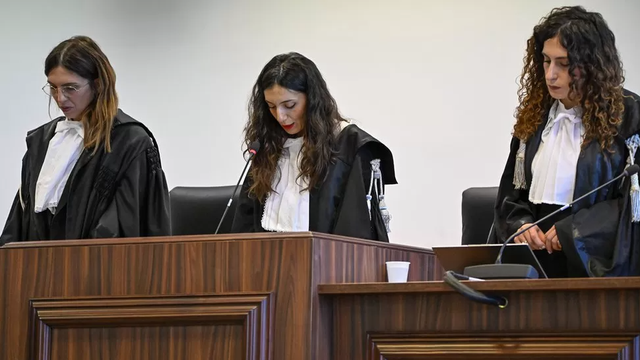
In the most voluminous process against the mafia in Italy for more than three decades, sentences ranging from a few months to 30 years in prison were announced. The charges ranged from drug smuggling to bribery and attempted murder.
Among the convicts, whose names were read for almost an hour and a half by the president of the court, judge Brigida Cavasino, are members of the 'Ndrangheta and assistants of the Calabrian mafia in the ranks of the police, politics and administration. The court imposed sentences ranging from a few months to 30 years of imprisonment.
In the epicenter of the Mancuso clan
In the so-called Maxi-Process in a high-security courtroom constructed in a goods warehouse in the city of Lamezia Terme in the southern region of Calabria since January 2021, the affairs of the 'Ndrangheta were being examined. Central to the process were the powerful Mancuso clan from the province of Vibo Valentia as well as its supporters and aides to its supporters.
Exterior view of former warehouse converted into a large courtroom Exterior view of former warehouse converted into a large courtroom
The prosecution for a total of 322 accused requested almost 5000 years in total. The charges ranged from drug smuggling and creating a mafia organization to money laundering, bribery and attempted murder. Against a dozen mafia bosses, the prosecution demanded the maximum sentence of 30 years in prison.
About 200 accused were found guilty and sentenced, the rest were acquitted. Only four mobsters were sentenced in accordance with the prosecution's request with the maximum sentence. One of the most prominent accused, 70-year-old former member of parliament, Giancarlo Pittelli, was sentenced to 11 years in prison - while the prosecution had asked for 17 years.
The 'Ndrangheta has its roots in Calabria, but meanwhile it is active in about 40 countries, including Germany. Thanks to its almost monopoly, the European cocaine trade, this is the richest and most powerful Italian mafia organization that has managed to subdue the state apparatus.
Mafia members broke their silence pact
Most of the accused, who went on trial in Lamezia Terme, were arrested in 2019 in a wave of coordinated night raids in Italy, Germany, Switzerland and Bulgaria. The trial against the 69-year-old head of the clan, Luigi Mancuso, nicknamed "Daja", was separated last year from the general trial as a case to be dealt with separately. Businessmen, mayors, civil servants and high-level police officers stood alongside the clan members before the trial.
The voluminous process in Lamezia Terme, where the questioning of witnesses has lasted for thousands of hours, became possible only after dozens of members of the 'Ndrangheta violated the pact of silence, the so-called Omerta, among them a nephew of Luigi Mancuso. Key witnesses told the trial about hiding weapons in cemeteries and smuggling drugs with the help of emergency vehicles, also describing how the 'Ndrangheta used municipal drinking water reserves for marijuana plantations.
Witnesses describe gruesome threats to people
Witnesses also described how the 'Ndrangheta threatened people by scaring them: dead dogs, dolphin corpses or goat heads were thrown in front of their doorsteps, cars were set on fire and shops were looted. The mobsters, according to them, were not ashamed of anything by brutally beating their opponents, or by disappearing them without leaving a trace.