"We are drowning..." - From Lisbon, Milan to Tirana, "The Guardi...
/ 2026-10-18 23:13:32Focus


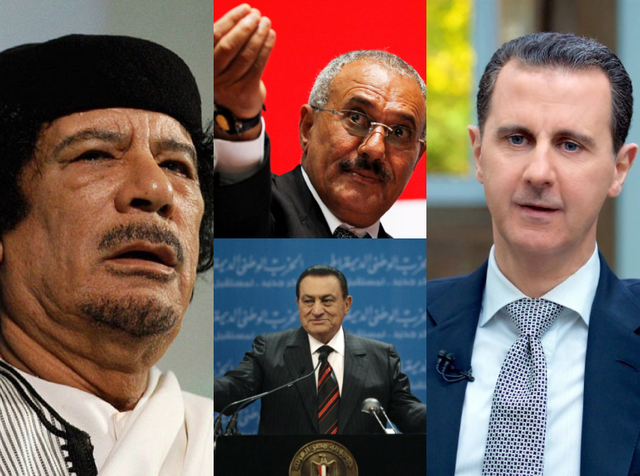
Libya's strongman and long-time ruler of 42 years, Muammar Gaddafi , was the first leader to be killed after the Arab Spring uprisings.
Like many dictators, kings and military rulers across the Arab world had no idea that their oppressive governments would reach a tipping point and come to an end.

Popular discontent and rebel uprisings brought drastic changes and the fall of autocrats.
But what was the fate of some of the Arab world's most cruel dictators?

The former president of Tunisia, who ruled for 23 years, was one of the first autocrats to be overthrown.
Zine al-Abidine Ben Ali fled with his family to Saudi Arabia in January 2011 after a month of anti-government protests in the North African country that sparked the Arab Spring.
Ben Ali was sentenced in absentia to life imprisonment for his role in the deaths of demonstrators.
After years of treatment for prostate cancer, Ben Ali died in 2019, at the age of 83.

Having ruled Egypt for three decades, Hosni Mubarak was the second Arab leader to be ousted by the 2011 protests.
He resigned on February 11 of that year after massive demonstrations in Cairo's Tahrir Square and across the country.
Mubarak, who took power in 1981 after the assassination of Anwar Sadat, ruled the most populous country in the Middle East with a punitive grip, using deep state surveillance and cronyism, usually with Western support.
After a trial that captivated the nation, Mubarak was jailed for life in 2012 for plotting to kill protesters, but was later acquitted.
The former air force commander died in February 2020.

Despite a nationwide popular uprising, Ali Abdullah Saleh, Yemen's president in power since 1980, managed to hold on for a few months in 2011.
He repeatedly claimed he would leave, while brokering deals with the country's small elite and foreign governments.
After nine months of mass protests and a bomb attack on his palace that left him severely burned and bedridden, Saleh agreed to transfer his powers to the vice president in exchange for immunity from prosecution.
In the following years, he fought a devastating civil war before being killed by Houthi rebels, a faction of former enemies who became allies - after they said he retaliated against them.

Libya's strongman and long-time ruler of 42 years, Muammar Gaddafi, was the first leader to be killed after the Arab Spring uprisings.
Responding to a pro-democracy uprising with crushing death, the mercurial colonel who gained world fame for his narcissism plunged his country into a bloody eight-month civil war.
Calling his critics "thousands," Gaddafi sent forces to attack the eastern city of Benghazi, which had revolted.
In response, NATO imposed a no-fly zone over the country, coordinating with rebel forces.
On October 20, 2011, Gaddafi, still fighting a clearly losing war in his ancestral home of Sirte, was captured and killed. He was 69 years old.

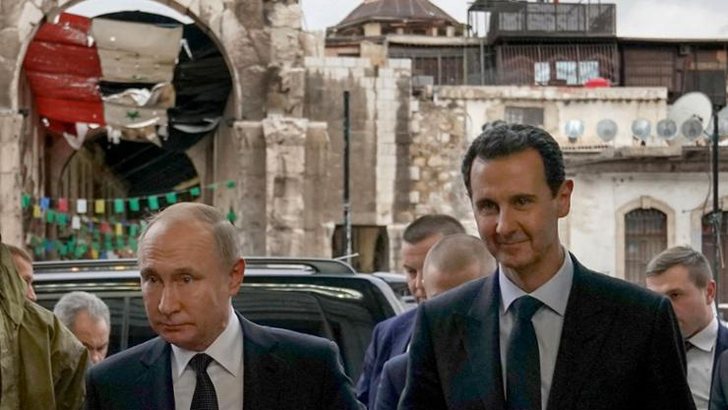
Backed by Syria's notoriously brutal secret police, Bashar al-Assad was believed in early 2011 to be an autocrat capable of suppressing public dissent inspired by the Arab Spring before it gained momentum.
However, Assad underestimated his people, and although it took longer to emerge, small peaceful protests quickly spread.
In response, the eye doctor-turned-dictator launched a bloody coup, sparking a civil war.
With his forces bombing hospitals and bakeries, as well as carrying out chemical weapons attacks, the Syrian leader managed to retain his title with significant military and financial assistance from his allies in Moscow and Tehran.
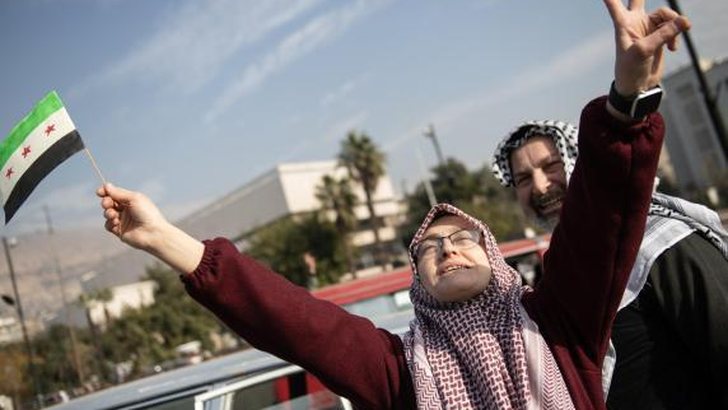
All this to be overthrown from power 13 years later, where on December 8, 2024, he was forced to leave Syria and flee to Russia, after rebels took power.