Details of the storm in the administration, here's who will resi...
/ 2026-10-22 22:25:00Focus


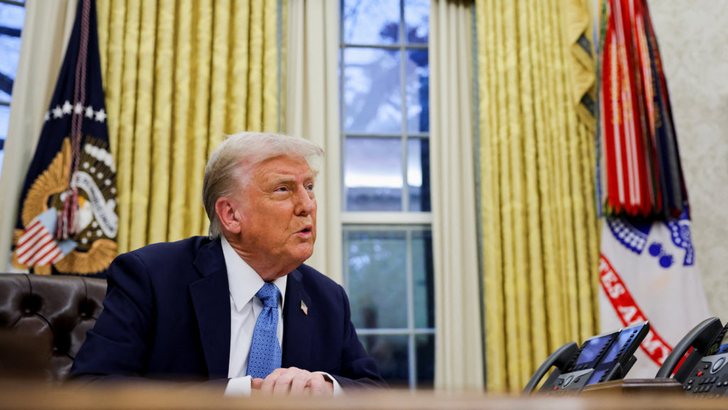
United States President Donald Trump has warned that he will impose severe financial sanctions on Russian oil imports if Moscow does not agree to a ceasefire in Ukraine within a month.
In an interview with NBC, Trump expressed anger after statements by Russian President Vladimir Putin, who called for the replacement of Volodymyr Zelensky with a UN-backed transitional government.
“I am very angry and very frustrated,” Trump said. “If I and Russia do not make a deal to stop the bloodshed in Ukraine, and if I think it is Russia’s fault — which it may not be — but if I think it is Russia’s fault, I will put secondary tariffs on all the oil that comes out of Russia.”
Trump said Putin was aware of his anger, but noted that the anger could "go away quickly" if Putin "does the right thing."
Trump said he expects to speak with the Russian president this week.
Trump clearly specified the economic threat: "If you buy oil from Russia, you will no longer have access to the American market. There will be a 25 percent tariff on all oil, maybe a 25 to 50 percent tariff."
This would be a form of "secondary sanctions," which would also affect countries that continue to buy oil from Russia, not just Moscow itself.
A maneuver that, practically, threatens with exclusion from the American market any company or country that continues to be supplied with Russian oil.
This intervention comes at a time when there were signs of a "warming" of relations between Washington and Moscow, with the White House signaling a willingness to ease some sanctions in exchange for a ceasefire in the Black Sea.
But Trump's stance overturns this climate.
Tension between Western countries
The European Union has imposed an embargo on Russian oil transported by ship, but some countries like Hungary and Slovakia continue to receive supplies through pipelines. Meanwhile, NATO countries like Turkey, as well as China and India, have increased their purchases of Russian oil. And then, fuels refined from this oil – such as gasoline, diesel and jet fuel – are exported around the world, including to the US and Europe.
This "refined hypocrisy" has strained relations between Western countries, as some countries watch with concern that part of the global market is being secretly reopened to Russian energy products, while Ukraine is being asked to move towards peace.
US Secretary of State Marco Rubio played down the tone this week, saying: "There is still a lot of technical work to be done" and that we are not close to a high-level dialogue to end the war.
What is Trump really doing?
Trump appears to be deliberately causing diplomatic turmoil, sending a double-edged sword to Putin. On the one hand, he flexes his muscles in front of Putin and positions himself as the only negotiator who “can stop the war,” warning of harsh consequences for Moscow. On the other, he opens the door to a deal, implying that if he reaches a consensus with Putin, tariffs will not be needed — and everything will be “business as usual.”
A classic maneuver in his style: threaten with the weapon of sanctions, but leave the door open for bargaining.

How did the Europeans receive it?
Many EU countries have indignantly greeted the idea of a low-cost peace for Russia, especially if it means a return to buying Russian oil without a full and just solution for Ukraine.
They view Washington's signals with suspicion, especially when they come from a leader like Trump who has a warm history with Putin and a tough stance on international institutions.
If such tariffs go into effect, they could cause economic and diplomatic clashes with countries like India, Turkey, or even European allies that still consume Russian products – directly or through third-party refineries.