"Condemned" protesters?! Who trapped Rama inside the Prime Minis...
/ 2026-10-23 16:02:00Focus


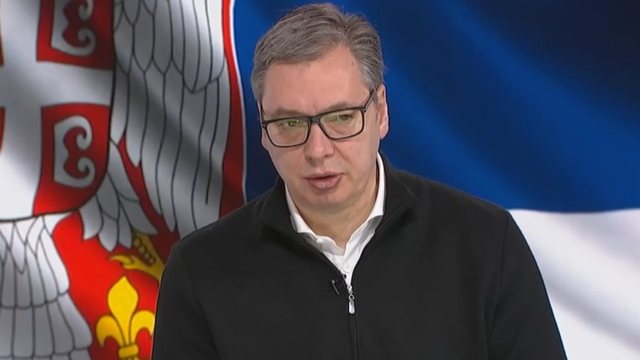
Moscow's accusations against Serbia for selling weapons to Ukraine have prompted a reaction from Serbian President Aleksandar Vučić. Immediately after the publication of the Russian intelligence report, the Serbian head of state rushed to justify himself, stressing that he would set up a working group on the issue.
"We have formed a working group with Russian partners to determine the facts. Some of the things stated in the statement were not true, such as the one regarding the Czech Republic contract, for which, no permits were issued and none of the missiles were delivered. No permits were issued for 44,000 long-range missiles and 24,000 short-range missiles. There is talk that arms exports from Serbia to Ukraine are going through an African country, but Serbia no longer exports arms, only ammunition. But, there is another thing, our factories must live and work. We employ about 24,000 people in the defense industry who depend on that industry. Now we are directing the weapons to supply our army," he said.
Vučić criticized the West after being frequently attacked by diplomats regarding Serbia's rapprochement with Putin, especially after the latter's visit to the May 9 parade in Red Square.
"Last week, I was attacked by two ambassadors, who said that we exported ammunition to the Russian Federation through a Turkish company and that Serbian ammunition appeared at the front from the Russian side. I had to explain that I don't really know what the contract was, nor is it possible for me to know everything, but you know, our factories must live and work," Vučić said.
Vučić found time to attack Kosovo and the authorities there by creating the idea that a depopulation of the Serbian community is taking place in the north.
"They hope that the majority of the Serbian people will be expelled from northern Kosovo. For a smaller part in the West and East, what Kurti is doing is rioting. We must oppose the efforts of the Albanians to gain as much recognition as possible with the help of some countries, especially Turkey, and I will soon inform the public about the good and surprising results that a small country can achieve in this fight."
These tensions between the two allies come after Serbian President Aleksandar Vučić's visit to Russia, where in addition to celebrating Victory Day over the Nazis, he met with his counterpart Vladimir Putin. Among the topics discussed was the situation in the Western Balkans.