


"Condemned" protesters?! Who trapped Rama inside the Prime Minis...
/ 2026-10-23 16:02:00Focus


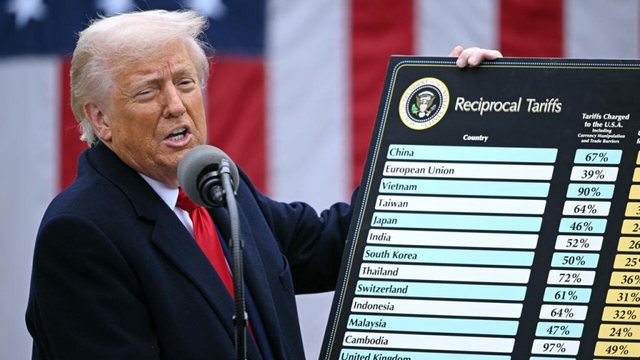
Trump's tariffs are illegal. Not all of them, but almost. We're not at the end of the tariff strategy yet, because the Court of Appeals has already stayed the ruling that struck them down.
But the blow that the judges have dealt to the head of the White House is strong, because it forces him into a legal battle with an uncertain outcome, with all the consequences that this brings on the ongoing negotiations with the affected countries, starting with the EU. For this reason, the markets are cautiously 'celebrating' the ban, which adds chaos to chaos.
On Wednesday, the U.S. Court of International Trade in New York blocked the president’s plan to impose steep tariffs on imports from nearly every country in the world. A panel of three judges — Timothy Reif, a Trump appointee, Gary Katzmann by Obama, and Jane Restani by Reagan — ruled that he had “abused his authority” when he used the International Emergency Economic Powers Act (IEEPA) of 1977 to declare a national emergency and justify the tariffs. A second court, the U.S. District Court for the District of Columbia, issued a similar ruling shortly after, through Judge Rudolph Contreras.
Tariffs in the US, battle in the courts
The White House responded by saying that "some unelected judges cannot decide on national emergencies," and counsel Miller denounced this as a "coup" by the courts. He asked the court in New York to block the decision, which gives the government ten days to stop collecting the tariffs. His theory is that the judges are thus disrupting the ongoing negotiations with the affected countries. Therefore, he appealed and yesterday evening, the Court of Appeals in Washington "temporarily suspended" the decision, leaving the tariffs in force while it reviews the case, which could end up in the Supreme Court.
The tariffs have overturned decades of US trade policy, rattled financial markets, raised the risk of inflation and recession in the US and around the world, and have led to concessions that remain unclear. The Court of International Trade has jurisdiction over civil trade-related cases and has ruled that the president has overstepped his authority because such decisions are the preserve of Congress.
Court decision on fees
The tariffs have been challenged in at least seven lawsuits, including one filed by Victor Schwartz, owner of Vos Selections in New York, which imports Italian wines. Facing bankruptcy because of rising prices, he went to court. In the ruling, the court combined two cases: one filed by five small businesses and another by 12 states. The ruling challenges the use of IEEPA and thus blocks the tariffs imposed by Trump on April 2 against almost all of the United States’ trading partners, and those previously imposed on China, Mexico and Canada. Meanwhile, tariffs on steel, aluminum and cars remain in place because they are based on a different law.
The White House has appealed, and National Economic Council director Kevin Hassett has said he is confident they will win. For adviser Peter Navarro, the architect of the tariffs, "nothing has changed: we will impose them even if we lose."
What can Trump do after the decision?
Pending the judges' decisions, the administration could use several avenues to keep the tariffs in place. According to Goldman Sachs analysts, cited by the Wall Street Journal, the president could impose tariffs of up to 15% for 150 days to balance the balance of payments deficit, based on Section 122 of the Trade Act of 1974. After that, Congress would have to intervene to extend the measures. The second option would be Section 301 of the same act, which allows the imposition of unlimited tariffs, but only after an investigation that would take months. Tariffs imposed under Section 232 of the Trade Expansion Act of 1962, such as those on steel, aluminum and cars, could be extended to other sectors, such as pharmaceuticals. Finally, under Section 338 of the Trade Act of 1930, Trump can impose tariffs of up to 50% on countries that discriminate against the US in trade, without the need for an investigation to justify them.
The president has no intention of giving up and yesterday met with the head of the Federal Reserve, Powell, to discuss the economic outlook, in the face of a 0.2% drop in GDP. He has long called for a reduction in interest rates. However, the entire tariff strategy risks being rejected. The judges are confirming that they are the main defenders of the rule of law, waiting for the democratic opposition to wake up, without waiting only for the midterm elections. Two judges consider the reciprocal tariff measures illegal. The appeal freezes the sentences for the time being, the markets are disoriented. / La Repubblica





