"Condemned" protesters?! Who trapped Rama inside the Prime Minis...
/ 2026-10-23 16:02:00Focus


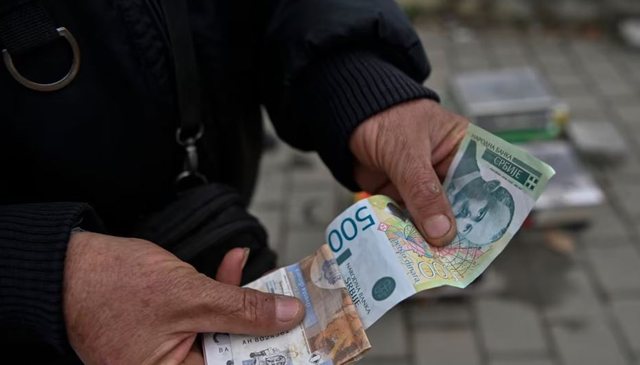
The political analyst from Pristina, Visar Ymeri , believes that the Government of Kosovo, led by Prime Minister Albin Kurti , will "repulse" from the decision to remove the Serbian dinar from circulation, under the pressure of the international community.
However, he says, he "will not do this in a visible way for the public", because, according to him, "he wants to create the image of a government that fights all the parallel structures of Serbia".
But, according to the political scientist from Belgrade, Ognjen Gogič, Kurti, until now, has shown that he "resists" international pressures, and this practice will continue.
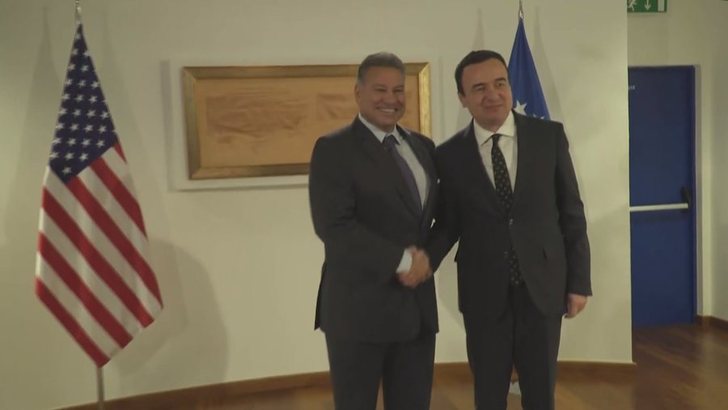
This week, the United States envoy for the Western Balkans, Gabriel Escobar, is staying in Pristina, who, on the eve of his arrival, said that the focus of the visit will be "a possible solution to the uncoordinated decision to stop the dinar Serbian".
REL requested a comment from the Government of Kosovo on these statements, but did not receive a response.
The American emissary met the president of Kosovo, Vjosa Osmani, on Wednesday, while it is expected that he will meet with the chief executive of Kosovo, Kurti, on March 14.
On February 1, the Central Bank of Kosovo enforced a regulation, which established the euro as the sole currency for cash payments in Kosovo.
The regulation, therefore, banned the use of the dinar, the currency in which the Serbian community in Kosovo accepts various payments from Serbia - from salaries and pensions to child benefits.
The regulation caused anger among the Serbs, but also among the international community.
The latter requested its suspension, until the affected citizens adapt to the new practice.
The authorities in Kosovo, so far, have shown no signs of backing down. CBK only said that there will be a transition period for its implementation, but not longer than three months.
Ymeri: The solution for the dinar is in the draft statute for the Association
Visar Ymeri, executive director of the Institute for Social Policy "Musine Kokalari" in Pristina, says that the dinar issue can be resolved with the formation of the Association of municipalities with a Serbian majority in Kosovo.
Speaking for Radio Free Europe, he recalls that Kosovo has accepted a draft statute for this association, drawn up by the international community, where it is mentioned that the circulation of money will be done through the Central Bank of Kosovo.
Exactly this part of the statute, according to Ymer, "would be a solution to this issue".
He adds that the CBK regulation has only created "additional problems", because it is trying, according to him, to solve the issue without the formation of the Association.
Gogič: The only solution is an agreement within the dialogue
The political scientist from Belgrade, Ognjen Gogič, believes that Escobar is not staying in Kosovo to find a solution, but to convince Prime Minister Kurti to discuss this issue in the framework of the political dialogue with Serbia.
Kosovo insists that the removal of the dinar is a "technical issue" and that it should not be discussed within the dialogue for the normalization of relations, but Serbia seeks a political solution.
Gogic says that one solution could be for Serbia's bank, Kursimorja e Posta, to obtain a license in Kosovo to enable its customers to open accounts and convert dinars to euros.
But, for such a thing, he says, an agreement between the two parties is necessary.
"It's not that there is no solution, but Prishtina has brought everything before the committed act. Now it is expected that someone will adapt, not understanding that [implementation of the CBK regulation] is not possible without finding a solution", says Gogič for Radio Free Europe.
Savings of the Post from Serbia is the only one in Kosovo that operates with dinars.
It has branches in the four Serbian-majority municipalities in the north – North Mitrovica, Zveçan, Zubin Potok and Leposavic – while in the south there are only ATMs.
Due to the lack of dinars in Kosovo, Kursimorja e Posta recently set up several improvised branches in the vicinity of four border points with Kosovo: Jarinje, Bërnjak, Konçul and Merdare.
Will there be consequences if Kurti doesn't let go?
Ymeri says that in diplomatic circles it is often said that "Kosovo is not keeping the promise through which it was declared independent, which is the relationship with the communities".
Criticism at this point damages Kosovo, he says.
"Kosovo is dependent on the West for its security. Kosovo is dependent on the West for its international subjectivity. And it is clear that these Western partners will not have the will and enthusiasm to help Kosovo, especially not in international subjectivization, if Kosovo has this approach", says Ymeri.
Some Western diplomats, including the assistant to the US Secretary of State, James O'Brien, have already said that the decision to ban the Serbian dinar has affected the quality of Kosovo's relations with the US.
Gogic, on the other hand, says that if Western countries really want to put pressure on Kosovo, the European Central Bank should raise the issue of using the euro in Kosovo.
"This is, perhaps, the only thing that can lead to a change of attitude in Pristina", says Gogic.
Kosovo does not have a special law that defines the use of the national currency, but there is a regulation that enables the use of the euro.
The Constitution of Kosovo provides for a single currency to be used as a means of payment, but does not specify which one./ REL