How Belinda Balluku is fabricating the rumor about Top Channel's...
/ 2026-10-19 16:19:54Focus


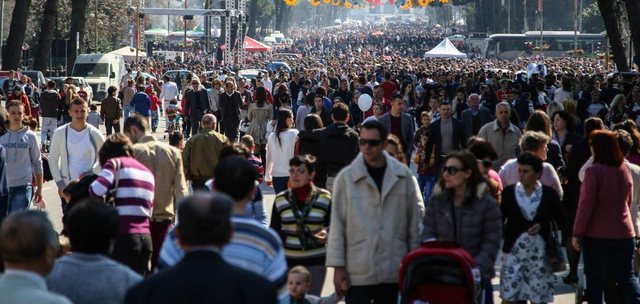
The results of the 2023 Census confirmed the significant decline in population predicted by various indicators such as the number of births, the natural increase of the population, or even immigration figures. In the span of 12 years, Albania decreased by about 420 thousand inhabitants, according to data published by INSTAT. Specifically, the resident population in Albania, according to the calculations of the Census results, turns out to be 2,402,113 people. Meanwhile, in the 2011 Population and Housing Census, the resident population was 2,821,977 people. Expressed as a percentage, the population decline in our country is estimated at around 15%.
"Scan Intel", with the help of the figures of the "European Statistics Agency", has calculated how the number of the population in European countries has changed in reference to the same period. Referring to the figures of the Census of 2011 and the population indicators in 2023, in most of the countries of the European Union, the population appears to be increasing.
More specifically, if we analyze the figures, we notice that Malta and Luxembourg have the highest population growth over the 12-year period, with around 30% and 29% respectively. Also, Iceland, Ireland and Sweden are listed among the countries where the population has increased. Countries such as Slovakia, Spain and Slovenia recorded more modest increases.
Meanwhile, on the other hand, the graphic presentation of the data shows us that Albania is ranked among the countries with the largest population decline. Bulgaria, Croatia, Latvia, Lithuania, Romania, Greece, Hungary, Poland, Italy and Portugal follow our country in this ranking, in terms of population change since 2011. The decline in these countries is recorded from 0.4% in Portugal to 12.4% in Bulgaria.