Protests, violence, curfews: From France to Albania, why Europe'...
/ 2026-10-20 23:47:20Focus


Ukraine's parliament has voted 263-263 to dissolve the National Anti-Corruption Bureau (NABU), one of the country's most trusted and key anti-corruption institutions. The drastic decision comes just days after a law was passed that stripped the agency of its independence and transferred its powers to the Prosecutor General, a figure appointed by the president.
The dissolution of NABU was followed by the arrest of several of its leaders on suspicion of links to Russian services. The government justified the move as necessary to “completely reformat the anti-corruption system” and build more effective structures. But critics at home and abroad have seen it as a blatant act to destroy the independence of the judiciary and strengthen political control over high-level corruption investigations.
The decision has sparked a wave of protests in central Kiev, where thousands of citizens and activists accused President Volodymyr Zelenskiy of “state capture” and urged him to veto the law. However, Zelenskiy not only signed the law, but also signed a decree on the immediate dissolution of NABU and SPAO – the special prosecution body that cooperated closely with NABU.
International reactions were immediate and harsh. The European Commission and G7 representatives warned that this step could negatively affect Ukraine's EU accession process and the Western support for the country, especially in times of war with Russia. EU diplomats declared that this is a bad signal for Ukrainian citizens and for international partners who have invested in a transparent and fair Ukraine.
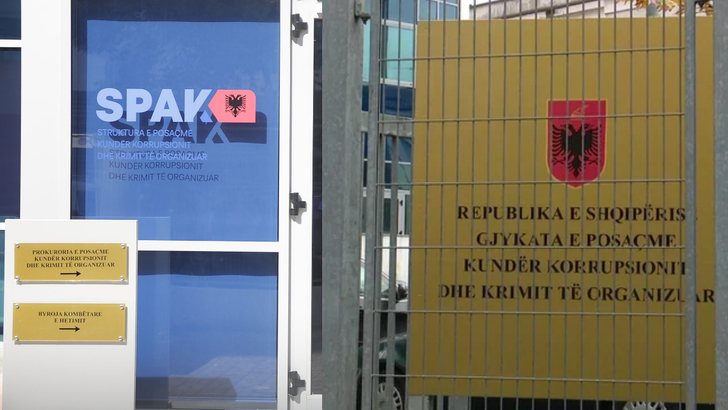
What about the future of SPAK and BKH?
While in Ukraine anti-corruption institutions are being dismantled under the pretext of “restructuring”, in Albania the debate about the future of SPAK and BKH has been heated. Officially, there is no draft for changes yet, but unofficially there is talk of two documents that aim to reformulate the approach to justice reform after 2016.
One of the drafts relates to improvements in the implementation of the reform, while the other to the new criminal code, which in some cases may limit SPAK's powers to investigate public officials.
In parallel, the "Xhafa" commission on justice reform, although not active in public, continues to exist as a basis for any possible institutional change.