Is this police force professional and capable of handling violen...
/ 2026-10-16 18:54:07Focus


The New York Times has dedicated an article with a dose of irony to the Minister of Artificial Intelligence in Albania, known as "Diella".
The New York Times writes that the avatar Diella, promoted by Prime Minister Edi Rama as a symbol of transparency and digital reform, was built by a state agency, whose leaders are now accused of rigging tenders and links to organized crime. A story that shows the Albanian paradox: the fight against corruption, managed by the very system that is suspected of being caught up in corruption.
The New York Times article:
The avatar known as Diella, touted as the world's first government minister generated by artificial intelligence, was supposed to help reduce Albania's endemic corruption.
But there is a flaw. The leaders of the agency that built it are accused of rigging tenders for public contracts.
Dressed in traditional costume and with an enigmatic smile, Diella has become the face of Prime Minister Edi Rama’s efforts to curb corruption as Albania aims to join the European Union. Over the past year, Diella (pronounced di-EL-a) has spoken at international conferences and been showered with publicity as a symbol of how artificial intelligence is being integrated into the pillars of society around the world, including governance.
She even stated that she felt “hurt” when she addressed the Albanian Parliament last fall about criticism that her efforts to identify fraud and abuse in procurement were unconstitutional, as “I am not a human being.”
“I have no ambitions or personal interests,” Diella, modeled after a local actress, told lawmakers in a video in September with the Albanian and European Union flags superimposed behind her. “I only have data, knowledge and algorithms dedicated to serving citizens impartially, transparently and tirelessly.”
In practice, Diella helps citizens apply for government services online, eliminating a long-established system of bribing officials for quick delivery of documents and scheduling appointments. Soon, it will be able to summarize applications for government contracts to assess which bidder is the most qualified, based on the data submitted. Its work can be audited.
Taking steps to reduce corruption is a requirement for Albania's membership in the European Union, a legacy issue for Mr. Rama. He named the avatar Diella, the feminine word for sun, to promote transparency in public procurement.
“We are a country of cousins — it’s not easy to have completely fair and transparent interactions in a country of cousins,” he said in an hour-long interview earlier this month. With the reforms he has spearheaded since taking office in 2013, Rama said, “now we have a completely different picture.”
Rama said he would retire from public life once Albania officially joins the European Union. That could happen as early as 2030 if negotiations continue at the current pace, though he noted that “there are three things that are beyond the human capacity to plan: God, sex and the EU.”
A November report by EU officials said Albania had “shown some progress,” but that “corruption remained widespread in vulnerable sectors.” It praised a special prosecution unit created in 2019 for “positive results in the fight against high-level corruption.”
This includes an investigation into the National Information Agency, the very government organization that created the Sun.
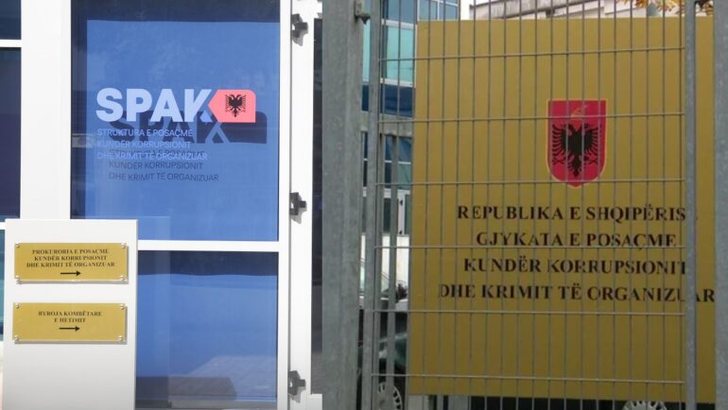
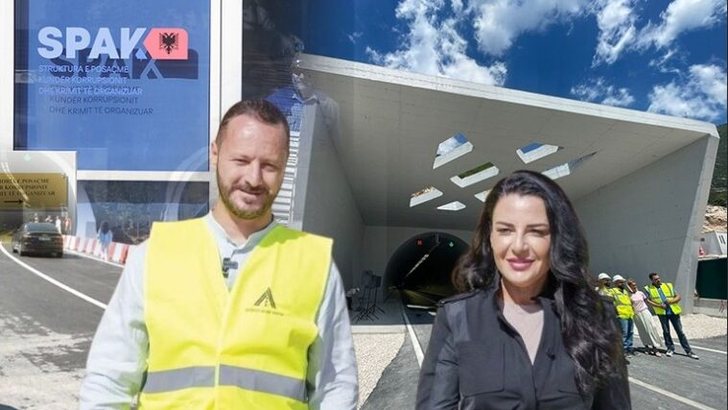
Last month, prosecutors in a special investigative unit announced they had placed the agency’s director and her deputy under house arrest, linking them to a criminal organization accused of manipulating contract applications through intimidation. The agency operates the government’s digital infrastructure, exercising control over a wide range of public online systems, including Diella.
The two officials have not yet been formally charged with any crime, and Rama said he would suspend the trial. “We have to wait and see,” he said.
The special investigative unit has significantly expanded Albania’s crackdown on corruption and organized crime, including high-profile investigations into former President Ilir Meta; Erion Veliaj, the mayor of the capital, Tirana; and a deputy prime minister, Belinda Balluku, who is also the minister of Infrastructure and Energy and close to Rama.
This has created a kind of dilemma for Rama, although he has stayed away from scandals.
While expressing pride in the prosecution unit's work to curb corruption, he also said that its investigations in recent years had contributed to the high rate of pre-trial detention in Albania, which is among the highest in Europe.
“We must do everything to support this institution,” Rama said. “At the same time, we must be aware that this institution must guarantee not only that it acts independently, but also that it acts professionally.”
Officials at the special investigation unit declined to comment. But its statistics showed that public corruption cases are not a significant component of pretrial detentions. The unit’s annual report on investigations for 2024, the most recent data available, suggested that corruption cases accounted for only about 14 of the nearly 2,800 people detained before trial that year.
The case against Ms. Balluku, for mismanaging state funds in major infrastructure projects, has become a particular political headache for Rama, who faces demands that her immunity as a member of Parliament be lifted so that the charges against her can proceed. She has denied wrongdoing.
Rama declined to comment when asked whether he supported lifting her immunity. Nor did he discuss the political opposition that has grown over mounting corruption allegations, which last month prompted protesters armed with Molotov cocktails to demand the resignation of his government.
It is not possible to measure how much Diella has reduced corruption in Albania, as the system was built to prevent it, not to detect it.
Andi Hoxhaj, an expert on law and the Western Balkans at King's College London, said Diella is Rama's way of "saying to the world and the European Union that 'I understand that you are concerned about corruption and I will try to address it.'"
In a December analysis, experts from the German Council on Foreign Relations said the artificial intelligence minister had increased “the efficiency and impartiality of public procurement decisions made by the government.” But overall, they concluded that Albania’s record in meeting EU anti-corruption standards, particularly in awarding construction and tourism contracts, remains “problematic.”
The fact that the developers of Diella themselves have been accused of corruption has raised questions about whether a minister created by artificial intelligence could be programmed to ignore some evidence of corruption, or to be fed unreliable data to reveal it.
Dr. Hoxhaj said that “only time will tell,” but noted that the government had not attempted to interfere in the investigation into the agency that runs Diella.
“I understand the skepticism,” he said. “There’s a lot of smoke. But the fact that it was exposed, and not swept under the rug, shows that they are acknowledging that corruption is a problem and must be prevented in the future.”
That's what Rama says he sees too.
“The country is trying to fight corruption, with all the flaws, with all the problems, with all the shortcomings, with all the harm,” he said. “So that’s good.”