Protests, violence, curfews: From France to Albania, why Europe'...
/ 2026-10-20 23:47:20Focus


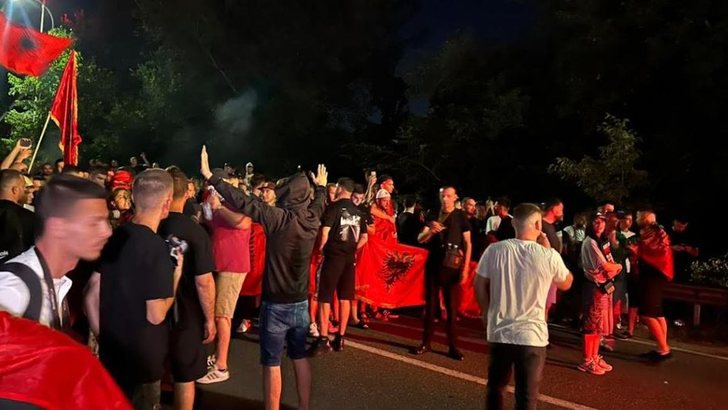
Recent developments in Pishe Poro–Nartë show that the concerns raised by the EU are no longer simply potential risks, but are materializing on the ground.
On June 2, the European Commission told DW that it is closely following developments in the Pishe-Poro-Narte protected area and stressed that EU standards must be fully taken into account in this project. Meanwhile, the European Union Delegation in Tirana warned that Albania should avoid actions that could undermine the fulfillment of the Chapter 27 criteria and that it expects the Albanian authorities to "act without delay."
On Monday, Enlargement Commissioner Marta Kos said the Commission had received assurances from the Albanian government that "a full environmental impact assessment will be carried out and that European environmental protection standards will be respected." The statement is disputed by environmental organization EcoAlbania, which argues that environmental procedures should have preceded any intervention on the ground and not followed the work already underway.
None of the elements of sustainable development
In an interview with DW, Annette Spangenberg, head of the nature conservation sector at the international organization EuroNatur, says that the developments in Pishe-Poro-Narte confirm concerns that the EU has long raised about the protection of protected areas. "In the case of this project, none of the elements of sustainable development have been convincingly demonstrated," says Spangenberg.
Why has the Zvërnec project attracted attention beyond Albania?
The Poro–Nartë Pine Zone is part of the Vjosa–Nartë Protected Landscape and an important node for migratory birds along the Adriatic corridor. For this reason, habitat damage in this area raises concerns that go beyond Albania, especially at a time when the country is aiming for membership in the European Union.
In September last year, the European Union adopted a Common Position on Cluster 4, which includes criteria related to Chapter 27 on the environment. This position requires Albania to repeal amendments to the Law on Protected Areas, which allow luxury tourism developments within these areas, and to ensure that new projects are assessed in accordance with EU standards. It also requires a revision of the Law on Strategic Investor Status.
Recent developments in the Poro–Nartë Pine Forest show that the concerns raised by the EU are no longer simply potential risks, but are materializing on the ground. There is currently a lack of transparency, impact assessments and public consultations. This constitutes a serious violation of nature protection legislation and of the commitments that Albania has made in the context of the EU accession process.
Albania has not respected the procedures
The Vjosa–Narte Protected Landscape is already a candidate site for the Emerald network under the Bern Convention and is considered a future part of the Natura 2000 network after Albania's accession to the European Union. "For this reason, any change in its status must be subject to special procedures that, unfortunately, Albania has not respected," says Spangenberg.
Natura 2000 and Emerald sites are subject to a strict protection regime, which requires preventing the degradation of natural habitats and species habitats, as well as carrying out full impact assessments for any project that could affect biodiversity.
"When there is a project plan in these areas, national authorities and developers must follow a special procedure before its approval. This procedure includes, among other things, carrying out full and appropriate environmental and biodiversity impact assessments. To our knowledge, such a process has not currently been followed in the case of Narta," says Spangenberg.
International environmental organizations and the Zvërnec project
EuroNatur remains committed to ensuring that the Poro–Narta Pine and other protected areas in Albania maintain the level of protection they deserve and that the legal framework is effectively implemented.
"We will continue to work closely with our partners in Albania, supporting public dialogue, citizen participation and the involvement of various actors in policy-making and nature conservation processes at the national level.
"We will also continue to provide expertise and support for the harmonization of legislation and practices with European Union standards, with the aim of long-term protection of the country's natural heritage," says Spangenberg.
Amendments to the Law on Protected Areas
Albania has changed its legislation to allow strategic tourism investments in protected areas. From a nature conservation perspective, the most recent and worrying development relates to the amendments to the Law on Protected Areas, allowing the use of heavy machinery and the construction of luxury tourist resorts within protected areas. "These amendments have significantly weakened the protective function of the law, making it practically incapable of fulfilling the purpose for which it was drafted," says Spangenberg.
Another problematic issue, according to Spangenberg, is related to the Law on Strategic Investments, which allows investors to avoid or accelerate certain administrative procedures and control mechanisms, including those related to environmental protection. "What must be kept in mind is that what is happening today in Nartë could happen tomorrow in any other protected area in Albania. Therefore, it is not just a local problem, but a broader issue related to the weakening of the legal framework created for the protection of these territories," says Spangenberg.
Can economic development and nature protection coexist?
Supporters of the project argue that economic development and nature protection can coexist. But what conditions must be met for such a balance to be credible in the Poro–Nartë Pine Forest?
"Pishë Poro–Narta is one of many protected areas in Albania that have been declared above all to protect nature and the species that live in them. Any development proposed in these territories must respect this fundamental principle. The project planned for this area is in direct contradiction with legal obligations and the very purpose for which protected areas exist," says Spangenberg.
Sustainable economic development means taking into account the interests of local communities affected by the project, clearly analyzing the benefits and costs, examining possible alternatives, protecting nature, and integrating the project into a strategic, long-term vision for the territory.
According to Spangenberg, "in the case of this project, in our assessment, none of these elements have been convincingly demonstrated."/ DW