"Condemned" protesters?! Who trapped Rama inside the Prime Minis...
/ 2026-10-23 16:02:00Focus


It's hard to overstate what's happening in Albania's capital, Tirana.
The city that Erion Veliaj helped transform from a grim, traffic-choked relic into something that truly looks and feels European is now run, in practice, by a deputy mayor, while its three-time elected mayor sits in a prison cell on the outskirts of the capital. Ten months in detention, five of them without even a formal list of charges.
Two well-known international law firms, Kasowitz Benson Torres of New York and Mishcon de Reya of London, have published two separate reports (one in June, and an updated version in October) that read like a checklist of everything that can go wrong when anti-corruption zeal clashes with basic human rights.
Excessive detention, delays in filing charges, rejections of bail applications that barely bother to justify, grossly unequal treatment of co-defendants, limited access to evidence – the list is long and discouraging. Their conclusion is sober but ruthless: the Veliaj case shows clear signs of political motivation and falls far short of European standards.
They are not alone in saying this. Alastair Campbell, no fan of the center-right Balkan mayors, wrote in his journal The New European that holding someone for months without charge “is not something that should happen in a country that is knocking on the door of the European Union.” Istanbul’s Ekrem İmamoğlu, no stranger to political trials, sent Veliaj a public letter of solidarity from his own prison cell, noting the uneasy parallels across the region.
Even the usually cautious Venice Commission has reminded everyone, in language that can hardly be misunderstood, that keeping elected mayors in detention for extended periods of time, without trial, undermines the very idea of democratic representation.
Veliaj's story is worth a moment's pause. A civil society activist turned mayor, he won three consecutive elections by margins that most European politicians could only dream of. Skanderbeg Square was pedestrianized, the Lana River was cleaned up, a full-fledged bicycle network was built, and a 24-hour water supply was provided in a city that once had water on a schedule, for only a few hours a day.
The transformation was so tangible that it won him international awards and the sincere affection of many Tirana residents. He was regularly mentioned as the logical successor to Edi Rama whenever the prime minister finally decided to step down.
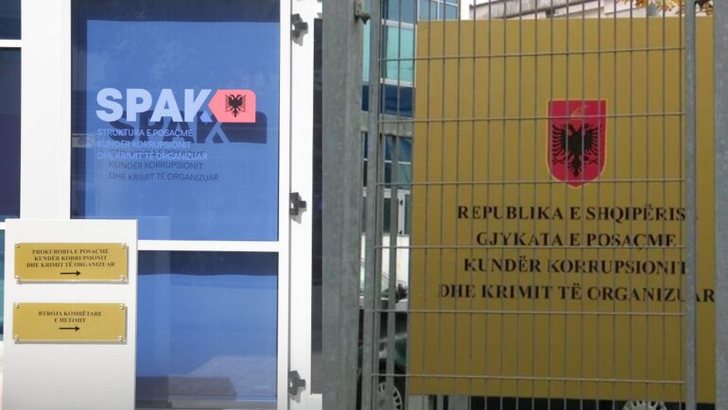
Then came SPAK, the Special Structure Against Corruption and Organized Crime, with allegations of passive corruption related to municipal contracts – prompted by an anonymous tip. Veliaj insists the charges are unfounded, a product of a polarized political climate where the ruling Socialists and the opposition Democrats have been trying for years to put each other’s key figures in jail.
What followed was a judicial sequence that would raise eyebrows across the continent. Arrest in February, no indictment until July, seventeen failed bail applications, and eighteen co-defendants, seventeen of whom are now free under relatively light conditions, while the mayor remains incarcerated. In November, the Constitutional Court intervened and ruled that the Tirana City Council had acted contrary to the Constitution when it stripped him of his mandate; a rare victory. However, even after that decision, SPAK reportedly prevented him from attending council meetings, turning the theoretical reinstatement into a practical suspension.
The EU’s own Enlargement 2025 Report on Albania tells the story in diplomatic language: yes, there is progress on vetting judges and reforms on paper, but “serious concerns” remain about the extension of pre-trial detention, inconsistent prosecution standards and declining public trust in the judiciary. Brussels is keeping the accession train moving, because the Western Balkans are too strategically important to leave on hold, but the “Veliaj” dossier is already in too many inboxes in Brussels to be quiet.
And now, voices from across the Atlantic are joining the chorus. At a hearing of a subcommittee of the U.S. House of Representatives Foreign Affairs Committee, entitled “Flashpoint: A Path Toward Stability in the Western Balkans,” just yesterday – December 2, 2025 – Republican Congressman Keith Self, chairman of the subcommittee on Europe, offered a grim assessment of Albania’s decade-long justice reforms – reforms that Washington itself helped fund. “The United States has long supported efforts to build an independent and exceptional judiciary in Albania,” Self said.
“ However, after ten years of implementation, it is appropriate to review whether the justice reform is working as intended and providing impartial justice to the Albanian people. It should be of concern to everyone that the national backlog of unresolved cases has increased from around 16,000 cases at the beginning of the reform to around 200,000 today, leaving citizens waiting 8 to 15 years to receive a final decision. Such delays undermine the rule of law, public trust and due process. ”
Coming amid broader concerns about ethnic tensions, Russian interference and economic stagnation in the region, Self's remarks sound like a quiet wake-up call: even America's patience has its limits.
SPAK itself is not a “cardboard enemy.” It was set up in 2019 with generous support from the EU and the US precisely because Albania needed a structure capable of confronting the toxic mix of political corruption and organized crime in the country. SPAK has delivered results: drug networks dismantled, corrupt judges removed, millions in assets seized.
But the Veliaj case, like those before it against former President Ilir Meta or Greek-minority mayor Fredi Beleri, highlights the dark side of creating a prosecutor’s office with broad powers and very little accountability in day-to-day life. When the institution’s success is measured primarily by the number of high-profile “scalps” it can expose to international partners, the temptation to pounce on the biggest names available – regardless of the strength of the evidence or the fairness of the process – becomes almost irresistible. Add to this a national case backlog that is ballooning to 200,000, and what you get is a system where ordinary Albanians wait over a decade for a resolution, while politicians like Veliaj get stuck in the gears.
None of this is abstract. A freely elected mayor has been removed from office for the better part of a year without trial. His family is under strict visitation rules in prison. Hundreds of thousands of Tirana voters are, in effect, deprived of the man they elected to lead their city. The human cost is real, and felt far beyond the prison walls.
Albania is at a crossroads. The country has done more in the past decade to clean up its judiciary than many outside observers thought possible. Yet cases like this one show how fragile those gains remain – and how easily anti-corruption rhetoric can be used to settle political scores. For the European Union, the dilemma is equally acute: how strongly should you criticize rule of law deficiencies in a candidate country whose geopolitical orientation is vitally important to you? With even U.S. lawmakers now demanding a serious review of the reform failures, pressure is mounting on Tirana to deliver real fixes, and on Brussels to make those fixes non-negotiable.