Protests, violence, curfews: From France to Albania, why Europe'...
/ 2026-10-20 23:47:20Focus


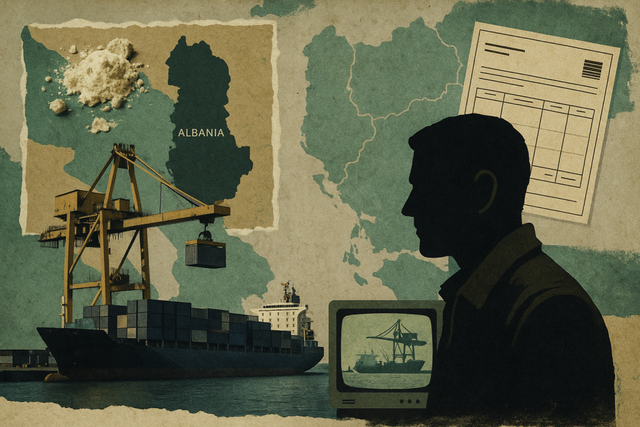
Albanian groups continue to remain among the most active actors in international drug trafficking.
The Italian anti-drugs agency has published a document of over 300 pages, where Albania and Albanian criminal networks occupy a special place.
According to the DCSA (Central Directorate for Anti-Drug Services) report, groups of Albanian origin continue to be among the most active actors in international drug trafficking, both in Italian territory and in most of Europe.
The document emphasizes that Albanian organizations have evolved towards sophisticated structures, modeled after mafia forms, with an internal organization divided into three levels: leaders, organizers and executors.
Italian authorities underline that Albanian networks use encrypted communication, move quickly between countries and are considered among the most reliable brokers for the trafficking of cocaine, heroin and cannabis.
The report also focuses on the official cooperation between Italy and Albania within the framework of the annual aerial surveillance campaign, known as "Campagna Sorvoli".
Guardia di Finanza monitoring flights during 2024 identified over 1,200 suspected plantations, while Albanian authorities uprooted and destroyed over 109,000 cannabis plants.
The document highlights that cultivation has changed areas, moving from the southern regions to the north and center of the country, including territories near Rinas airport.
The report also mentions the Albania-Turkey trafficking axis, where, according to Italian authorities, marijuana is exchanged for heroin due to the latter's smaller volume and ease of transportation.
According to the report, there is a significant change in Albanian criminal activity: a shift in focus from the cultivation and trade of cannabis towards the trafficking of hard drugs, mainly cocaine and heroin.
This transformation is associated with higher profits and lower operational risk for criminal networks.
Italian authorities emphasize that, despite close cooperation with the Albanian State Police and the intensification of field operations, Albanian criminal groups remain among the most powerful and widespread in Europe, with stable branches in Italy, Greece, the Netherlands, Belgium and Central European countries.