Is this police force professional and capable of handling violen...
/ 2026-10-16 18:54:07Focus


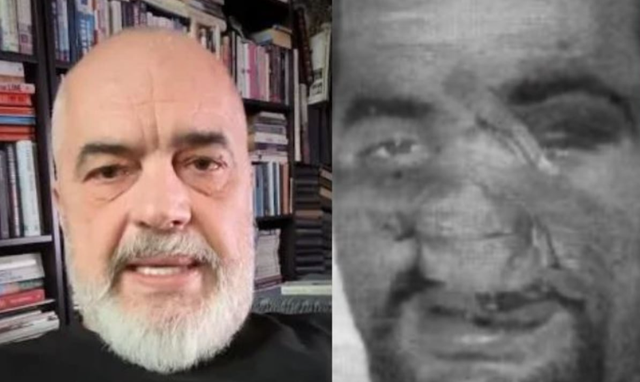
Prime Minister Edi Rama gave an interview to the German magazine ZEITmagazin, where he spoke about many aspects, both political and private life.
"This interview with the Prime Minister of Albania, Edi Rama, has a story. After I, ZEIT journalist Stefan Willeke, published an article in May 2024 in which I described an angry Rama struggling with his computer in the office, he called me and complained for more than 20 minutes.
It was almost unstoppable. How could I have thought of portraying him in such a distorted way! "It's not just insulting me, it's also insulting Albania," he said.
Didn't I know what great advances the country was making in information technology? And then the prime minister appeared as a man unable to connect a computer cable?
"Do you know what a big lie consists of?", he asked and answered himself: "Not a thousand little lies, but a thousand little half-truths." He said: "You ruined my day with your article." "Now I want to spoil your day with my phone call."
Finally, he mentioned that Albania was a generous country. I would be welcome there in the future as well. Albania is Edi Rama, and Edi Rama is Albania – that was the summary of his long speech. So I had little hope that Rama would accept an interview. I contacted him. A few minutes later, he sent me a good-humored voice message.
"You are a good man," he said, "an honest man." Life is short, too short to hold grudges." As he was leaving, he called me "my friend."
You have to give credit to Edi Rama, he possesses an amazing ability for change. He has governed the country since 2013 and in May he won the elections again, starting his fourth term," writes the German magazine.
Rama was also asked about the episode of violence in 1997.
Excerpts from the interview:
Did your physical strength help you when someone tried to kill you in 1997?
This was the opinion of the doctors who treated me. The attack on me was very brutal.
The attack took place in Tirana. You were 32 years old, a lecturer at the academy of arts and one of the militant intellectuals who confronted the authorities in newspaper articles. The country was on the verge of serious political turmoil at the time.
It happened on January 22, 1997. I was coming home with my girlfriend and one of my friends. At that time, we lived in a small apartment in a suburb. It was a cold night after a rainstorm, and Tirana was a completely different city then. Electricity was regularly cut off and at night the streets resembled black holes. Just before I arrived at the house where I lived, two dark silhouettes appeared. At first, I thought I recognized one of the men who carried a roll of paper: one of my students, a kind of bodybuilder. But no, he was holding an iron rod inside the roll of paper. I fell to the ground under the blows and tried to protect my girlfriend by holding her behind her back with both hands. I saw the oil lamp lights shining on the windows of the house and I thought, "That's it, my life is over."
The men left me lying in the mud, seemingly dead. The blood was flowing from my face and my mouth was also full of blood. I had several cracks in my head and nose.
Who were these men?
I still don't know exactly. But I do know that it was an assassination attempt by the secret service of the then president. I had tried to organize a petition calling on the government to resign. At the hospital, the doctor who treated me told me: "Without your good physique as an athlete, things would have gone wrong. Your height also helped you; he didn't get a good shot."