Is this police force professional and capable of handling violen...
/ 2026-10-16 18:54:07Focus


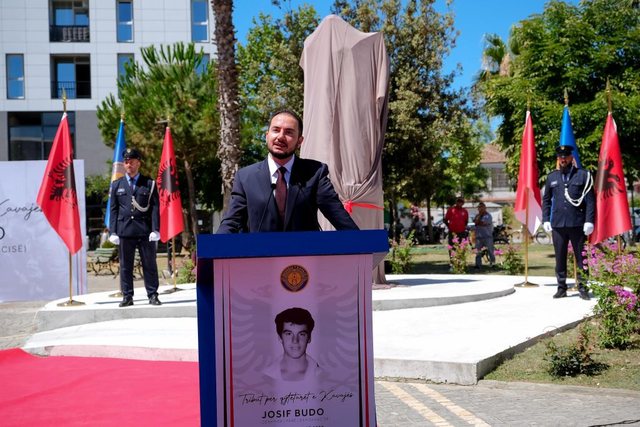
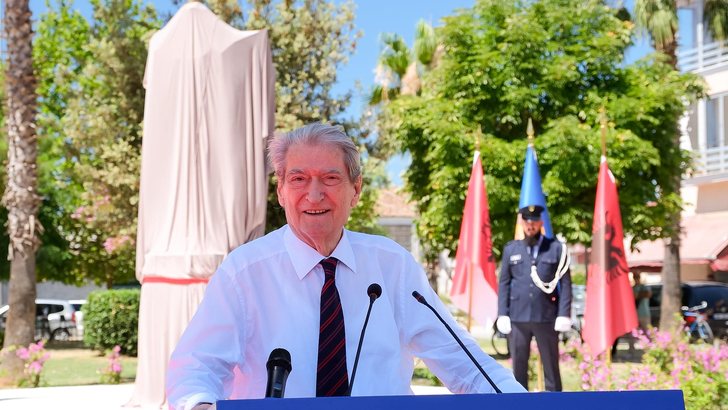
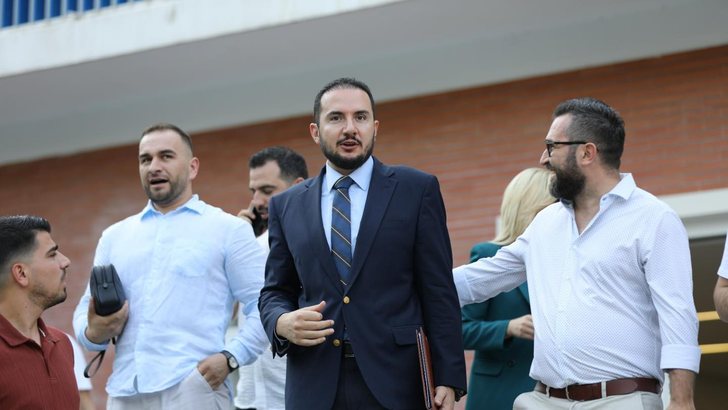
In his speech at the memorial ceremony for Josif Budo, Ervin Salianji spoke in emotional tones, expressing himself as a citizen who had just experienced the reality of prison in a "new dictatorship."
Salianji described Josif Budo not only as a victim of the communist regime, but as a symbol of conscience and courage in the face of injustice. He emphasized that the Buddha did not fall by chance, but because he refused to live on his knees, refused silence and chose to confront evil, even though it cost him his life.
Comparing today's times to the years of dictatorship, Salianji warned of the risk that the freedoms gained could be lost if citizens remain silent. He called on today's generation not to waste the sacrifices of those who, like Joseph, chose resistance over submission.
Full word
Dear guests, family, esteemed Leader of the Opposition Doctor Berisha, dear Fisnik, Hysen. My heart tells me to speak as a citizen, not as a political representative. As an individual who has just finished his acquaintance with prison, not as a metaphor, but as a reality in the new dictatorship. In an isolation where life is counted by the hour, but with patience. With silence. With endurance.
Today we are not simply following the memory of a man. Today we are standing in silence in front of a light that could not be extinguished, even though it was struck with the densest darkness. Josif Buda did not fall by chance. He came out to seek justice, freedom! Life did not take Josif — the Sampists took him! Because he had the courage not to accept being lied to, not to accept injustice, the lack of freedom!
To refuse to live on his knees. In a place where even a word could cost you your life, Joseph chose to react. At a time when looking evil straight in the eye was an act of self-sacrifice, he did so without hesitation. And for this, he was killed. But let us accept a great truth: These people are not killed, they do not disappear.
Because they are more than the body. They were and are consciences. Joseph Buda was conscience. Not only of his time, but also of our time. Because he left us a question that has not lost its power even today: Is it worth living a peaceful life, if it is without dignity? Everyone who has gone through the hell of dictatorship knows that what saved man was not bread, but faith. In God, in freedom, in a day that would come.
Joseph did not see that day. But we are here because that day came thanks to individuals like him and we must not let our generation be known as a generation that lost its acquired rights! And we must not waste it. Today we are free because someone chose not to be part of the crowd that applauded evil. Today we are here because someone like Joseph said “No” — at a time when a “no” could cost you your life. And for that, he should not be remembered only as a victim.
But as light. Joseph did not seek martyrdom. He sought life. But he sought it with his face to the sky, not with his head bowed in fear. Dear friends, In a world that quickly forgets, Joseph Buda is the memory that must never be forgotten. Not to mourn, but to remember that truth is always stronger than fear. Glory to his endurance. Glory to the light that did not fade. Glory to Joseph Buda.