Details of the storm in the administration, here's who will resi...
/ 2026-10-22 22:25:00Focus


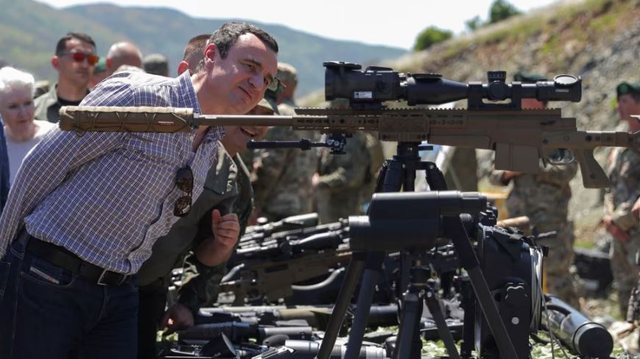
Valona Tela and Arton Konushevci- REL
Military modernization in the Western Balkans is not simply a matter of equipment. It reflects the competition between great powers for influence.
Serbia maneuvers with weapons from the West, China, and Russia, while its neighbors remain largely equipped with Western technology.
Former Albanian Defense Minister Fatmir Mediu says this combination has long turned the Balkans into a miniature of global rivalry. And the consequences of this positioning extend beyond the defense field.
"Security today is not just a matter of defense. Security is a matter of infrastructure, technology, politics, economics, and military. Given these, the relations that Serbia has established [with Russia and China] are a matter of no small concern," Mediu tells Radio Free Europe's Expose program.
Harmonizing military modernization with declared Euro-Atlantic goals remains a controversial issue even for Nikola Llunić, a consultant in Belgrade on geopolitical and security issues.
"It would be expected that – if all countries aim to one day join NATO and certainly the European Union – the European security structure would be fully compatible. This means that military purchases would be coordinated. But this, normally, does not happen in our region, due to our unfinished history and often nationalistic and aggressive narratives," says Llunic.
Of the six Western Balkan countries, Albania, Montenegro and North Macedonia are NATO members; Kosovo and Bosnia and Herzegovina aspire to join, while Serbia – although militarily neutral – is part of NATO's "Partnership for Peace" program.
NATO member countries, in principle, have weaponry designed or adapted to be interoperable. This means that the equipment must speak the same technological “language.”
The Kosovo Ministry of Defense confirms to Expose that "all weapons purchased by Kosovo in the last four years are according to NATO standards. They are mainly weapons purchased from the United States of America, Turkey, Germany, etc."
Spokesperson Liridona Gashi does not reveal how much has been spent on armaments this year, but emphasizes that this government has invested "many times more" than in the past.
This month, the Kosovo Security Force, which is in the process of transforming into a fully-fledged army, received drones purchased from the United States – the RQ-20 Puma LE model.
The KSF continuously trains on American and European bases and also participates in multinational exercises, such as "Defender Europe".
At the end of last year, Kosovo also reached an agreement with Turkey to build its first ammunition factory. Gashi, from the Ministry of Defense, says that the expectation is that it will be operational “within two years.” Meanwhile, regarding the military cooperation announced in March between Kosovo, Albania and Croatia, he says that “the joint plan of activities is currently being drawn up.”
The Armed Forces of Bosnia and Herzegovina are also in line with NATO. According to the announced annual plan, they will participate in 17 exercises this year, through cooperation with NATO, regional initiatives and bilateral agreements in the field of defense.
From customs data in this country, it appears that Bosnia and Herzegovina exports weapons mainly to Western and Middle Eastern countries, while importing mainly from neighboring countries and beyond.
What stands out in the region is Serbia. Participation in the Partnership for Peace program allows it limited cooperation with NATO, but interactions with China and Russia place it outside the pattern of its neighbors.
Until the Russian invasion of Ukraine, Serbia relied mainly on Russian weapons, while after geopolitical changes, it turned to China, from where it purchased, among other things, combat drones and missile systems.
Last July, Serbian army special units conducted their first joint training with soldiers from China, in Hebei province, despite warnings from the EU, which Serbia aims to join.
Last week, Serbia's president, Aleksandar Vučić, was at a summit in China and announced new arms purchases from the communist state.
"Today, China is the largest investor in Serbia, as a single country – with 7.2 billion euros. This year, the People's Republic of China and Serbia will have about 8.5 billion euros of trade exchanges," Vučić said.
According to the Stockholm International Peace Research Institute (SIPRI), Serbia has made the largest military expenditures in the Western Balkans region over the past five years, purchasing weapons from both the West and the East.
In 2024 alone, it allocated $2.2 billion for the military – about five times more than NATO member Albania. Kosovo allocated about $162 million, compared to $90 million allocated in 2020.
For Mediu, such an imbalance in military investment raises a "red flag."
"Serbia - if you look at its policies in Bosnia and Herzegovina and especially in Kosovo - has never given up on its claims to protect, as it says, the Serbian population. It's the same narrative that Russia has used [for its invasion of Ukraine]. So, it is not going to give up its dominance in the Balkan region," says Mediu.
Si arsyetim për armatosjen e Serbisë, Vuçiq shpesh përmend “kërcënimet nga fqinjësia”, pa specifikuar se prej kujt. “Ne nuk do të prekim askënd, vetëm do të mbrojmë territorin dhe integritetin tonë”, deklaroi javën e kaluar në Pekin.
Për Lluniqin, kjo retorikë është për përdorim të brendshëm. Por, përpjekjet e tij për të balancuar mes të gjithëve, përfshirë Kinën dhe Rusinë, në një moment të caktuar mund t’i kthehen bumerang.
“Nëse kriza aktuale gjeopolitike eskalon, atëherë edhe vetë Serbia do të ishte në një situatë shumë të ndjeshme, ku askush nuk do ta pranonte statusin e saj neutral. Në një situatë të tillë, të gjithë do ta perceptonin Serbinë si një partnere të pabesueshme”, vlerëson Lluniç.
Radio Evropa e Lirë ka kërkuar koment edhe nga NATO-ja, edhe nga BE-ja për orientimin e Serbisë gjithnjë e nga Kina, por nuk ka marrë përgjigje prej asnjërit institucion.
Ish-zyrtari i NATO-s, Jamie Shea, thotë se Kina kërkon pikëmbështetje në Evropë dhe Serbia, me nevojat e saj ekonomike dhe me lëkundjet e vazhdueshme mes Lindjes e Perëndimit, është partnere tërheqëse.
Shea nuk e përjashton mundësinë që Vuçiç, për shkak të trazirave të brendshme dhe tensioneve rajonale, të ndjekë një qasje më konfrontuese edhe ndaj fqinjëve.
Ai thotë se NATO-ja duhet t’i monitorojë nga afër zhvillimet e sigurisë, sidomos përgjatë kufijve dhe në zonat e prira për trazira, dhe të jetë e gatshme të reagojë shpejt nëse tensionet përshkallëzohen.
“Mendoj se është e rëndësishme tani që NATO-ja të ketë një të dërguar të posaçëm në rajon, i cili do të punonte bashkë me përfaqësuesit e BE-së dhe të SHBA-së”, thotë Shea për Exposenë.
Për Kosovën, Serbia mbetet kërcënimi kryesor për sigurinë dhe stabilitetin. Dy vjet më parë, grupe të armatosura serbësh sulmuan Policinë e Kosovës në Banjskë, duke vrarë një polic. Beogradi mohoi përfshirjen, por autoritetet e Kosovës thanë se kanë prova që e lidhin atë drejtpërdrejt me sulmin.
Sipas profesor Fidair Berishës, nga Akademia e Kosovës për Siguri Publike, Serbia nuk heq dot dorë nga pretendimet territoriale ndaj Kosovës.
“Neve na duhet një bashkëpunim i fortë ndërkombëtar sidomos me pesë vendet e QUINT-it. Garancia më e fortë është anëtarësimi i Kosovës në NATO dhe një bashkëpunim i sinqertë dhe më i thelllë me Shtetet e Bashkuara të Amerikës”, thotë ai.
Rruga e Kosovës drejt NATO-s është ende e gjatë, meqë katër vende të aleancës nuk e njohin shtetësinë e saj. Dhe për më tepër, siç vlerësojnë komentuesit, Ballkani Perëndimor ka zbritur në listën e prioriteteve të Perëndimit – i tejkaluar nga lufta në Ukrainë dhe konfliktet në Lindjen e Mesme.
Mediu sugjeron krijimin e kapaciteteve të përbashkëta ushtarake.
"The only way to confront this kind of political aggression by Serbia in cooperation with China and Russia is to build three important elements: a military deterrence of NATO countries in the Balkan region, a political deterrence for a joint analysis of security issues, and an economic deterrence. These are interconnected," says the former Albanian Minister of Defense.
Referring to the experience of the Baltic countries, he appreciates the initiative of Albania, Kosovo and Croatia for defense cooperation, with the hope that it will rise to a more advanced level.
Serbia, for its part, has strongly opposed it, warning that it will not accept unilateral actions that, according to it, violate territorial integrity.
Shea, known as NATO's voice during the 1999 Kosovo war, closes with a crucial message: no one should be caught off guard. According to him, Napoleon the Great's philosophy is summed up simply by this principle: "You can be forgiven for losing a battle, but not for being caught unprepared."