Protests, violence, curfews: From France to Albania, why Europe'...
/ 2026-10-20 23:47:20Focus


The phone call between Donald Trump and Vladimir Putin somehow restores the Kremlin leader to a role in the Iranian issue. And Putin, who has received the unexpected gift of rising oil and gas prices from the blockade of the Strait of Hormuz, is trying to make the most of the situation.
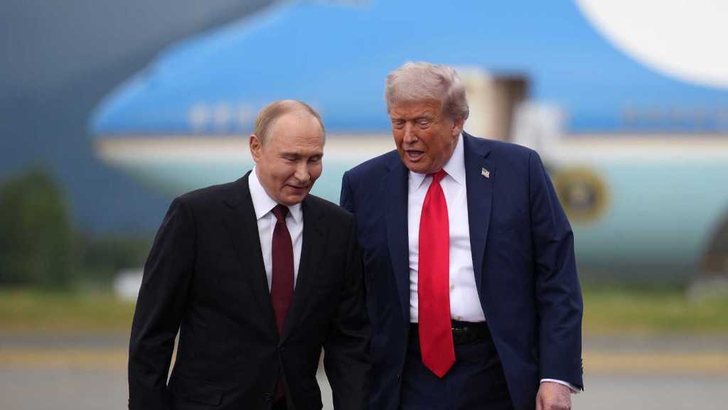
A day after the conversation with Trump, Kremlin spokesman Dmitry Peskov explained that the Russian president had presented several mediation proposals for the conflict in Iran and that these were “still on the table.” Trump himself had hinted at this at the end of the call, saying that “Putin wants to help” in reducing tensions, but adding that “his contribution would be even more useful if he ended the war in Ukraine.”
This exchange confirms the "Tsar's" attempt to present himself as a reliable and indispensable interlocutor in the Middle East, despite the fact that previously in Syria and now in Iran he has seen almost helplessly the military defeat of two of his loyal allies.
Before the call with Trump, during a meeting with the heads of Russian energy companies, Putin had recalled Russia’s warnings about the risk that any destabilizing action in the region would lead to a severe energy crisis with devastating consequences for the global economy — a scenario that has already materialized. “Within the next month, the flow of oil from the Strait of Hormuz could completely stop,” Putin had said, taking another rhetorical turn towards Europe. Just days after threatening to completely cut off gas supplies to the European market, “the Tsar” said he was ready to work with Europe again, provided that governments were ready to return to “sustainable and stable cooperation, free from political considerations.”
Putin even assured that he would continue to supply Europeans he considers reliable — namely Hungary and Slovakia. Before the invasion of Ukraine, Europe bought more than 40% of its gas from Moscow; this percentage has fallen to 13% by 2025.
It is the United States itself that is bringing Putin back into the game, with the announcement that it is considering a “broad relief of sanctions on Russian oil”, with special decisions modeled on what they have already done for India, which has been authorized to buy Russian oil for a month without being subject to tariffs. This was first confirmed by Treasury Secretary Scott Bessent, and then by Trump himself. The aim of this decision is to counter the increase in energy prices, by increasing the supply of oil and gas to cope with the narrowing of supply from Hormuz.
The American attack on Tehran and the Iranian reaction against the countries of the region, with the closure of the sea passage between the Arabian Peninsula and Iran — through which one-fifth of the world's oil and gas passes — have caused the price of a barrel of oil to exceed $100. A blessing for the Russian Ministry of Finance, which for the 2026 budget had predicted a price of $59 per barrel, counting on cuts in civilian spending and tax increases to continue financing the war in Ukraine.
Of course, this is short-term oxygen. “To have a significant impact on the Russian economy, prices would have to remain at this level for about a year,” explained Vladimir Milov, a former deputy energy minister who later fell out of favor and now lives in exile. But even for the duration of the current conflict — which Trump says is unlikely to last long — Putin intends to capitalize on this unexpected advantage. And not just economically.
Thus, the “Tsar” is proposed as an inevitable mediator and actor in the Middle East, tries to maintain ties with Tehran (he has even expressed unconditional support for the new supreme leader) and, no less importantly, takes advantage of the new income — and the general distraction — to intensify the war efforts against Kiev, where, however, things are not going as well as his propaganda claims.
It's like keeping too many balls in the air at once: an act of political and diplomatic virtuosity that is very fragile and of uncertain duration. All it would take for Trump to declare "mission accomplished," whatever the result, for Vladimir Vladimirovich's house of cards to collapse. (Corriere della Sera)