Protests, violence, curfews: From France to Albania, why Europe'...
/ 2026-10-20 23:47:20Focus


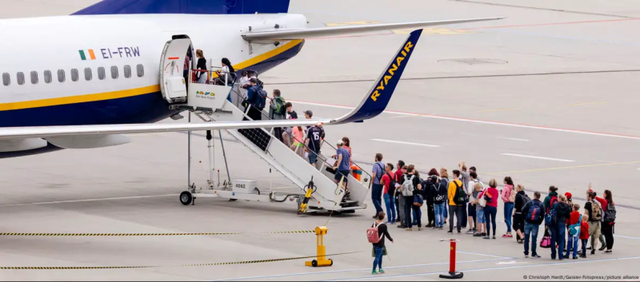
Tax increase at airports, few planes: Europe's largest low-cost airline, Ryanair, reports a drop in profit.
The largest company of low-cost flights in Europe, Ryanair this Monday announced a decrease in profit for the first six months of the year. For the whole year as a whole, Ryanair did not dare to give forecasts. However, chief financial officer Neil Sorahan said profit would likely be lower than last year, according to Reuters. The decline in Ryanair's profit is related to the reduction of ticket prices, but also to delays in the supply of Boeing aircraft due to technical problems. But Ryanair also has problems with the decisions to increase taxes at airports. Germany, which increased airport taxes this year, is now followed by Great Britain and France. Both countries will increase flight taxes.
Ryanair has strongly criticized the decisions of the British and French governments. The largest low-cost airline warned that these increases could harm tourism, inter-European links and economic growth. The news of the increase in flight taxes in the UK and France comes at the most inopportune time for Ryanair. In the UK there will be a £2 rise in flight tax for passengers on short-haul flights. Ryanair has criticized that it will burden families and make the British flight market less attractive to tourists and airlines, and the tax could negatively affect the economic growth of regional airports. Ryanair chief executive Michael O'Leary claims the tax hike is also at odds with the Labor government's growth agenda and has announced potential cuts of up to 10% to UK flight capacity by 2025.
Even in France, the government plans a 260% increase in the "solidarity tax". Ryanair reacted after this announcement, saying that this could further hinder the recovery of France's air traffic after the COVID-19 pandemic. Ryanair is asking both European governments to cancel these tax increases to support tourism, jobs and not being left behind by competition.
Where will flights be reduced in Germany?
In Germany, Ryanair reacted to the government's decision to increase airport charges and has taken several decisions by reducing the flight offer. In the coming year, Ryanair will no longer fly from Dortmund, Dresden and Leipzig and will reduce the offer at Berlin airport, BER by 20%. The offer in Hamburg will be reduced by 60%. As early as August, Ryanair threatened to cut flights to Germany if Germany did not withdraw its airport tax.
"In the winter flight schedule from October, we see a gap in German flight offers of 27 percent compared to the European average," says Alexander Klay of the Federal Association of the German Aviation Industry (BDL). "Germany has 83 percent of the flight offer compared to 2019. The rest of Europe has 110 percent"./ DW