Is this police force professional and capable of handling violen...
/ 2026-10-16 18:54:07Focus


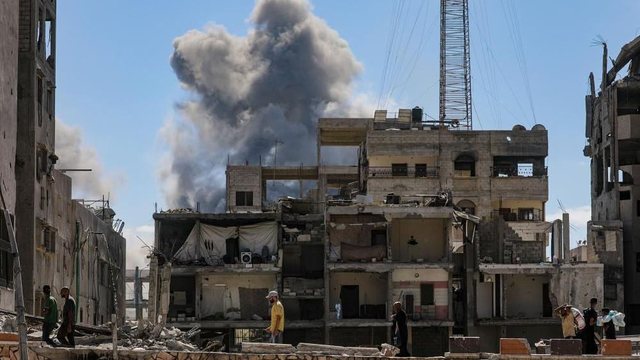
Following the presentation of the US ceasefire plan by President Donald Trump and Israeli Prime Minister Benjamin Netanyahu, the main Palestinian factions are trying to formulate a joint response.
However, this is a major challenge due to internal divisions in the two main groups: Hamas, which is directly involved in the conflict in Gaza, and Fatah, which has control in the West Bank.
Qatar's Prime Minister, Sheikh Mohammed bin Abdulrahman Al Thani, has given early indications that the US plan meets some of the key objectives of international mediators, including stopping the massacres and mass displacement of Palestinians. However, points of contention remain, particularly regarding the timing and extent of the Israeli withdrawal from Gaza, as well as the composition and nature of the future Palestinian administration.
Within Hamas, the divisions are deep. A section of this group, known as the most radical, rejects the plan, considering it an act of surrender and humiliation for the Palestinian cause. However, the majority of the leadership seems willing to accept the plan with certain conditions, to avoid blame for the continuation of the conflict, but rejecting clauses that could violate Palestinian national rights.
Through intermediaries such as Qatar, Egypt and Turkey, Hamas is demanding specific changes to the disarmament clause, distinguishing between defensive and offensive weapons, as well as guarantees for a complete and rapid Israeli withdrawal from Gaza. They also demand that the future administration be fully in the hands of the Palestinians and not under the influence of the Palestinian National Authority (PNA).
On the other hand, there are also visible tensions within Fatah. Palestinian President Mahmoud Abbas (Abu Mazen) supports the efforts of Arab mediators and the American approach, but there are critical voices within his party, such as Abbas Zaki, who describes the plan as a “surrender document” that does not reflect the real aspirations of the Palestinian people. A source from Ramallah points out that Fatah is divided between those who support the plan, including Abbas and his deputy Hussein al-Sheikh, and those who oppose it.
Meanwhile, discussions within Hamas continue intensively, and the first response to the plan is expected to come out within a few days. The head of Egypt's State Intelligence Service, Diaa Rashwan, expressed optimism that Hamas will accept the plan with some reservations, paving the way for a ceasefire.
In this complex diplomatic backdrop, Qatar has reached a special agreement with the US, where the United States guarantees the protection of Qatar in the event of attacks on its territory, considering it a threat to US national security. Qatar is a strategic US ally in the Persian Gulf, a personal friend of Trump, and the country where the main US military base in the region, al-Udeid, is located. Qatar's role as a mediator in this conflict and its security agreement with the US give it a unique position, even stronger than Israel itself, which does not have such a security agreement with the Americans.
The Israeli attack on Doha on September 9 failed to eliminate Hamas' leadership outside Gaza, and unexpectedly strengthened Qatar's position in the region and its relations with the US, creating a new dynamic that could affect the resolution of the conflict and ceasefire efforts.