


Protests highlight trauma crisis, operating rooms under reconstr...
/ 2026-10-15 18:35:16Focus


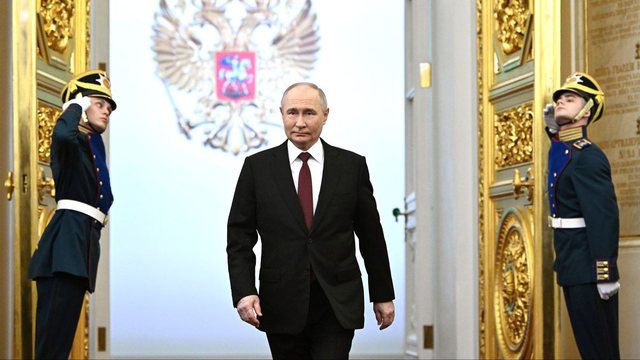
Intelligence services in several European countries have raised concerns that Russia could take more direct action against NATO countries, with a Czech intelligence chief warning that such a scenario could unfold within "months, not years."
The warnings do not mean a Russian attack on NATO is imminent. In the Baltic states, officials say they have seen no signs of an imminent attack and warn that exaggerating the threat could be exploited by Moscow to spread fear and uncertainty.
Michal Koudelka, head of the Czech Security and Information Service (BIS), said Russia could use a combination of provocations, influence operations and, in a more serious scenario, a limited incursion into NATO territory near the Russian border.
According to Koudelka, such a scenario could happen "within months, not years," although he stressed that efforts are being made to prevent it.
He described the Russian strategy as "escalate to de-escalate," arguing that Moscow aims to exert pressure on European societies in order to weaken support for Ukraine.
Baltic: "We see no signs of an imminent attack"
A more cautious stance comes from Latvia.
Normunds Mežviets, the general director of the VDD security service, said there are no indications of an imminent attack on the Baltic states, although he said there are signs that Russia is preparing for more decisive actions in Europe.
According to Mežviets, it remains unclear whether these preparations are related to concrete military plans or are part of a broader destabilizing strategy.
"It is still an open question whether they have direct and concrete plans or whether this is part of general efforts to spread fear and uncertainty," he said.
Tusk: Russia could test Article 5
The warnings come after statements by Polish Prime Minister Donald Tusk, who said intelligence assessments suggest Russia could use drones and missiles against countries supporting Ukraine, including Poland.
Tusk has warned that the incidents could be presented by Moscow as "accidents", with the aim of testing NATO unity and the alliance's readiness to implement Article 5 of the treaty.
Article 5 provides that an attack on one NATO member is considered an attack on the entire alliance and activates the obligation to assist the attacked country.
Macron: Warnings are "well documented"
French President Emmanuel Macron has called Tusk's warnings serious and based on credible intelligence assessments. France has also raised concerns about the intensification of what it describes as a Russian hybrid threat, including cyberattacks and the use of drones.
At the same time, Baltic leaders have called for caution in public communication. The Secretary General of the Estonian Foreign Ministry, Jonatan Vseviov, has warned against “panic on social media,” saying authorities will notify the public if there is concrete reason to fear an attack.
Russia denies plans to attack NATO
Moscow has repeatedly denied claims that it is planning an attack on NATO. Kremlin spokesman Dmitry Peskov has said such claims “have no connection with reality” and do not correspond to Russia’s intentions.
Meanwhile, tensions continue to rise along NATO's eastern flank. In recent days, incidents involving drones and aircraft in member countries' airspace have been reported, while European allies are stepping up their vigilance against hybrid threats, sabotage and cyberattacks.
In Europe, the current warnings bring back to mind the situation before the full-scale invasion of Ukraine in 2022, when American officials repeatedly warned of Russian preparations, while the Kremlin denied them.
However, Baltic officials distinguish between the real threat of hybrid operations and a direct military attack. According to them, Russia may seek to destabilize European countries, test NATO's response and weaken support for Ukraine, without necessarily going into open war with the alliance.


