Is this police force professional and capable of handling violen...
/ 2026-10-16 18:54:07Focus


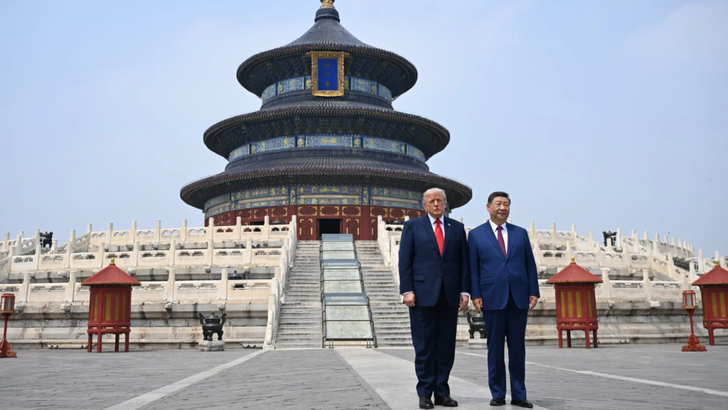
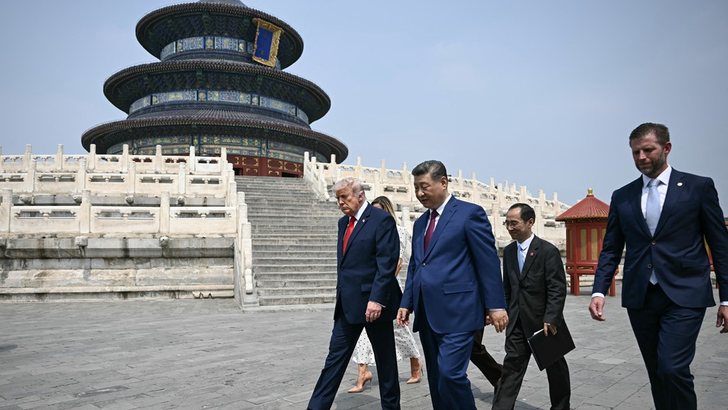
Chinese President Xi Jinping used one of his most politically charged phrases during a meeting with United States President Donald Trump in Beijing, when he declared that the world is undergoing a "once-in-a-century transformation."
According to a New York Times analysis, this was not just diplomatic rhetoric, but a way to articulate Beijing's strategic vision for changing global balances.
In Chinese diplomacy, this expression – most often phrased as “great changes unseen in a century” – is not just rhetoric.
It represents a central idea of Xi's strategic vision: the belief that the global order created after World War II and dominated by the United States is entering its final phase.
According to Chinese political scholar Rush Doshi, author of the book The Long Game: China's Grand Strategy to Displace American Order, the origin of this phrase dates back to the 19th century.
It is associated with Li Hongzhang, a general and reformer of the Qing Dynasty, who in 1872 argued for the need for China's military modernization in the face of new Western technologies.
In a memorandum from the time, he wrote of "great changes unseen in three thousand years," warning that China was in danger of falling behind foreign powers.
In the end, China failed to modernize sufficiently and experienced what is called in Chinese historiography the "century of humiliation" – a period of invasions, wars, and the influence of foreign powers.

Xi has reclaimed this concept and turned it into a kind of strategic call: a historic moment where China must exploit the technology, economy, and relative weakening of the West to reclaim a central role in the international system.
In 2023, Xi was accidentally overheard on microphones during a meeting with Russian President Vladimir Putin, saying: “Changes are happening now that we haven’t seen in 100 years – and we are leading these changes together.”
The use of the same idea in the face of Trump in Beijing is seen by analysts as a clear diplomatic message: China seeks to establish a new reality in relations with Washington – a world where the United States can no longer impose the rules of the game and where the two powers must negotiate a way of global coexistence.
In this sense, Xi's phrase was not merely philosophical. It was a political signal – and perhaps even a coded warning – about the era that China believes it has begun.