Is this police force professional and capable of handling violen...
/ 2026-10-16 18:54:07Focus


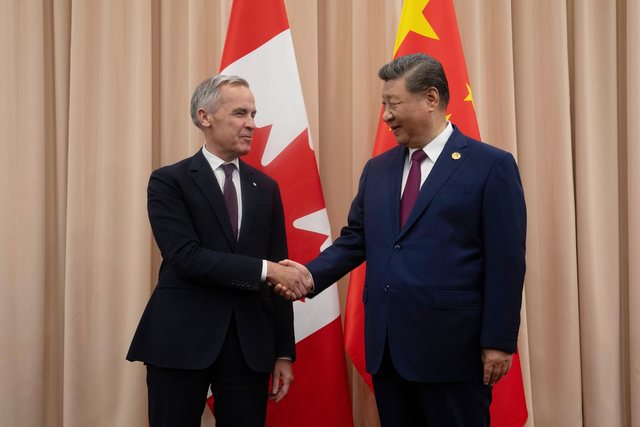
China has launched a counterattack and is projecting itself into the United States' "backyard." After the shock of the capture of Nicolás Maduro, which risks compromising many of Beijing's interests in Venezuela, Xi Jinping received Mark Carney with all due respect.
This is the first visit to China in more than eight years by a Canadian prime minister, pushed to get closer to Beijing by Donald Trump's trade and political aggressiveness.
"After Greenland, it will be Canada's turn," write Chinese media, which see Ottawa's decision to end the long years of cold as a "model" for all other Western countries "bullied" by the White House.
Not coincidentally, Xi completely avoided the troubled relations of the recent past: the arrest in Vancouver of Meng Wanzhou, the daughter of the owner of Huawei, had launched a series of reprisals from Beijing.
In 2024, Justin Trudeau had imposed very high tariffs on a wide range of Chinese products.
"Let's create a strategic partnership together," Xi told Carney, an all the more significant proposal given that it is addressed to the US's main neighbor. The Canadian prime minister responded by hoping for a "new era" in relations with Beijing, La Stampa reports.
The visit seemed to be simply to reopen dialogue, but it immediately produced concrete results. Canada will import about 50,000 Chinese electric cars, reducing the 100% tariffs imposed by Trudeau to the preferential level of 6.1%.
In return, Beijing will reduce tariffs on Canadian canola (a type of vegetable oil) to 15% and eliminate them on peas, lobsters and crabs. China will also allow visa-free entry for Canadian citizens. Not only that. A memorandum of cooperation on energy was also signed, paving the way for a significant increase in oil and gas exchanges.
For Canada, this means attracting capital and reducing its almost exclusive dependence on the American market. For China, it is also a political signal. By taking control of Venezuelan oil, of which Beijing is the main importer, Trump aimed to gain a new negotiating weapon in his clash with Xi. By bringing Canada closer, China also seems to question the effectiveness of the new Monroe Doctrine.
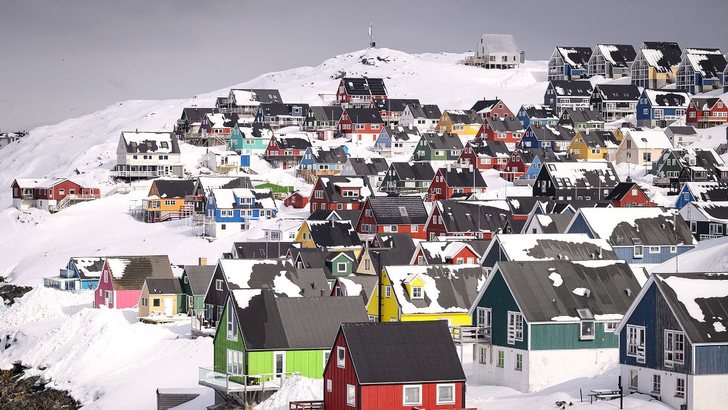
The discussion extends even further north. "The right and freedom of all countries to conduct activities in the Arctic must be fully respected," the Chinese government has been repeating for weeks in response to Trump's intentions on Greenland.
Beijing is targeting natural resources: not only gas reserves, but also rare minerals such as uranium, zinc, nickel, graphite and palladium, all useful for applications in technological development, a fundamental chapter in the clash between China and the United States.
The presence between Greenland (where it has shown interest in financing infrastructure such as ports and airports) and archipelagos such as Svalbard in Norway is consolidated. Between 2012 and 2021, China invested $89.4 billion in the Arctic region. Ambitions are strong, given that with the melting of glaciers, the development of the Polar Silk Road is among Xi's strategic objectives.