Is this police force professional and capable of handling violen...
/ 2026-10-16 18:54:07Focus


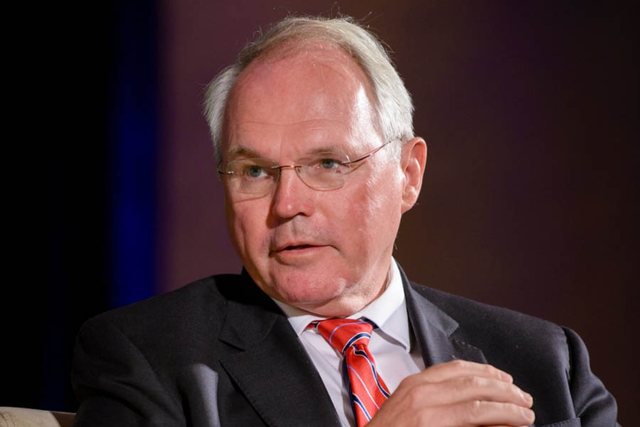
The United States Ambassador to Serbia, Christopher Hill, said the US "sees no evidence that would lead to Belgrade" when it comes to who is behind the attack on the Ibër-Lepenc water supply canal in northern Kosovo.
"We certainly don't see any evidence that would lead to Belgrade, but someone did it and a full investigation should be conducted," Hill said in an interview with Serbia's public television, RTS.
In the north of Kosovo, inhabited by a Serb majority, in Zubin Potok, an explosion occurred on November 29, damaging the Iber-Lepenc canal, which supplies water to several cities, as well as the Kosovo Energy Corporation for cooling power plants.
Hill added that it is good that the US Federal Bureau of Investigation (FBI) is supporting the investigation and that this speaks to a lack of trust and a "tendency towards mutual accusations".
Kosovo Police have announced that the attack was carried out with up to 20 kilograms of explosives.
Kosovo blamed Serbia for this attack, but official Belgrade denied this.
In the days following the attack, Kosovo authorities carried out several operations in the north, during which they confiscated weapons, ammunition and other military equipment. Of the ten people taken to the police station as suspects of involvement in the attack, two were sent to detention for a month.
For Kosovo authorities, this was the most serious attack on the country's critical infrastructure since the 1998/99 war, with damages estimated at around 400,000 euros. The attack was strongly condemned by the US and European Union countries.
No warnings of sanctions against Serbia's oil industry
The United States Ambassador to Serbia, Christopher Hill, stated that there is no warning about imposing sanctions on the Oil Industry of Serbia (NIS) due to its Russian ownership.
He told RTS that there is concern whether the NIS, in Russian hands, is in any way helping to finance the war in Ukraine and that these are legitimate issues that need to be carefully examined.
"I can tell you that, since the Russians bought NIS, there has been a great deal of concern about this, as it is the only refinery in Serbia and since it has been majority-owned by Russians, this has been a concern for many people for years. This concern has become even greater due to the fact that Russia continues to wage a barbaric war against Ukraine," Hill said.
NIS has been majority-owned by the Russian state-owned company Gazprom Neft, and its parent company, Gazprom, since 2008.
The European Union and the US have blacklisted Gazprom Neft since 2014, following Russia's annexation of the Ukrainian peninsula of Crimea.
"We will see what the outcome will be. I want to assure you that, in no way, will the final decision affect the Serbian economy," Hill added.
Serbian President Aleksandar Vučić stated on December 13 that the US plans to impose sanctions against NIS due to its Russian ownership and that the United Kingdom will join these sanctions.
A day later, Vucic said that he has not yet seen an official document on the imposition of sanctions by the US against NIS, but that there is "some kind of official confirmation" that the decision will enter into force on January 1 due to Russian ownership.
The State Department on December 16, in a response to Radio Free Europe, stated that the United States does not publish sanctions-related actions.
The response states that the US "remains committed to disrupting Russia's revenue and supply and financing networks used to support its war against Ukraine."
Belgrade, since the beginning of the Russian invasion of Ukraine, refuses to join Western sanctions against Moscow and continues to maintain ties with officials in the Kremlin.
Serbia is largely dependent on Russia in the energy sector, although it has begun diversifying its gas supply routes and sources./REL