Is this police force professional and capable of handling violen...
/ 2026-10-16 18:54:07Focus


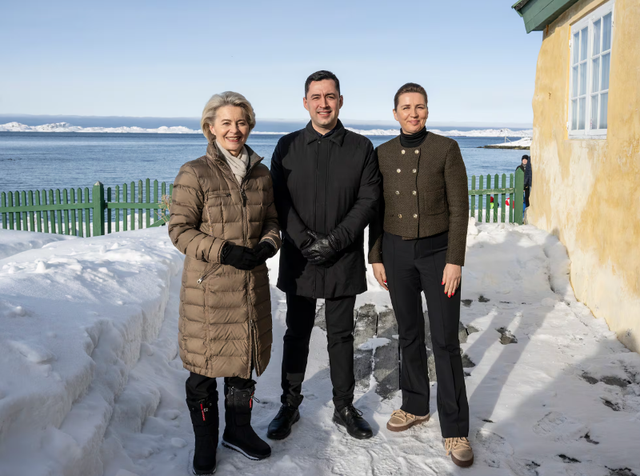
Geopolitical tensions in the Arctic are entering a new and unforeseen phase.
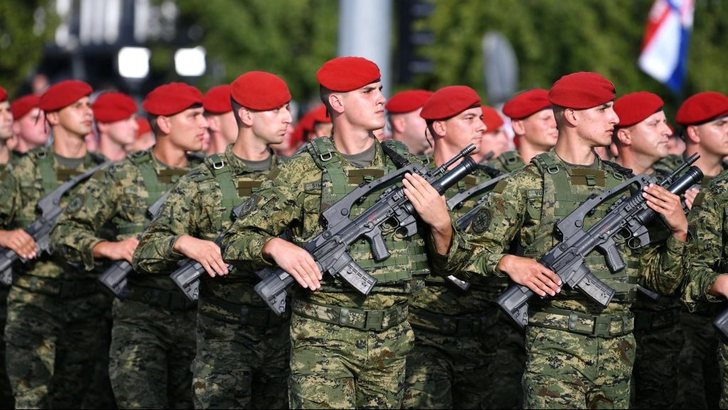
Several European countries have decided to send military troops to Greenland, in response to Denmark's request and in an increasingly tense climate with the United States.
Thus, Sweden, Norway, Germany and France have deployed military personnel to strengthen the European presence on the Arctic island, reports La Repubblica.
The Danish government has confirmed that it will increase its military presence in Greenland, including military exercises. Although Greenland enjoys extensive autonomy, it remains a territory of the Kingdom of Denmark.
Prime Minister Mette Frederiksen has emphasized that the operation is taking place within the framework of NATO, but the timing of the decision raises clear political questions.
“The aim is to train the Armed Forces for operations in the unique conditions of the Arctic and to strengthen the Alliance’s presence in the region, for the benefit of European and transatlantic security,” the Danish Ministry of Defense stated. However, almost in parallel with this announcement, other European countries have also reacted by sending troops to the area.
Swedish Prime Minister Ulf Kristersson has announced that several Swedish officers have already arrived in Greenland to join a multinational allied group, as part of preparations for the Danish exercise Operation Arctic Endurance.
Norway has provided high-ranking military personnel, while Germany has sent a reconnaissance patrol of 13 soldiers. A French contingent of the same composition is expected to join them.
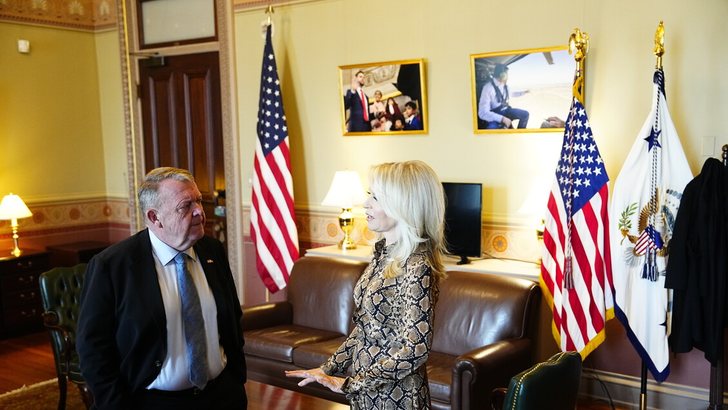
This is an unprecedented situation, especially after the inconclusive summit in Washington between representatives of the US, Denmark and Greenland. Although the number of European troops in Nuuk remains limited, the level of tension within the Western Alliance is considered the highest ever recorded.
In this context, the possibility of activating Article 42, paragraph 7 of the EU Treaty, which provides for mutual assistance in the event of armed aggression against a member state, is being openly discussed within the European Union. The key question remains: could this article be applied to a NATO ally and, theoretically, against the United States?
European Commission President Ursula von der Leyen has avoided a frontal stance, stating that such a scenario is "not currently being considered."
"Greenland belongs to its people and is part of NATO. It is important that its inhabitants know that we respect their will," she said.
The European Parliament has also come out in defense of Greenland's sovereignty, describing any attempt to undermine it as a violation of international law.
French President Emmanuel Macron has also expressed himself in the same vein, according to which violating the sovereignty of a European country and ally would have "unprecedented chain reactions". While German Vice Chancellor Lars Klingbeil has warned that "the transatlantic relationship, as we knew it, is disintegrating".