Is this police force professional and capable of handling violen...
/ 2026-10-16 18:54:07Focus


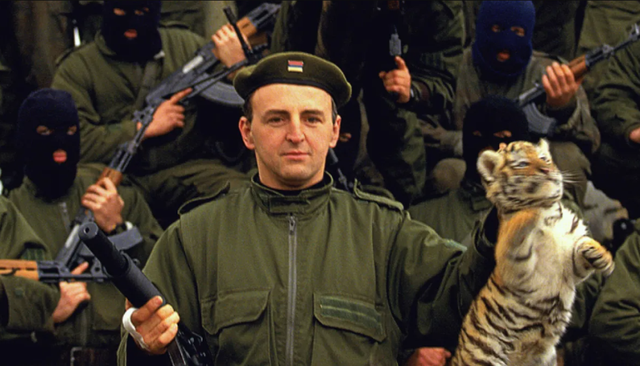
On Saturday, January 15, 2000, around noon, Željko Raznatović (known as Arkan), accompanied by two bodyguards, stepped out of the elevator and headed for the lobby of the Intercontinental in Belgrade.
A few seconds later, Dobroša Gavrić, a police officer by profession, along with Milan Đurišić and Dragan Nikolić, crossed the hotel entrance and walked quickly towards Arkan, as he was widely known throughout the world.
When they pulled out their assault weapons, the notorious Serbian paramilitary and his two bodyguards had no time to react and collapsed dead.
A pool of blood slowly formed amidst screams and screams, as a bodyguard-driver waiting outside, along with others, put Arkan into the car, but it was already too late.
The man who led the massacres in Bosnia and Kosovo, along with his "Tigers," had taken three bullets to the head and his bloody journey had ended, at a time in his life when he felt untouchable.
“I'm afraid of him”
American diplomat Richard Holbrooke, mediator in the 1995 Dayton Accords to end the war in Bosnia, had revealed that Slobodan Milosevic was afraid of him.
When the conversation turned to Zeljko Raznatovic's "achievements" during the civil war and his ambitions, Holbrooke asked the Serbian leader why he was not doing anything about Arkan and received the answer: "I'm afraid of him."
Many others feared him as well, since he was the teenage son of a Yugoslav Air Force pilot, who was largely responsible for his son's unruly character.
His father made sure not only to punish him for every mistake, but to almost beat him to death, as he recalled years later, "to say he beat me is not entirely accurate. In reality, he would grab me and throw me against walls and floors."
Perhaps this is why the words "fear" and "mercy" were not even present in the character of the man who was accused of numerous war crimes in the former Yugoslavia.
The countries targeted by "Arkan's Tigers," as his small army was called, were those with Catholic and Muslim communities, mercilessly exterminating men, women, and children.
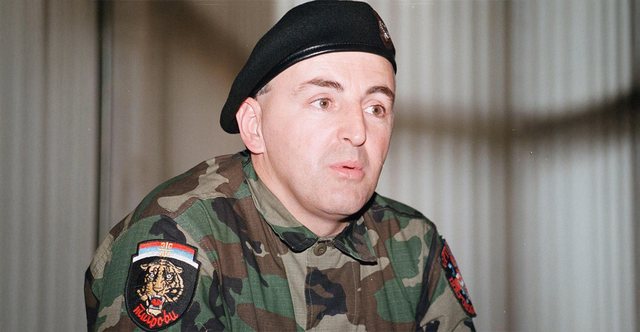
Robbery, murder and escape
Arkan's criminal activities began in his teenage years, when he began stealing wallets in Belgrade and engaging in petty theft, while a re-education center where he ended up probably made him even worse as a character. In the early 1970s he was about to leave Yugoslavia behind and go to Paris when he was arrested by French police and sent back.
It was then that he was recruited by the Yugoslav Security Service UDBA, which needed a good assassin who could track down dissidents abroad and do the right thing.
Thanks to this relationship, Arkan – the famous name came only as one of dozens of forged passports he had – this criminal received strong support.
In the following years, he would participate in robberies, thefts, murders, and human trafficking, thus achieving prominence on Interpol's list of most wanted criminals.
His activities expanded to Belgium, the Netherlands, Sweden and Germany, where he was arrested at least three times, but in a "magical" way escaped from three prisons and a hospital.
Commander-in-Chief of Terror
On March 13, 1990, the winds of civil war began to blow in Yugoslavia, a few weeks after the first free elections in Croatia.
That day, the Serbian Red Star was playing in Zagreb against the Croatian Dinamo, and Arkan, who was now also the leader of the Delijev – the ardent Red fans, led 1,500 of them to the Maksimir stadium.
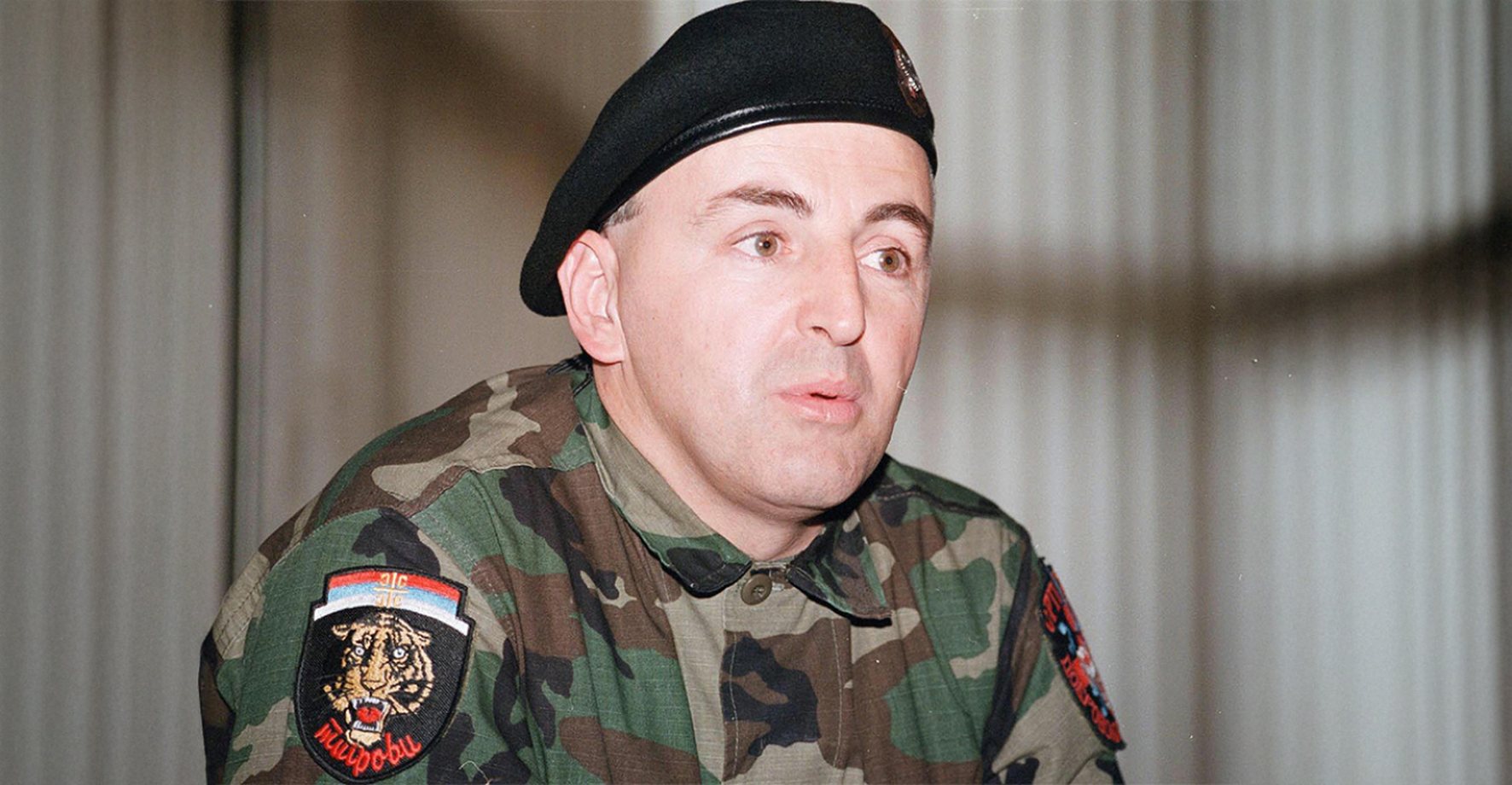
The horrific incidents that erupted between Serbs and Croats showed that the worst was yet to come, and in October of that year he created the Serbian Volunteer Guard, which would become widely known as “Arkan’s Tigers.”
“I foresaw the war after the end of that war in Zagreb,” he would say years later in an interview. “I foresaw everything and I knew that the knife of the Ustasa (a notorious paramilitary group that operated in Croatia and sought a racially “pure” country through mass murders of Serbs during World War II) would begin to massacre the women and children of Serbia.”
From 1991 to 1995, his "Tigers" with him as their leader committed atrocities against Muslims and Catholics in Bosnia, mainly, while in Serbia most treated him as a national hero, a man who had three marriages, had eight children from them and where his last wife was the country's most famous singer, Ceca.
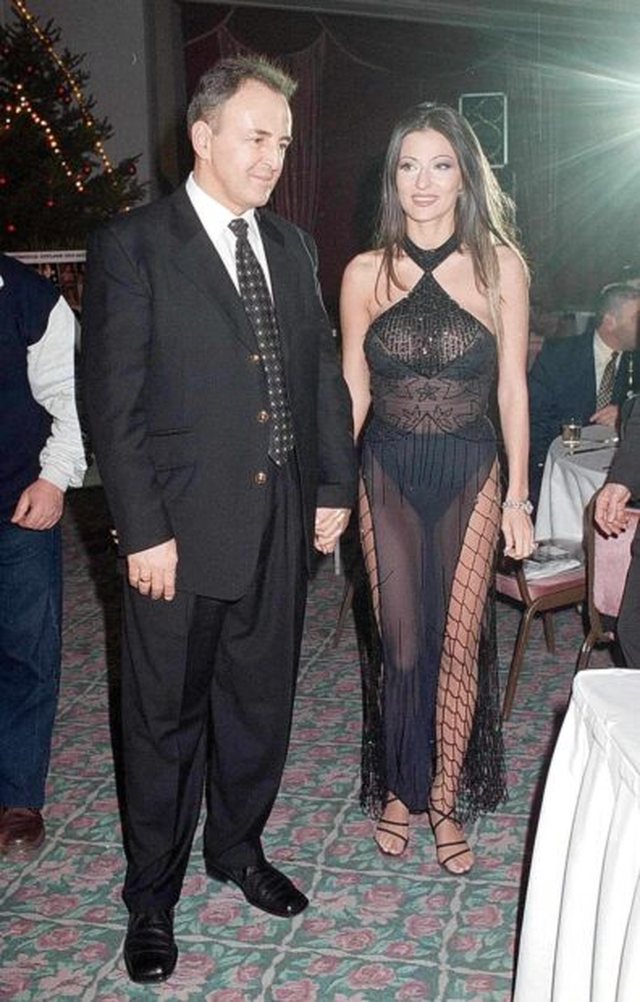
Many remember him driving a pink Cadillac to clubs, where he also became a businessman during the war and in June 1995 bought a football team, Obiliq Belgrade. In 1998, they became champions, something that seemed impossible, but according to urban legend, Razhnatovic made sure that opposing teams knew it would be good to lose when they played against his team.
A few hours after his murder, a Serbian journalist described him as the idol of every criminal in the world. An idol who left his bloody mark indelibly on Bosnian villages, in towns like Vukovar, and in mass graves where unfortunate “infidels” who fell before his bloodthirsty “Tigers” were buried.