How Belinda Balluku is fabricating the rumor about Top Channel's...
/ 2026-10-19 16:19:00Focus


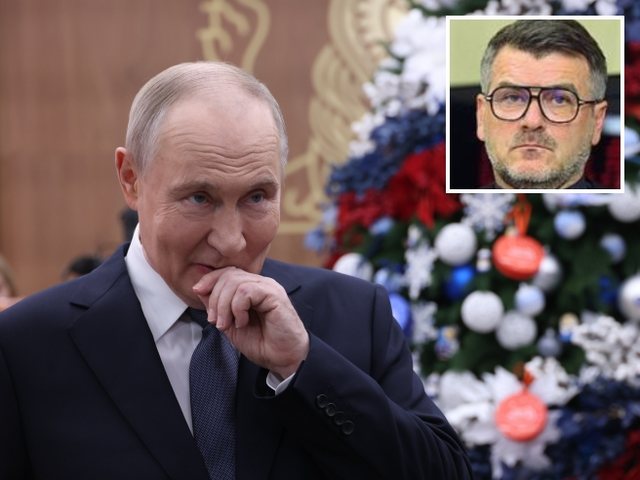
“Europe wanted to isolate us, it didn’t succeed, and now it finds that it is the only one isolated.” There is no sign of satisfaction on the face of Marat Bashirov, a political scientist with proven loyalty to Putin, who in 2014 was prime minister of the fictitious separatist Republic of Lugansk, and today runs a company that brings foreign entrepreneurs to the Kremlin, and is one of Russia’s most well-known opinion leaders.
"I'm just listing the facts," he tells Corriere della Sera. "For us it's a good moment. Putin's visit to India was different from the others, because the US was very much hoping to disentangle New Delhi from this collaboration between the tiger, the Chinese dragon and the Russian bear. From the moment we were met at the airport, it was clear that we were going to complete all those agreements that the Trump administration had tried in vain to block in recent months."
The better things go for Russia on a diplomatic level, the further away peace in Ukraine is?
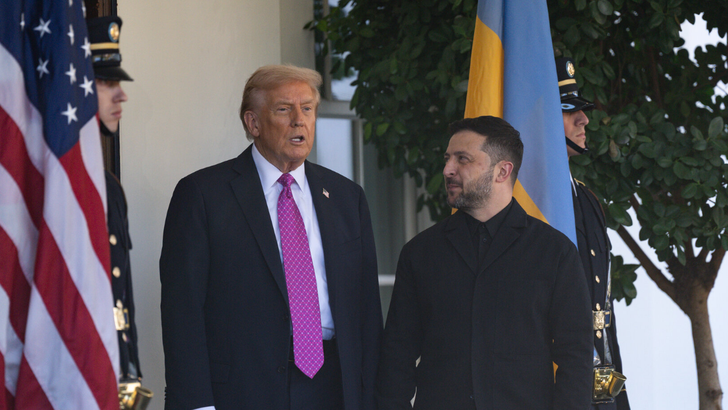
Bashirov: "In my opinion, other factors influence the achievement of a peace agreement. With Trump, the US has changed the paradigm of promoting its own interests. It has long been known that China is their main competitor in the world. This forces the White House to no longer consider us part of the so-called 'axis of evil'. As a result, the 'Ukrainian issue' is no longer important to them. And they simply want to get rid of it."
Is the new US security doctrine "a modest premise" to resolve the Ukrainian crisis, as Dmitry Peskov says?
Bashirov: “It is simply the Americans’ implementation, not of commitments, but of a global demonstration of the goals that were discussed in Anchorage. If the US intends to start strategic cooperation, it cannot present Russia as a threat. Why “modest”? It seems to me a positive signal, showing that for us the Ukrainian problem remains very important. While for the Americans, it is not. But concrete steps are needed. For example, the return of American oil and gas companies to Sakhalin, which will also take over the part currently controlled by the French company Total. In the Arctic project, I expect some steps from our government, which will lift restrictions in exchange for the easing of US sanctions. Do ut des (a Latin phrase that translates as “I give, so that you give”).”
How much could a solution to the Ukrainian crisis weigh on relations between Moscow and Washington?
Bashirov: “The Americans know that there are 25 points out of 28 in this statement of intent that Russia is ready to discuss. But the remaining three are fundamental. Regarding NATO, the Americans have publicly said that they are aware of Russia’s concerns. What is written in the new American doctrine? That if Europe is concerned about alleged Russian threats, it is Europe that should take care of its security, without drawing the US into it. In this sense, the US is fulfilling its commitments, and we are fulfilling ours.”
What concessions can Putin make on these fundamental points?
Bashirov: "On NATO, territories, the size of the Ukrainian armed forces, none. It's a rigid, official position. Everything else is shades of gray."
Is Russia's isolation over?
Bashirov: "Not from Europe. Which is actually left alone. But the rest of the world had never started, including the US. Recently, American companies have been occupying certain market sectors in Russia, and they have done so openly, while European companies were leaving."
Do you consider Europe and NATO out of the game?
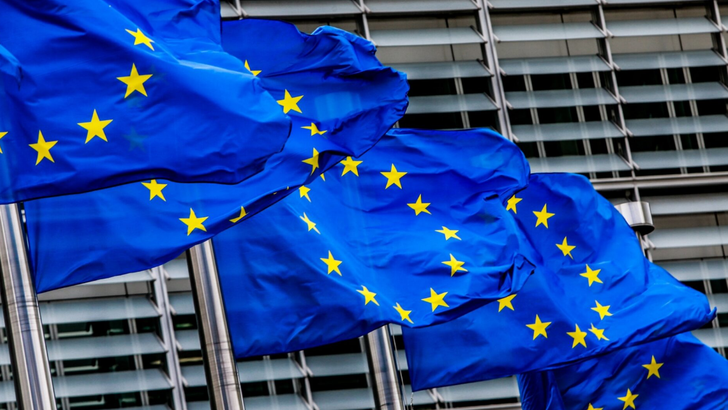
Bashirov: "Meanwhile, you are divided into at least three groups. Our friends or allies, let's say. Then there are France, Germany and the United Kingdom who are playing the war. The last group is that of the silent ones, made up of all the other countries, for which the issue of EU unity and the big problem of Euro-NATO, the no longer Atlantic Alliance, without the US, is raised. Italy oscillates between the second and third groups. When you reach an agreement, maybe you will be able to have more weight. But for now, the facts speak. You are isolated. You, not us."