"Condemned" protesters?! Who trapped Rama inside the Prime Minis...
/ 2026-10-23 16:02:00Focus


The "Toyota" case, following the seizure in Albania of money from drug trafficking in Belgium, is set to go to trial in Brussels. The Albanian part of the investigation has led to convictions for corruption, as Albania hopes to join the EU soon.
The "Toyota" case begins this Monday, before the Brussels criminal court. The case dates back to 2018, when nearly 3.5 million euros in cash were discovered in two Toyota Auris that had arrived from Belgium and were preparing to dock at the port of Durrës, Albania.
A classic money laundering dossier and yet another example of the penetration of Albanian mafias into Belgian soil. But also, yet another proof of Albania's desire for membership in the European Union, where progress has been made but is still hampered by the growth of corruption and the influence of criminal organizations, a "cancer" that spreads to all levels of society in this small Balkan state.
Money coming from drug trafficking in Belgium
Let's go back to the case. On June 13, 2018, two men set off in a truck towards Albania and arrive in Belgium three days later. On June 17, an Albanian citizen living in Belgium loads several Toyota vehicles from a garage in Leeuw-Saint-Pierre and the truck crosses Europe again, passing through Germany, Austria and Italy, where they board a ferry at the port of Bari, towards the small port of Durrës, across the Adriatic Sea.
But the Albanian secret services, which had confidential information, notified the customs. At the moment of customs clearance, the latter discovered 3,366,700 euros and 80,000 Swiss francs in cash, packed in 106 packages hidden inside the doors of two Toyota Auris. It could be money from drug trafficking in Belgium.
A lawyer and a prosecutor convicted in Albania
The Belgian case comes as the wider Albanian part of the case had a decisive episode last week. The Special Court in Albania sentenced Albanian lawyer Radovan Çela – prosecuted in the Belgian part – to four years in prison for active corruption. In the same Albanian part of the case, the former prosecutor of Vlora, Aurel Zarka, was also sentenced to four years in prison.
According to the Albanian press, it was the wiretaps of Radovan Çela's Sky ECC phone, made available to Albanian authorities by Belgium, that revealed the corruption attempt, where the lawyer had offered money to the prosecutor to lift the seizure.
One more obstacle to EU membership
These latest convictions constitute further setbacks in Albania's efforts to join the European Union (EU). These efforts date back to 2009, when the country submitted its application for membership and received candidate status in 2014.
Negotiations were officially opened in July 2022, with an end goal of 2030. In the meantime, Albanian efforts have been important, especially to restore trust in judicial authorities.
“To meet the EU requirements, Albania has undertaken very important reforms. In my opinion, the most important over the last ten years is the reform of the judicial system. It has been supported institutionally and economically by the EU and the United States, creating new institutions to guarantee the independence of the judicial system,” summarizes Roland Dodani, professor of European law at the University of Shkodra.
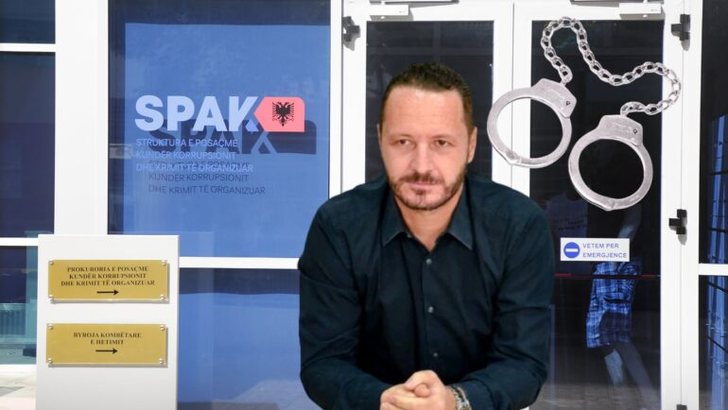
At its core is the creation of a new High Court and a prosecutor's office, SPAK (Special Structure against Corruption and Organized Crime), with significant powers. This has notably enabled the indictment, and sometimes conviction, of important political (a former president, a former prime minister) and judicial (prosecutors, police officers, etc.) figures.
More than 50% of Albanian magistrates have been dismissed
In parallel, all the wealth, connections and diplomas of the country's magistrates have been inspected by a commission called "vetting". "This process has radically changed the Albanian judicial system," comments Roland Dodani. The result, approximately 300 Albanian magistrates out of 800 inspected have, so far, been removed from the system. A real purge, painfully experienced in Albania.
“This important result has created several problems, especially due to the lack of magistrates in the courts and a significant slowdown in judicial procedures,” explains this Albanian researcher.
The process of Albania's integration into Europe is still ongoing, with the fifth accession conference taking place last week. On May 15, in X, European Commission President Ursula von der Leyen declared that "Albania's place is in the EU". Meanwhile, Albania's Prime Minister, the socialist Edi Rama, is doing everything possible to allow his country to join the Union, trying in particular to strengthen ties with the president of the Italian Council Giorgia Meloni, on immigration issues.
“Albania should complete the reforms required by the EU as soon as possible, in order to become a member state as soon as possible,” says Roland Dodani. “I am convinced that the EU should try to add new members to its European family, because this will strengthen its position and guarantee more stability in our region.”
Also, the fight against criminal organizations remains. “This is one of the issues that Albania cannot address alone and will need the support of the EU and other European member states, especially for unfair competition and the fight against organized crime, which has reached an international level and can only be addressed at an international level.” Thus, in particular, Belgian magistrates of the federal prosecution regularly travel to Tirana to strengthen ties between the justice systems of the two countries. Source: L'Echo / Vna.al