Exclusive - SPAK denied it, but Vox News learns that MP Sara Mil...
2026-11-11 11:01:00Focus


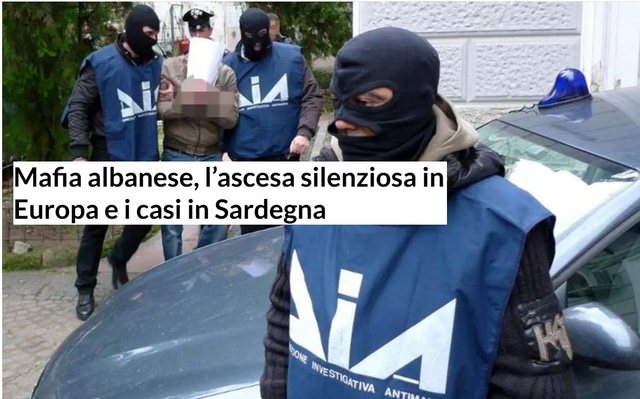
From the ruins of the communist regime to global trafficking. How Albanian organized crime was formed and why it became central to Europe.
UnioneSarda.it/ The history of Albanian organized crime begins with a power vacuum. It is the beginning of the 1990s. The communist regime of Enver Hoxha had just fallen and Albania was left without a strong economic structure, with fragile institutions and an unprepared law enforcement agency.
The turning point came in 1997. The collapse of pyramid schemes wiped out the savings of hundreds of thousands of families. Riots broke out, military arsenals were looted, and millions of weapons were lost. In the chaos, criminal groups emerged and consolidated, capable of occupying the spaces left vacant by the state.
Italy as the first destination
During the same years, thousands of Albanian citizens crossed the Adriatic. The image of the ship “Vlora” filled with migrants in the port of Bari remains a symbolic photograph of that exodus. Within these migratory flows, along with those seeking work and stability, emerging criminal networks also emerged.
Geographical proximity and short sea routes made Italy the ideal platform. Initially, crimes were widespread: theft, robbery and prostitution. But by the mid-1990s, Albanian gangs had established a strategic role in trafficking heroin along the Balkan route.
Over time, there was a qualitative leap in the direct management of shipments of marijuana cultivated in the Balkans, entry into the cocaine market, and sustainable cooperation with Italian organizations. No longer workers, but reliable partners in logistics and distribution.
Flexible structure, family ties
Unlike the historical Italian mafias, Albanian crime does not have a single, distinct structure. There is no centralized “dominance.” Instead, it is made up of family clans, bound by blood and territorial ties.
Their strength lies in their internal unity and ability to move quickly between different countries. Networks in Italy and the rest of Europe provide logistical support, contacts and cover. Each group operates relatively autonomously, but maintains links to its homeland.
Another distinguishing feature, especially in the 1990s, was direct and demonstrative violence: extortion, kidnappings, and armed clashes. Over time, however, many organizations have chosen a lower profile, focusing on profitable trafficking and money laundering.
A stable player in European drug trafficking
Today, Albanian organized crime is considered among the most dynamic in Europe. International investigations highlight its ability to control entire segments of the cannabis supply chain in the Balkans and to deal directly with cocaine suppliers in South America.
Its main characteristic is its network: agile groups, without a single brand, but with a strong communal identity. A phenomenon born of the institutional collapse of the 1990s, it has transformed, within a generation, into a silent but central player in transnational crime.
Drug trafficking and links to the Albanian underworld: Three major investigations in Sardinia
Over the past 10 years, Sardinia has consistently appeared in the files of the Cagliari District Anti-Mafia Directorate for drug trafficking with links to the Balkans. No “Albanian mafia” rooted in the island with territorial control appears, but three operations reveal a common thread: operative groups in Sardinia embedded in wider networks with Albanian criminal circles.
2016 – Operation “East Pole”
This is the first structured case. The investigation led to the arrest of 30 people, both Italian and Albanian, for conspiracy to engage in international drug trafficking. An Albanian fugitive, subject to an international arrest warrant, was also arrested. The investigations uncovered a transnational trafficking ring with an operational base on the island.
2023 – “Family and Friends”
The Italian Anti-Drugs Agency (DDA) coordinated 40 precautionary measures (22 in prison and 18 under house arrest) against an organization identified as Italo-Albanian. According to investigators, the cocaine also came from Albania, while the cannabis came from Spain. The estimated turnover was close to 15 million euros. The activity was concentrated between Cagliari, Quartu and northern Sardinia, with branches in several Italian regions.
2025 – Operation “Termine”
This is the latest and most extensive investigation: 71 precautionary measures in an investigation into international drug trafficking. Sources speak of two organizations with roots in Sardinia, linked to Albanian criminal circles active in Tuscany and Veneto. The operation also led to the seizure of over 50 kilograms of cannabis.