"Condemned" protesters?! Who trapped Rama inside the Prime Minis...
/ 2026-10-23 16:02:00Focus


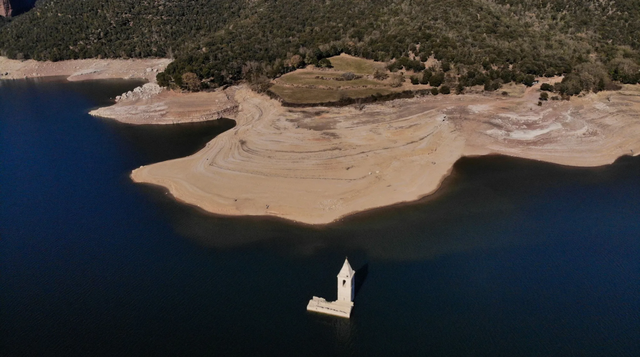
Europe's water reserves are falling sharply, according to a new analysis based on more than 20 years of satellite data. The research, carried out by scientists at University College London in collaboration with Watershed Investigations and The Guardian, shows that much of southern and central Europe, from Spain and Italy to Poland and parts of the United Kingdom, is experiencing a steady drying up of water resources.
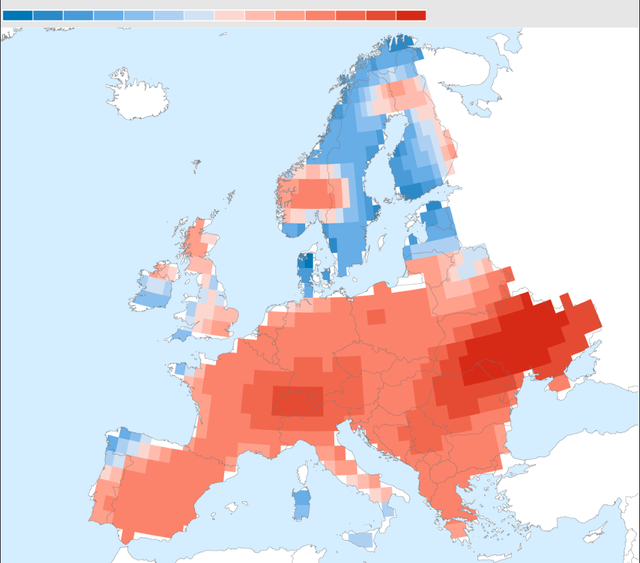
Satellites measuring changes in the Earth's gravitational field show that groundwater reserves, rivers, lakes and glaciers are shrinking significantly in these areas. Meanwhile, the north and northwest of the continent, especially Scandinavia, parts of Britain and Portugal, are becoming increasingly humid.
According to the researchers, the data clearly aligns with climate crisis models.
"We are no longer talking about limiting warming to 1.5 degrees. We are heading towards 2 degrees and we are seeing the consequences in real time," said Professor Mohammad Shamsudduha.
Groundwater reserves, considered more resilient to climate change, are also declining. In the UK, the picture is mixed. The west is getting wetter, while the east is getting drier, with periods of heavy rain followed by long droughts. In the south-east, where around 70% of drinking water comes from groundwater, this change is seen as a serious threat to public supplies.
According to data from the European Environment Agency, the total amount of water abstracted from surface and groundwater sources in the EU has declined since 2000, but groundwater use has increased by 6%, mainly for public supply and agriculture.
The European Commission says its new water resilience strategy aims to help member states adapt to pressures from climate change and the abuse of natural resources. The EU wants to increase water efficiency by at least 10% by 2030, while losses in the distribution network reach up to 57% in some countries.
Experts warn that the drying trend will have profound consequences for agriculture, food security and ecosystems, especially those that depend on groundwater. Spain, for example, is facing a drastic decline in reserves, which could directly affect the supply of fresh fruit and produce to other European countries, including Britain.
Meanwhile, many other areas of the world, from the Middle East to South America and Canada, are experiencing extreme droughts. In Iran, the capital Tehran is approaching “day zero,” when tap water could run out completely, and the government is preparing to ration supplies.
Scientists are calling for much more aggressive management of water resources, faster implementation of water-saving technologies and openness to new solutions, including massive rainwater harvesting in wet places like Britain.
"Climate change is affecting us here and now. We need to act much faster than we are currently doing," warns Shamsudduha.