"Condemned" protesters?! Who trapped Rama inside the Prime Minis...
/ 2026-10-23 16:02:00Focus


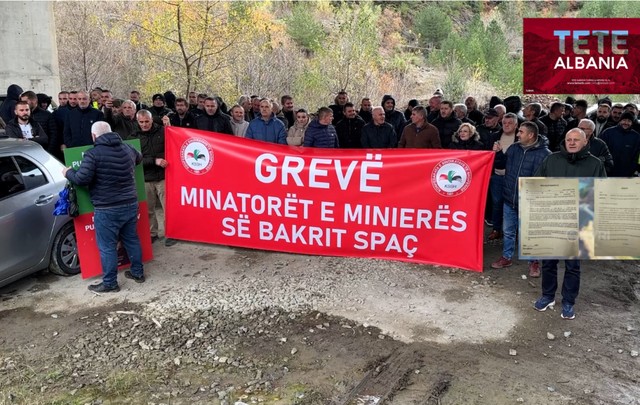
On October 8, 2025, the Spaç miners began a protest and then a strike outside the premises of the Turkish company 'Tete Albania Tunnel and Mining', to demand their denied rights, which included a collective agreement and a salary increase. Meanwhile, in August they had joined the Confederation of Albanian Trade Unionists, thus forming the Miners' Union.
However, the Turkish company not only does not recognize the union that was created, but also does not accept the miners' demands. Representatives from the Ministry of Economy and the Labor Inspectorate have also been involved in this process as mediators, but so far no solution has been found.
On November 7, the 'Piranhas' were at the Spaç mine where they requested a meeting with company representatives regarding the problems created, but it was not possible.
The 'Piranhas' also requested a meeting with Turkish representatives at the company's headquarters, but again it was not possible. So the filming group traveled to Spaç again. The miners continue the strike, in really low temperatures, waiting for the company and the Albanian state to extend a hand of dialogue.
'No structure has come here,' says Albert Bushpreni, former shift manager for the underground section.
'What do we expect from the Turkish company, at a time when we have no representation from the state?', says Lekë Gjergji, a firefighter.
'We have been on strike for 46 days and we have not spoken to any company representative since we came here on the 8th,' adds Kastriot Prenga, a fadromist by profession.
He says that out of 60 strikers, about 55 remain today, as the rest have left and resumed work due to economic impossibility. However, the documents they have signed are completely contrary to the Labor Code, and outside any moral norms of a professional employee.
It is about two sheets, written in the first person, but compiled by the lawyers of the firm 'Tete Albania'.
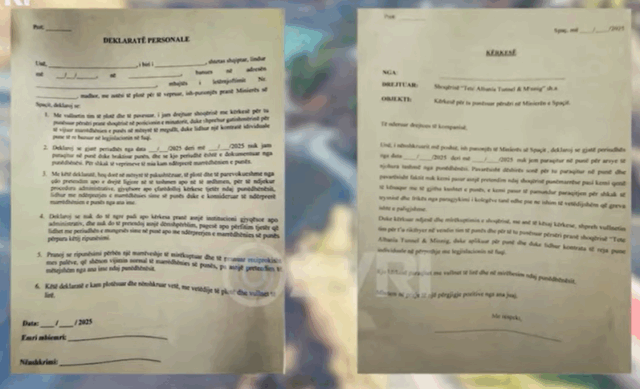
One is a request, by which, if they sign it, the returning employees are forced to admit that they did not show up for work because of the strike, and that they themselves wanted to show up because they are very satisfied with the working conditions there, but found it impossible due to pressure and prejudice from other colleagues.
They themselves must admit that the strike was illegal. As for the legality of the strike, we have made it clear with documents. Regarding the pressure, if the miners felt that way, they would still continue the protest against their will. Meanwhile, the miners themselves speak about the good working conditions within the 'Tete Albania' company and the appreciation that the latter gives them.
'The director comes, for 2 months now, he doesn't stop for 5 minutes with the worker. He says that we are his slaves. They don't treat us well. That Turkish worker is treated 3 times as much as the Albanian worker. We are in the same place, the same job, he gets a lot of bonuses. There are many differences with the Turk,' says Tonin Përkeqi, a surveyor by profession.
They say that the differences between their salaries and those of Turkish employees for the same job positions are very large.
'An Albanian firefighter, for 26 days of work, earns 1,670,000, while a Turkish firefighter earns 3,150,000, so he earns twice as much,' declares firefighter Lekë Gjergji.
'A Turkish fadromist gets 3,750,000, while I get about 1.2 million lekë,' adds fadromist Gjovalin Nikolli.
Miners state that even in cases of accidents at work, they have not found support from the company.
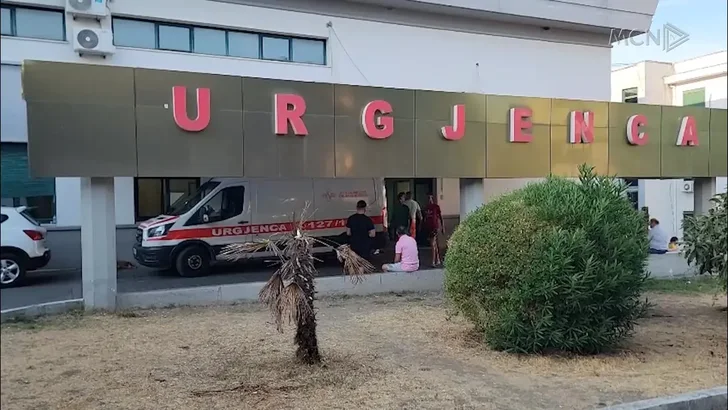
'I had an accident in a mine 4 months ago. The Rrëshen hospital couldn't take me and they sent me to Tirana. Even the company doctor left me there and left. After a while, I became interested in the reports, I went to the insurance company, I asked for my name and they said it wasn't listed. Why wasn't it listed? They told me 'It wasn't registered as an accident at work'. I called the company and they said 'We'll discuss this gradually, but don't talk about it','' declares Gjon Simoni.
In addition to what the firm calls a request, it has also drafted another document, a 'Personal Declaration', through which it forces the miners to sign a new employment contract and by putting their black signature on the white sheet, they must accept that they unconditionally waive, in the present and in the future, to follow administrative or legal procedures related to the termination of work by the company.
But it doesn't end there, because the company has also thought about the strike days. After signing this document, with point 4, the employee is obliged to accept that he will not file any lawsuit and will not claim any compensation related to his absence from work before this re-employment.
'We have to start from scratch. We have to collect a letter from the Prosecutor's Office, a letter from the Hospital, everything, we have to start from scratch. You have to go to security, they take you for a test. Having the contract, they say 'No, this is the first time I leave'. How do I sign that letter?', says Erjon Tusha, a fadromist by profession.
The miners expressed their willingness to continue the strike until their demands are met, while 'Piranjat' again requested a meeting with company representatives, but they were denied on the pretext that the translators were not in the office and that the administrator of Turkish origin cannot communicate in English. /Piranjat