How Belinda Balluku is fabricating the rumor about Top Channel's...
/ 2026-10-19 16:19:00Focus


The government is set to amend the law on the electricity sector, proposing a new set of rules that significantly strengthen the way unpaid bills and consumer liabilities are handled.
The draft law submitted for public consultation, consulted by skyweb.al, provides that end customers are obliged to pay energy bills according to the supply contract.
In case of non-payment, the supplier has the right to take a series of measures to collect the obligation, starting from official notification, disconnection of electricity and up to compulsory execution procedures through enforcement.
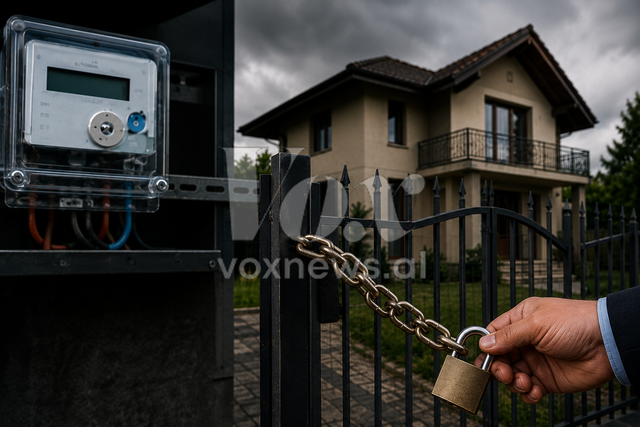
The strongest innovation is related to the possibility of placing a mortgage lien on real estate that is supplied with electricity.
According to the draft law, this measure can be applied in cases where the unpaid obligation exceeds 1.5 million lek and belongs to non-family clients, mainly businesses.
Placing a mortgage lien means that the property is legally linked to the debt and cannot be freely used without the obligation being repaid.
In practice, this turns the energy bill from a simple payment obligation into an obligation that directly affects the property.
In parallel, the draft law maintains the treatment of the energy bill as an executive title, which gives the supplier the opportunity to pursue enforcement procedures without the need for lengthy court proceedings.
Although the term "sequestration" is not directly used in the text, the combination of mortgage lien with enforcement procedures creates the legal basis for further stages, if the debt is not repaid, to reach the execution of the property according to civil legislation.
The draft law aims to strengthen payment discipline in the energy sector and reduce bad debts, at a time when consumers' rights to transparency in billing and access to price information are also increasing.
Overall, the changes indicate a tougher approach to non-payment of energy, directly linking the bill to the consumer's assets for the first time, at least for the business category. /skyweb