Protests, violence, curfews: From France to Albania, why Europe'...
/ 2026-10-20 23:47:20Focus


The ISP believes that officials under official investigation or under security measures, regardless of their leadership level in the executive or other branches of government, should resign.
This is the standard applied by the European Parliament and the European Union (e.g., Qatargate 2022), where officials were suspended from office and parliamentary political groups suspended or expelled them from their ranks.
The same standard should also be applied by countries aiming for EU membership, such as Albania.
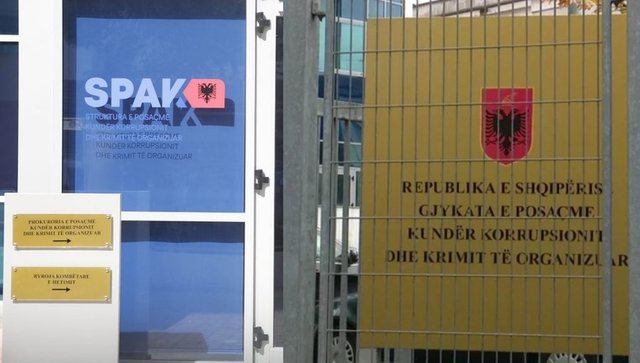
Recent cases, when SPAK has addressed official accusations against several senior officials, are being ignored, sending a negative message towards standards of accountability, ethics, integrity, democracy and the rule of law.
On the other hand, ISP also supports the ethical standards of the PES/EPP, according to which convicted officials cannot hold leadership positions and parties cannot be advocacy institutions supporting accusations against officials.
This is not yet happening in Albania. The decline in public trust in parties to historically negative records is also a consequence of this attitude.
Our political parties, especially those that are part of political groups in the EP/EU, must reform their regulatory acts and provide positive models of activity, integrity and representation.
Statement regarding impeached officials and the need to uphold integrity standards:
Law 138/2015 promotes Albania's vital need for clean elected/appointed officials, as an essential condition for guaranteeing public trust in the functioning of elected state bodies, independent institutions and those established by law, public administration, and in particular for protecting and guaranteeing the democratic functioning of the Assembly and the executive branch. In its function, political parties and institutions have drafted and adopted Codes of Ethics, as well as promoted initiatives for decriminalization and against cases of corruption/abuse of power.
After 10 years, the ISP finds that the country is at a critical stage, where key institutions, including the Parliament, the Government, Municipalities and political parties, in contrast to their ethical declarations and integrity standards, are delaying, avoiding or refusing to remove from leadership positions individuals convicted, under official charges or involved in acts prohibited by the Codes of Ethics.
ISP believes that officials under official investigation or under security measures, regardless of their level of leadership in the executive or other branches of government, should resign. This is the standard applied by the European Parliament and the European Union (e.g., Qatargate 2022), where officials were suspended from their positions and parliamentary political groups suspended or expelled them from their ranks. The same standard should also be applied by countries aiming for EU membership, such as Albania. Recent cases, when SPAK has addressed official accusations against several senior officials, are being ignored, sending a negative message towards standards of accountability, ethics, integrity, democracy and the rule of law.
On the other hand, ISP also supports the ethical standards of the PES/EPP, according to which convicted officials cannot hold leadership positions and parties cannot be advocacy institutions supporting accusations against officials. In Albania, this is not yet happening. The decline in public trust in parties to historically negative records is also a consequence of this stance. Our political parties, especially those that are part of political groups in political groups in the EP/EU, must reform their regulatory acts and provide positive models of activity, integrity and representation.
The Institute of Political Studies (ISP) is engaged in monitoring the standards of integrity, decriminalization and functionality of political parties and elected/appointed officials, and in the coming weeks will address concrete recommendations for reforming the legislation on political parties.