How Belinda Balluku is fabricating the rumor about Top Channel's...
/ 2026-10-19 16:19:00Focus


With 37 mandates in the battleground, a relatively younger population than the rest of the country, and an economy not entirely dependent on party power, Tirana is the region from which at least five or six small parties hope to win mandates, making this region the decisive battleground for the future majority and the place from which a new chapter in Albania's history could begin to be written on May 11.
Several times over the past three decades, Albania's political history has been written in Tirana, the country's largest city, the epicenter of the nation's youth. In 1991, the decision of residents of a neighborhood in Tirana to vote out the last communist leader, Ramiz Alia, in a majority battle against a little-known candidate from the newly formed opposition, played a decisive role in the death sentence of a regime that, in those elections, managed to win over 75 percent of the vote again.
Tirana also played a decisive role in the change of power in 2005, in favor of the DP, and in 2013, in favor of the SP. In 2005, most of the majority contests in the Tirana region as well as in the city of Tirana itself were won by the opposition despite facing ministers and directors with deep pockets. While in 2013, the decision of the citizens of Tirana to give the left-wing coalition 56% of the votes and 19 mandates was the key factor in the new majority.
History could be rewritten again on Sunday, when the citizens of Tirana are expected to vote, no longer between the two alternatives, the PD and the PS and their offshoots in the form of electoral machines such as the PSD, LSI, PDIU and PR, but also for several new and not so new parties, which look to the relative freedom of the citizens of Tirana in hopes of winning key mandates, which could pave the way for the collapse of the PD-PS duopoly in Albanian politics and start a new chapter.
The 2009 elections were split 47 to 46% for the governing Democratic Party, amid allegations of electoral corruption. At the time, Tirana had 32 mandates, of which 16 were divided between the DP, 15 between the SP and 1 between the LSI.
In the 2013 elections, the mandates were divided 19 to 13 for the left, but the SP won only 16 mandates, only one more than in 2009, while three mandates were won by the SMI.
In the 2017 elections, Tirana residents massively abandoned the Democratic Party, which, then as now, was largely unreformed, giving it only 11 mandates out of 34. It was the abandonment of the opposition by its own supporters that propelled the Socialists to 18 mandates, securing the key mandates for the first single majority a party has had since 2001.
In 2021, Tirana residents turned out to vote in large numbers, marking the highest turnout in the country. The Socialists nevertheless managed to retain their 18 mandates, mandates won also with the help of Ornaldo Rakipi, while their unannounced ally, Tom Doshi's Social Democratic party, won a surprise mandate, practically without campaigning.
The general perception is that traditional Socialist Party voters vote for it no matter what, while a number of Albanians who dislike the SP, although they tend to vote against it, must have very strong reasons to go to the polls. The opposition also has its supporters who vote no matter what, but they seem to be not so many. For example, in 2009, when the Socialists effectively ran without reform and without a governing program, they received 163 thousand votes, compared to 162 thousand for the DP. But in 2017, the DP fell to 128 thousand votes. And in 2021, when a number of citizens seem to have turned a blind eye and voted against Rama more than for the opposition, the DP increased to 182 thousand votes, not enough to defeat the Socialists.
The 2021 elections likely marked a multi-year peak in real turnout. In Albania, a large portion of voters are in emigration and during past elections they did not have the physical opportunity to vote. Consequently, estimating the real turnout of the resident population is an exercise with many unknowns. But if we look at the population present in Albania in 2023, counted by the Census, as well as the number of votes cast in the 2023 local government elections and the 2021 Assembly of Albania elections, we can roughly estimate the real turnout.
Census respondents counted 2.4 million residents, of whom 458,000 were children under the age of eighteen. The number of voters in the April 2023 local government elections, held just a few months before the Census, was approximately 1.4 million. This suggests that the actual national turnout was 72%.
On the other hand, in the 2021 elections, the number of votes cast was 1.66 million, which suggests that, relative to the population present, turnout must have been around 85%.
In short, there is still a significant number of voters in Albania who are waiting for a political offer to encourage them to go out and vote.
In the Tirana District, 485 thousand votes were cast in the past elections, while the number of votes will likely increase further in these elections, as 52 thousand citizens have requested to vote from abroad for this district.
Based on these figures, i.e. the fluctuation of the Democratic Party's votes during the last two elections when the SP was in government as well as the "white" votes cast, the assumption is that a gray electorate of at least 70 thousand people exists in Tirana, enough to produce five or more mandates. The gray electorate is assumed to have increased in recent years in the face of the consumption of the government and the main opposition by corruption scandals.
The largest majority in Albania consists, under the current proportional voting system in the districts, of three or four deputies above the 70 quota. The two major parties are currently competing in conditions of extreme exhaustion from countless corruption scandals, facing themselves more than each other. And, if 10 or 20 percent of these voters choose to vote differently, neither party will be able to create a single majority, regardless of how the results turn out in the other districts. The small parties, Nisma Shqipëria Bëhet, Mundësia and Lëvizja Bashkë have already declared their intention, not to form a governing coalition with any of the two major parties and to send the country to early elections, where citizens will have the opportunity to vote again, and perhaps vote more for new parties, which opens the prospect of a radical political change, the end of the SP-PD duopoly and the creation of a more diverse political landscape, one in which Albanians will no longer need to vote, as they have done over the last three decades, to overthrow a corrupt government to replace it with another, in the hope that this other one will be less corrupt.
The May 11 elections may also, starting from the Tirana Region, allow the politics of clientelism, which has been fossilized over the last two decades, with jobs in public administration used for electoral bribery or voter blackmail, to begin to break down, as well as politics controlled by mayors, with appointed and not elected MPs.
Much will depend on Sunday's elections. If the smaller parties fail to break through, the two big ones may, over the next four years, agree on some other change to the electoral system to make it even more difficult for smaller parties or new political forces to compete.
Demographic and social profile
The Tirana region extends from the coast of Kavaja and Rrogozhina in the west to the Gropa Mountain and the Biza Intermountain Basin in the west. Most of the country's economy and industry are located here, from tourist services on the Kavaja coast, where some of the country's largest hotels are located, to trade and services, public and private education, and construction. The Kavaja Plain and the fields on the right side of the lower Shkumbini Valley constitute the region's main agricultural resources.
About 759 thousand people, approximately 31% of the country's total population, reside in Tirana County. The county's population has decreased by 3% over the period 2011-2023 after having increased by 31% over the period 2001-2011.
The population of the city of Tirana, which includes the historic city without the suburbs developed in recent decades, was 389 thousand people in 2023, a 7% decrease compared to 2011. The main suburbs, such as the one included in the territory of the former Kashar municipality, have experienced significant growth. The administrative unit of Kashar currently has 89 thousand inhabitants, a 106% increase compared to 2011. The administrative unit of Farkë has 36 thousand inhabitants, a 60% increase, while the administrative unit of Dajt has 35 thousand inhabitants, a 74% increase. In contrast, the rural areas of the region as well as the municipalities of Kamëz, Kavajë and Vorë have experienced significant growth. The city of Kavajë, once an important industrial center, currently has only 15 thousand inhabitants, a 21% decrease compared to 2011. In short, in this city, one in every five inhabitants has left. The municipality of Kamëz has also suffered a population decline.
Candidates
Twelve candidates are running for each of the 11 parties on closed lists and another 37 on open lists. The race for a seat in the next parliament is particularly fierce for the main parties, which claim to get more seats from the closed lists.
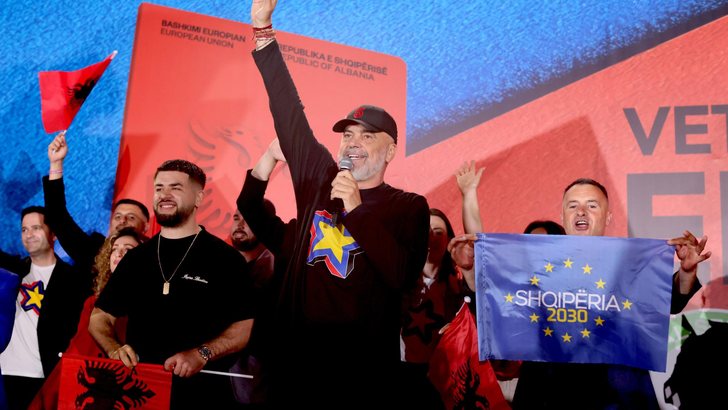
Socialist leader Edi Rama has divided the ministers and senior deputies of the Socialist Party into favored and unfavored, placing four ministers, Ogerta Manastirliu, Albana Koçiu, Igli Hasani and Delina Ibrahimaj on the predetermined list, which also includes the current Speaker of Parliament Elisa Spiropali and former Speaker of Parliament Lindita Nikolla, Taulant Balla, former Minister of Interior, Adea Pirdeni, Minister without Portfolio, as well as Ilva Gjuzi, Deputy Minister of Tourism, Erion Malaj and Iris Luarasi.
Disa nga politikanët më të vjetër të PS-së duhet të luftojnë nga pozicioni i listës së hapur, një garë që njëri prej tyre, ish-zv/kryeministri Erion Braçe, e përshkroi si “të pabarabartë”. Ministrat Blendi Gonxhe e Anila Denaj konkurrojnë praktikisht me Braçen, por edhe me ish-ministrin Fatmir Xhafaj, i cili arriti të thyejë herësin në zgjedhjet e vitit 2021. Ish-ministrja e jashtme Olta Xhaçka, ish-kryeministri Pandeli Majko apo ish-ministrja Mimi Kodheli, do të kenë një sfidë jo të lehtë përballë një numri drejtorësh të Bashkisë Tiranë, si dhe deputetëve aktualë, Klotilda Bushka, Plarent Ndreca, i cili është në proces gjykimi nën akuzën e shkeljes së barazisë në tenderë, Blerina Gjylameti, Toni Gogu dhe Ermonela Felaj. Ornaldo Rakipi, deputeti që theu herësin katër vjet më parë kur ishte në moshën 25 vjeç dhe që, është i biri i politikanit të sanksionuar Aqif Rakipi, konkurron gjithashtu në listën e hapur. Xhemal Qefalia, deputet që nga viti 2017 lufton krahas drejtorëve të bashkisë, Silda Çepe, Julinda Dhame, Andi Seferi, Florian Pullazi, Ylli Shehu, garojnë gjithashtu krahas Antonela Dedej, nënkryetare e Bashkisë Rrogozhinë.
Kryetari i opozitës Sali Berisha udhëheq listën e mbyllur të partisë së tij ku gjenden edhe politikanët Jozefina Topalli, e rikthyer pas mosmarrëveshjeve të vitit 2013, si dhe politikanët që i qëndruan besnik Berishës pas shpalljes nën sanksione në vitin 2021, Flamur Noka, Edi Paloka e Klevis Balliu. Belind Këlliçi, i cili humbi në zgjedhjet për kryetar bashkie në Tiranë më 2023, por denoncimi i të cilit në SPAK dërgoi pas hekurave një numër drejtorësh që përbënin edhe strukturën kyçe të makinerisë socialiste të votave në Tiranë e ka gjithashtu vendin mëse të sigurt, krahas Tedi Blushit e Erisa Xhixhos nga Partia e Lirisë, Fatmir Mediu, kryetari i Partisë Republikane apo Mesila Doda nga PDIU. Lista e mbyllur mbyllet me Besart Xhaferin në vend të 12. Demokratët kanë rënë në 11 mandate në Tiranë vetëm në vitin 2017, kur Tirana kishte 34 deputetë, gjë që sugjeron se ndoshta e gjithë lista e mbyllur do të zgjidhet, ndërsa gara pritet të jetë e ashpër në listat e hapura. Vetë kryetari i Partisë së Lirisë, Ilir Meta, shpreson për një mandat pasi ka garuar nga qelia e paraburgimit si person i hetuar për veprën penale të korrupsionit. Në kushte gjithashtu të vështira garon edhe kreu i Partisë Drejtësi, Integrim dhe Unitet, Shpëtim Idrizi, i cili më parë ka qenë drejtor dhe deputet socialist. Mjeku Ilir Alimehmeti si dhe deputetja aktuale Jorida Tabaku janë mes politikanëve që fillimisht duhet të mbledhin shumë vota për kandidatët e listave të mbyllura para se të shpresojnë se partia e tyre do të marrë mjaftueshëm mandate sa për t’u marrë në llogari dhe ata. Asllan Dogjani, deputeti dikur i PS që tashmë ka kaluar prej kohësh me Berishën garon në listat e hapura me deputeten Mimoza Hajdarmataj, apo Lorenca Hoxhën, një sipërmarrëse.
Also in the race are Salvador Kaçaj, former mayor of Shëngjin, Edith Harxhi, former deputy minister, and Arjan Hoxha, the losing candidate for mayor of Kamëz in the 2023 elections.
The Together Movement is competing with Redi Muçi, a lecturer at the Polytechnic University, Arlind Qori, a lecturer at the University of Tirana and also the party's chairman, Bora Mema, from civil society, and Jani Marka, a lecturer at the Faculty of Natural Sciences. Activist Albina Ruko, who declares her job as a waitress, is competing further down the list alongside Qani Shino, 73, a former miner from Valias, currently a construction materials trader. Jonida Sela, an Albanologist and art teacher, is competing in seventh place while Fatmir Gashi, a pensioner, also a former miner, is competing in eighth place. Next are Demjan Mrishaj, an activist and social worker at Don Bosko, and Alfred Bushi, a translator. Ana Fociro, a professor at the Polytechnic University of Tirana, and Boris Belortaja, an expert in the field of justice with experience in civil society, close the closed list of this party.
The Mundësia Party has in first place in Tirana its chairman Agron Shehaj, in second place its vice chairman Erald Kapri, who has worked as a journalist and researcher, and in third place Barbara Doda, a business administrator.
Tom Doshi's Social Democratic Party, which won a surprise mandate in Tirana in 2021, is competing in the first place with Albana Pëllumbi, a director at Profarma, the pharmaceutical company owned by Mayor Doshi. The following list is also filled with many employees of various levels of Profarma.
Several parties, such as the Euro-Atlantic Coalition, the Albania Is Becoming Initiative, or Right for Development, have stated that their closed lists have been filled with volunteers who have resigned or are expected to resign in order to allow for a level playing field among the candidates on the open lists. Right for Development is a coalition founded by career politician Dashamir Shehi and former democrat Enkelejd Alibej. Former prefect of Kukes Ibsen Elezi is also running on the party's open lists.
Adriatik Lapaj, the chairman of the Albania Becomes party, is running on the open lists of the Nisma Albania Becomes coalition, alongside the chairman of the Nisma Thurje party, Endri Shabani. Panajot Soko, an economic commentator and activist, is also running alongside journalists Ferdinand Dervishi and Edona Haklaj.
Running for the Euro-Atlantic Coalition on an open list are former Democratic Party leader Lulzim Basha, psychologist Neli Demi, former police director Shemsi Premçi, entrepreneur Hysen Xhura, writer Rudi Erebara, historian Nevila Noka, and pedagogue Taulanda Jupi.
Kreshnik Osmani leads the list of the Homeland Movement Party, Elena Kocaqi leads the Albanian National Alliance, while Edmond Stojku leads the New Democracy Alliance party./ BIRN