"Condemned" protesters?! Who trapped Rama inside the Prime Minis...
/ 2026-10-23 16:02:00Focus


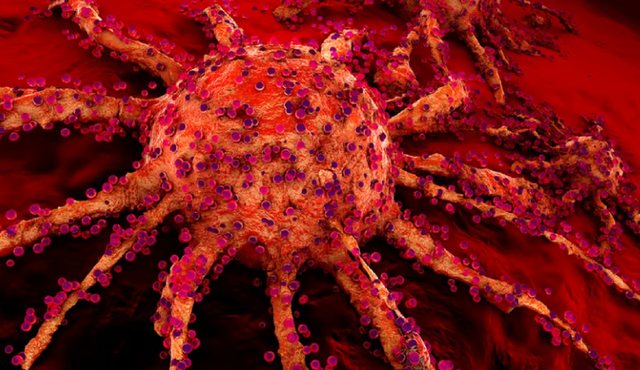
A new study has found that antioxidants such as vitamins C and E activate a mechanism that stimulates the growth of new blood vessels in cancer tumors, helping them to grow and spread.
The researchers say their findings highlight the potential danger of taking antioxidant supplements when they are not needed.
To grow and metastasize, cancer tumors need a constant supply of oxygen- and nutrient-rich blood. And this requires the formation of new blood vessels from existing ones, a process called angiogenesis.
When tissues are starved of oxygen (hypoxia), cancer cells in the affected area send chemical signals to recruit the endothelial cells that line blood vessels to form new vessels. A new study by researchers at Sweden's Karolinska Institute has examined the mechanisms of angiogenesis and found that antioxidants play an unexpected role in the growth and spread of tumors.
"We have discovered that antioxidants activate a mechanism that causes cancer tumors to form new blood vessels, which is surprising as antioxidants were previously thought to have a protective effect," said Martin Bergö, corresponding author of the study.
"New blood vessels feed tumors and can help them grow and spread."
Normally, antioxidants scavenge free oxygen radicals from body cells and prevent or reduce damage caused by oxidative stress. Oxidative stress is known to damage DNA and regulate the progression of various cancers, including those of the breast, lung, liver, colon, prostate, ovary and brain.
"There's no need to fear antioxidants in normal food, but most people don't need extra amounts of them," Bergö said. "In fact, it may be harmful to cancer patients and people at a high risk of cancer."
Researchers had previously shown that antioxidants such as vitamins C and E accelerated the growth and spread of lung cancer by stabilizing a protein called BACH1. The protein is activated when levels of free oxygen radicals in the body drop, which can happen when additional antioxidants are introduced into the diet, or when spontaneous mutations occur in tumors, activating antioxidant production.
In the current study, the researchers conducted most of their work on lung cancer using lung cancer organoids cultured from patients, but also did studies on mice and human breast and kidney tumor samples. They found that tumors in which BACH1 was activated, either by ingesting antioxidants or by overexpressing the BACH1 gene, produced more new blood vessels and were highly sensitive to angiogenesis inhibitors.
Angiogenesis inhibitor drugs are used to treat cancer, but the effects are different and they can produce side effects.
"Many clinical trials have evaluated the efficacy of angiogenesis inhibitors, but the results have not been as successful as expected," said Ting Wang, lead author of the study.
The researchers found that BACH1 can also promote angiogenesis by a mechanism that does not require hypoxia; that is, tumors can form new blood vessels in the presence of normal oxygen levels. They also found that BACH1 is regulated similarly to hypoxia-inducible protein-1-alpha (HIF-1-alpha), whose expression has been implicated in angiogenesis-driven tumor growth and metastasis, suggesting that both proteins work together.
"Our study opens the door to more effective ways to prevent angiogenesis in tumors," Wang said. "For example, patients whose tumors show high levels of BACH1 may benefit more from anti-angiogenesis therapy than patients with low levels of BACH1."
Researchers are already looking ahead to future studies.
"The next step is to examine in detail how levels of oxygen and free radicals may regulate the BACH1 protein, and we will continue to determine the clinical relevance of our results. We will also do similar studies in other forms of cancer such as breast, kidney and skin cancer," said Wang.
The study was published in The Journal of Clinical Investigation.