


How Belinda Balluku is fabricating the rumor about Top Channel's...
/ 2026-10-19 16:19:00Focus


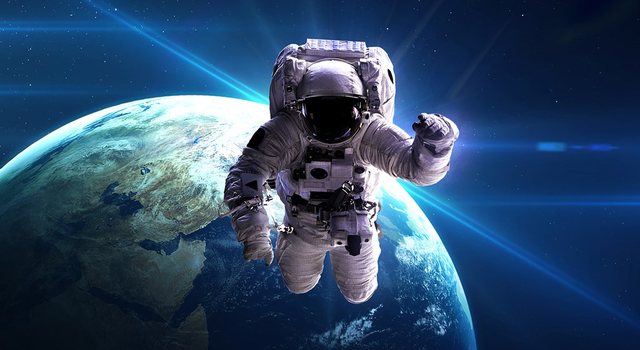
Looking at the stars, we all wonder, "What would happen if I went into space?" The only people who can give us answers are the astronauts who have traveled there and returned.
From studies obtained by the agency BrightSide, we will introduce you to the most interesting things that happen to humans in space.
1- The vision will decrease dramatically

Intracranial pressure syndrome is otherwise explained as a visual impairment that most astronauts have experienced for a long time after space travel. NASA has conducted research on this issue, but so far no specific cause has been determined, currently scientists are just trying to find a way to help astronauts with this syndrome.
2- You will grow a few centimeters

If you have ever wanted to be a few inches taller, then going into space can help you temporarily. A series of ultrasound tests have confirmed that the lack of gravitational forces causes the human spine to stretch for a while.
3- Radiation in space will affect your health

In preparation for the mission to Mars, NASA scientists have studied the effects of radiation on the human body. The atmosphere on Mars is much weaker than that of Earth, so it does not fully protect the planet from spatial radiation and negatively affects human health.
4- Your nails may fall out

22 astronauts after traveling to the International Space Station, have reported that they had lost their nails. This comes as a result of holding special gloves on the hands which puts pressure on the nails causing them to fall. This problem is likely to be solved with a new glove model for space walks.
5- The inner ear will stop working

The human inner ear works like an accelerometer when it experiences a change in motion and helps us not to get sick. But that changes when a man is in space. This small "device" breaks down and astronauts have reported feeling unwell for a day or two after arriving at the space station.
6- There will be a problem with body fluids

Lack of gravity also causes a particular change in the way fluids flow inside the human body. Instead of blood circulating in the lower limbs as on Earth, in space the opposite happens, traveling up to the head. This is why some astronauts look more "round" when they return.
7- The heart will shrink

The heart also experiences many changes in space. For example, it pumps less blood and changes its shape to be more spherical. Studies on astronauts can help not only to avoid such future heart problems in space, but also for humans on Earth.
8- Muscles will become weak

While in space, astronauts need to be trained at all times. A condition called atrophy can weaken muscles and bones after a long journey in space. Therefore, all people who travel in space are encouraged to exercise every day.
9- Psychological problems can be experienced

Are there many science fiction movies about people going crazy on spaceships? Well, it could become a reality with a mission to Mars. To avoid such a situation, NASA and the Russian Space Agency "Roscosmos" have conducted many studies and will continue to do so to see what happens to people in which they are locked in a tight spot.
10- What happens if the space suit is damaged in the open?

If you are wondering if it is possible to survive in the open air in space without a suit. So far these things are known:
You will lose consciousness for 15 seconds
This would be followed by suffocation
10 seconds in open space causes blood to bubble.
The lungs are destroyed in 30 seconds.
To sum it up, I die in less than a minute.
11- How does gravity work in the body?

Gravity, or lack thereof, has profound effects on the human body in space. This is why scientists continue to study how to recreate it for astronauts. It's Stephen Hawking, the famous physicist who experienced it in 2007. "Space, here I come," he said after his zero-gravity flight.
12- This study with twins reveals more about the human body in space

Identical twins Scott and Mark Kelly became the subject of a study on the "safety and performance of individual astronauts." As Scott went into space, Mark stayed on Earth. They both perform identical medical tests. The scientists then compared the data, and the results are fascinating. For example, levels of C-reactive protein, a sign of inflammation, were high for Scott because of the stress he experienced during landing. Research is still ongoing, and is likely to help understand the changes a human body experiences in space at the genetic level.
13- Falling into a black hole can break the body into ions

Hypothesis, if a person falls into a black hole, he or she would experience extreme "stretching." The sense of time would also change. A person would be able to see the future and the past at the same time. However, it is very likely that immediate death will occur as their body and brain would be dissolved in ions.
14- A sense of humor develops
The work of an astronaut is considered one of the most dangerous and difficult in the world. Thus, having a sense of humor is always helpful in surviving physical and emotional stress.

In the photo, an astronaut bears a "For Sale" sign for two satellites that are not working properly.
15- He will miss the Earth (home) more than ever

It may be the most fascinating experience for astronauts to be in space, but everyone wants to be home as soon as possible.
16- You will believe superstitions

Having a little luck has not hurt anyone, especially when you deal with space and change your body there. This photo of Mission 10 Apollo is proof of that.
17- If you fly far in space, what happens?

If an astronaut flies away from the station in the event of a space suit malfunction, or some other catastrophic event, things would become very grim for him. He or she would float in space for 6 hours until oxygen ran out. This is a horrible death scenario for any of the astronauts.
However, NASA and other space agencies around the world ensure that an astronaut is returned to a safe station using EVA Simplified Rescue Assistance.
Now that you know what happens to astronauts, think about whether you want to be part of any of the missions to Mars that are expected to be completed in the next 20 years.





