Is this police force professional and capable of handling violen...
/ 2026-10-16 18:54:07Focus


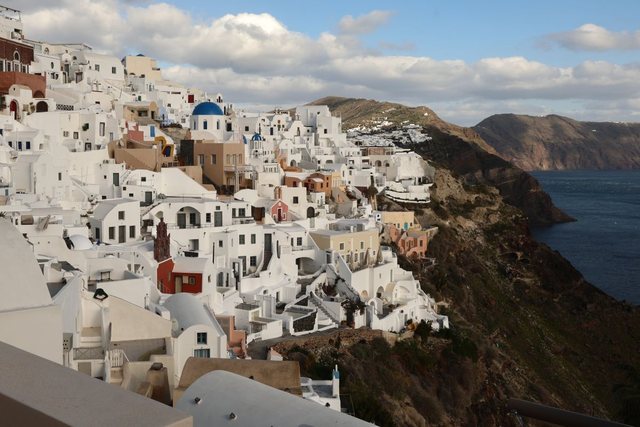
Scientists have discovered that the cause of tens of thousands of earthquakes near the Greek island of Santorini earlier this year was caused by magma moving in an underground channel for about three months.
To understand what caused more than 25,000 earthquakes that traveled about 20 kilometers horizontally through the Earth's crust, researchers used physics and artificial intelligence. Each earthquake was treated as a virtual sensor, and then the AI analyzed the patterns associated with them.
Seismic activity began underground under the islands of Santorini, Amorgos, and Anafi in January 2025. The islands experienced tens of thousands of earthquakes, many of them above magnitude 5.0 and sensitive to residents and tourists.
Many tourists fled, while locals feared that the underground Kolumbo volcano could erupt or that this was a warning of a larger earthquake, like the devastating 7.7 magnitude that struck the region in 1956.
The scientists, who published the findings in the journal Science, created a 3D map of the Earth around Santorini and mapped the seismic activity of each earthquake, as well as the movements and stresses in the earth's crust, resulting in a detailed model of the cause of the seismic activity.
They found that the event was caused by the horizontal movement of magma from Santorini and the Columbo volcano through a 30-km-long channel, more than 10 kilometres beneath the seabed. The volume of magma moving into the crust could have filled about 200,000 Olympic-sized swimming pools.
These "magmatic intrusions" destroyed rock layers, causing thousands of earthquakes.
For now, scientists say the activity appears to have ended.
However, volcanoes can enter prolonged phases of instability lasting many years, as recent volcanic activity in southwest Iceland has shown.
Scientists emphasized that the use of Artificial Intelligence, combined with basic earth crust physics and stress response, could transform the monitoring, understanding, and prediction of volcanic activity, helping to protect people in seismically active areas.