Is this police force professional and capable of handling violen...
/ 2026-10-16 18:54:07Focus


Marco Imarisio – Corriere della Sera
This will be a busy day for innocent doctor Peng Pai. Back in 2000, he was a child playing in Beijing's Beihai Park when he saw a group of people passing by accompanying Vladimir Putin on his first visit to China.
He waved to him from the wall where he was sitting, as the Russian president approached him, returned the greeting, and helped him down. The photographers accompanying him snapped a photo that became famous and marked his subsequent journey: graduation and specialization in Moscow, employment “in one of the large companies of the People’s Republic,” as Kremlin advisor Yuri Ushakov put it.
The exhibition of the ex-boyfriend who became a symbol of friendship between the two countries will be one of the highlights of the ceremony of a visit that seems to be more needed by the guest than the host.
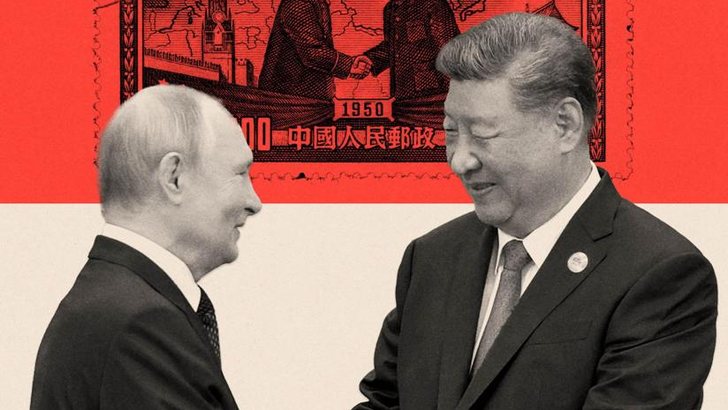
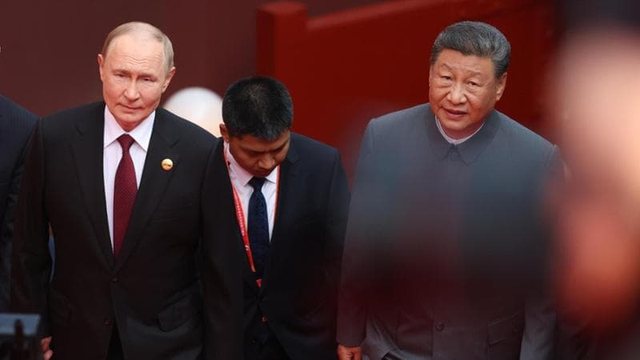
Putin arrives in Beijing today, accompanied by a delegation that includes, in addition to Foreign Minister Sergey Lavrov, the heads of oil and gas companies Rosneft and Gazprom. This is nothing new: Russian and Chinese presidents Xi Jinping have met more than forty times in the last fourteen years, and in 2026 alone they are expected to meet again in August, September and November.
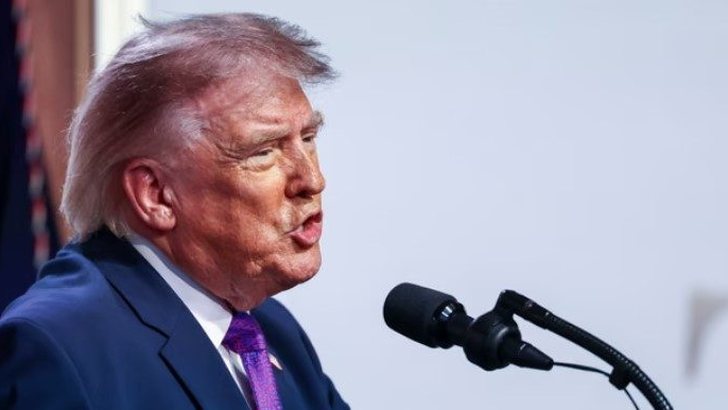
But it was Russia that announced this summit immediately after Donald Trump's visit to China, with a speed that many observers have seen as significant. If Xi's goal seems clear, to increasingly strengthen his position in the New World Order, as the fact that in just four months he has hosted all the highest representatives of the UN Security Council, is less clear about the purpose of Putin's one-day visit.
Moscow certainly needs to get something. Ushakov has spoken about the construction of the “Power of Siberia 2,” the long-haul pipeline project that the Kremlin says would make China the main buyer of Russian gas, although Beijing has just signed a deal with Turkmenistan, indicating it does not want to be tied to a single supplier.
But beyond the illusion of new infrastructure, the general feeling is that there is something more subtle at play: after Trump's visit, Russia needs guarantees, at a time of obvious difficulties.
This is underlined, not coincidentally, shortly before Putin's departure for Beijing, by Volodymyr Zelensky, a master of narrative construction, the daily currency of the propaganda war. The Ukrainian president says that his secret services have obtained documents confirming huge losses of Russian oil companies from drones, "one of which was forced to close 400 wells", that 11 banks or financial institutions are on the verge of liquidation, that Russia is involving "global companies in managing financial difficulties and schemes to avoid sanctions", and that some "American entities" are doing business in Crimea.
Only time will tell whether this is true or Ukrainian wishful thinking, but in the meantime it strikes at one of the weak points of today's Russia. Even the way the Kremlin media is covering Putin's visit suggests some concern, in addition to the usual self-confidence.
The state-run Ria Novosti agency closes its editorial with a kind of anthem: “The two old friends meet to discuss recent events and define a common strategy… Meanwhile, pro-Westerners complain: if Trump had divided Moscow and Beijing, he would have defeated Russia and China… but he didn’t succeed. So now they can only cry and give up.”
But something is wrong, as even the usually loyal Russia Today headlines its analysis with a painful cry: "Beijing can no longer consider Russia a second-rate partner."
This is the great obsession of the Putin era: the fear of losing its status as a great power. And hence the need to go to Xi to show the world that Russia is not the weak link in the Beijing-Moscow-Washington triangle.