Details of the storm in the administration, here's who will resi...
/ 2026-10-22 22:25:00Focus


A powerful 7.7 magnitude earthquake struck Myanmar and Thailand this morning, causing many casualties and catastrophic damage.
According to the US Geological Survey (USGS), the death toll could range from 10,000 to 100,000 people.
The quake was recorded near Mandalay, Myanmar's second largest city, and was followed 12 minutes later by another 6.4-magnitude aftershock. Experts warn that more earthquakes could follow.
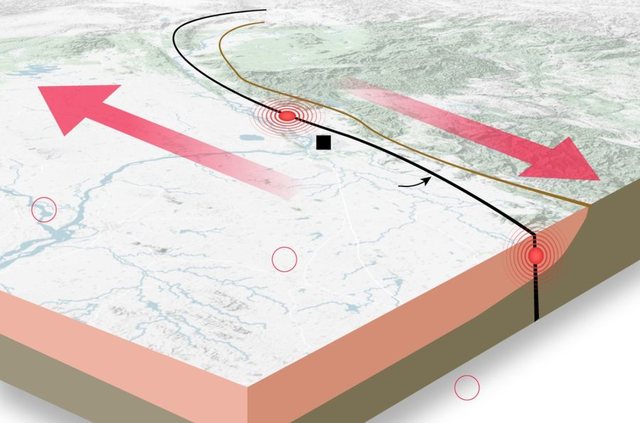
Myanmar lies on the Sagaing Fault, a highly seismically active zone where the Indian tectonic plates move at a rate of 49 mm per year. When these plates get stuck and then release stored energy, powerful earthquakes like today's are created.
According to the USGS, the earthquake occurred at a depth of just 10 km, making it extremely destructive for inhabited areas. The tremor was also felt in China's Yunnan province, where Chinese authorities measured it at magnitude 7.9.
The alert was also issued in Bangkok and other cities in Thailand at around 1:30 p.m. local time.
The strong tremors caused panic, while buildings and infrastructure were severely damaged.
Professor Bill McGuire from University College London said this is probably the biggest earthquake in Myanmar in the last 75 years.
He warned of the risk of multiple aftershocks, which could collapse damaged buildings and endanger rescue teams.
A report by Chinese scientists months ago warned that the central area of the Sagaing Fault had been "locked" for a long time, suggesting the possibility of a major earthquake. Unfortunately, the warnings came true today.
As rescue operations continue, experts point out that the lack of safety in construction has made the situation even more serious.