Details of the storm in the administration, here's who will resi...
/ 2026-10-22 22:25:00Focus


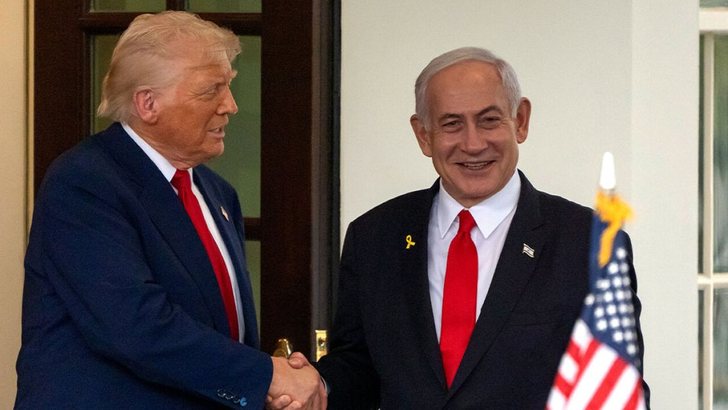
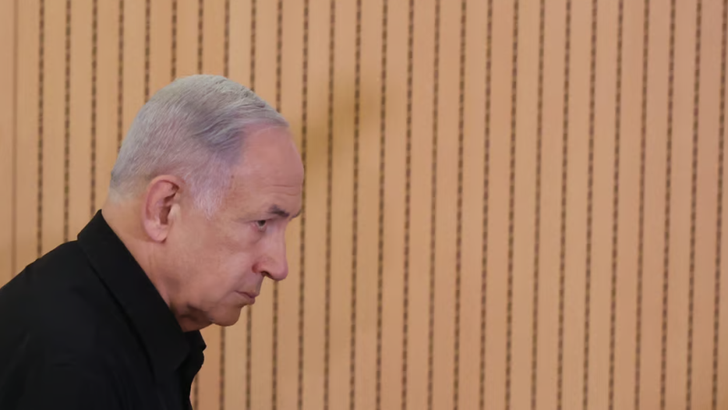
Among the tributes that Israeli Prime Minister Netanyahu paid to US President Trump during their dinner last night at the White House was also his nomination for the Nobel Peace Prize. Although the alliance between them remains close, several issues remain to be resolved: first, the ceasefire in Gaza which according to Donald's spokeswoman "is now his top priority", but not necessarily under the terms desired by Bibi; and second, the resumption of diplomatic dialogue with Iran imposed by the US, which the Jewish state views with skepticism.
During the dinner, Trump sat at the center of a long table in the Blue Room, facing Netanyahu. Defense Secretary Pete Hegseth was to the president's left, while Secretary of State Marco Rubio was to his right. Also on the American side were Middle East envoy Steve Witkoff, Chief of Staff Susie Wiles, CIA Director John Ratcliffe and the U.S. Ambassador to Israel Mike Huckabee.
Trump opened by saying it was an "honor" to have Netanyahu and his wife, Sara, back in the White House, "old friends." "We've had tremendous success together, and I think the future will be even greater."
Netanyahu expressed “gratitude and admiration” on behalf of Israel and the Jewish people for Trump’s leadership. He then produced the letter he had sent to the Nobel Peace Prize Committee, saying the peace prize would be “well-deserved.” The president was taken aback: “I didn’t know that. Coming specifically from you, it’s very significant.”
Yesterday there was an incident in northern Gaza, and although there were casualties among Israeli soldiers, Trump said that this will not disrupt negotiations with Hamas: “I don’t believe it. They want to meet and they want a ceasefire, so I don’t believe it.” Then he turned to Witkoff. He also said that it was a very sad event, but then turned to Netanyahu, adding: “We have an opportunity to finally reach a peace agreement, Mr. Prime Minister.”
Regarding the plan to relocate Palestinians, Trump passed the question to Netanyahu. According to the prime minister, the president has a “brilliant vision, which is called free choice. If people want to stay, they can stay.” Netanyahu said they are “close” to finding some countries that will accept Palestinians, and the White House chief noted that there has been “great cooperation” from neighboring countries.
On the two-state solution, Netanyahu commented: “I think the Palestinians should have all the powers to govern themselves, but none that can threaten us. That means that sovereign power, like overall security, will always remain in our hands. That is a factual given, and no one in Israel will accept otherwise, because we will not commit suicide. We love life, we value it, for ourselves, for our neighbors, and I think we can achieve peace between ourselves and the entire Middle East with the leadership of President Trump and by working together. I think we can build a very, very broad peace that includes all of our neighbors.”
According to Netanyahu, the Palestinians have had “a Hamas state in Gaza, and look what they did with it. So it is impossible for people to say: ‘Let’s give them another state and a platform to destroy Israel.’ We will find peace with our Palestinian neighbors – those who do not want to destroy us. We will find a peace where our security – the security of sovereign power – will always remain in our hands. Even if people say it is not a full state, we do not care. We have sworn that it will never happen again. Not even now. It will never happen again.”
Trump also made a mention of Ukraine, reiterating that “I’m not happy with President Putin at all. I’m frankly disappointed that it hasn’t stopped.” As for Ukraine and the cutoff of military supplies, the situation has changed: “We’re going to send more weapons. We have to. They have to be able to defend themselves. They’re getting hit very hard now.”
Then the conversation turned to Tehran and the American president gave some news: “We have scheduled talks with Iran. They want to talk.” They will take place next week, although the date and location have not yet been announced. The possibility of new attacks always remains open, but “I hope we don’t have to do it. I can’t imagine that they want to do it. They want to meet. They want to find a deal. They are very different now compared to two weeks ago. I hope we can lift the sanctions to help with reconstruction.”/La Repubblica