Protests, violence, curfews: From France to Albania, why Europe'...
/ 2026-10-20 23:47:20Focus


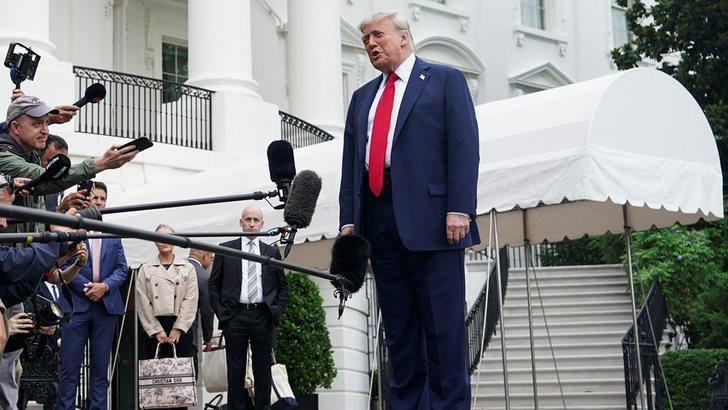
After 5 days of attacks between Israel and Iran, Tehran claims that its ballistic missiles are sowing terror in the heart of its eternal enemy. On the other hand, Tel Aviv is systematically bombing targets throughout Iranian territory from the air, advancing the destruction of the theocratic regime. The tension in the Middle East has also taken on a strong American "color" from the start, after Donald Trump's post calling for the evacuation of the Iranian capital highlighted scenarios for a war that will go far beyond the borders of the region.
Trump's US, which has long claimed that wars are destructive and against its political ways (regardless of whether the war in Ukraine ended in 1 or 100 days), today has a strategic choice in line with its military power and potential. Washington has the option of choosing to end Iran's nuclear program with concentrated attacks, with social uprisings in the country, or to "drag" the existing regime into negotiations in a much stricter manner, which will now have absolute knowledge that nuclear weapons are not an option and that they themselves have an expiration date.
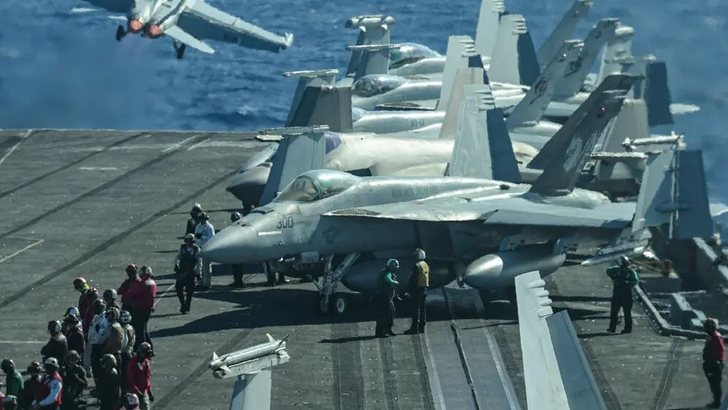
So far, Trump does not seem to have made any specific choice, since on the one hand he has given clear orders to transport fighters, bombers and air “tankers” to the Mediterranean and the Middle East and on the other he publicly declares that the Iranians are calling and demanding negotiations. Israel, for its part, has managed again, within 60 days, to bring Tel Aviv to the position of the White House’s only partner in the region and at the same time to strike at what for the country’s prime minister is the pillar of his political career since he became the head of his party at the age of 44, the “axis of evil”.
The United States is currently practically the only military power – if we accept the published data on the arsenals of the great powers – that has a weapon capable of definitively ending Tehran's nuclear program and specifically the Fordow facility located deep in the mountains.
The GBU-57 Massive Ordnance Penetrator (MOP) bomb is an American high-power armor-piercing bomb. Weighing 13,600 kilograms, this giant “fortress destroyer” is designed to neutralize extremely deep and fortified underground bunkers, targets that are impervious to conventional weapons. The GBU-57 was produced by Boeing for the US Air Force in the early 2000s and is considered the most powerful non-nuclear weapon in the US arsenal.
It carries a warhead of more than 2,400 kilograms of explosives and has a penetration capacity exceeding 60 meters in reinforced concrete.
Its main objective?
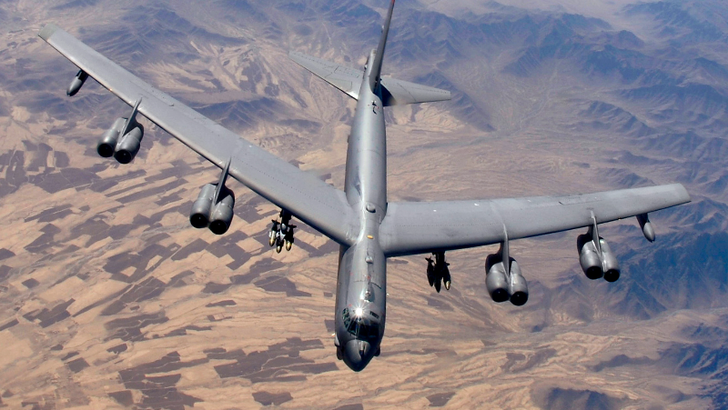
Facilities such as Fordow, Iran's underground uranium enrichment facility, buried deep in the rocky terrain near the city of Qom. However, using the MOP is not a simple matter. The only aircraft that can carry it is the stealthy B-2 Spirit bomber. Although the US has a small number of these bombs (about 20), they remain under strict strategic control.
Israel, while it has sophisticated fighter jets and advanced weapons systems, possesses neither the bomb nor the bomber needed to deploy it – meaning any operation against an Iranian underground facility would require direct support from the United States. To date, the GBU-57 has never been used in combat, remaining a “last resort” in the US strategic arsenal.
However, its existence is a clear message of power and a tool for influence in an extremely fragile geopolitical landscape.