


Details of the storm in the administration, here's who will resi...
/ 2026-10-22 22:25:00Focus


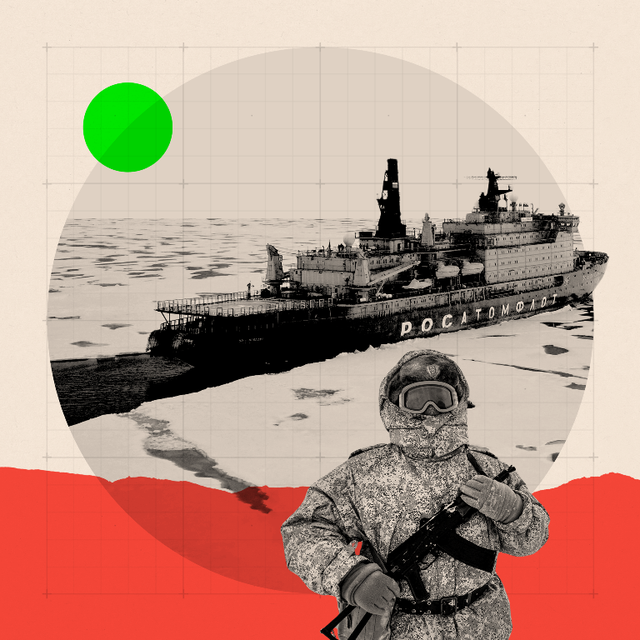
One of the most remote and coldest regions of the globe is becoming a flashpoint in the geopolitical competition between world superpowers, reports the BBC.
As Arctic ice melts rapidly due to climate change, powers like the United States, Russia and China are accelerating the clash for control over this strategic area.
Greenland, a strategic stone for the US
US President Donald Trump has declared that the US has a direct strategic interest in controlling Greenland, an autonomous territory under Danish sovereignty. “We need Greenland for national security purposes,” he said.
Just north of this territory is the US military base at Thule – now called Pituffik – which plays a key role in the US ballistic missile early warning system. According to military experts, it is a “strategic window” for defending and potentially striking any threat from the north.
However, Washington's ambitions for more control over the territory have caused tension with European allies, particularly Denmark and Canada. The idea of "buying" Greenland, mentioned by Trump, has been strongly opposed by Danish and Canadian officials, calling into question the cohesion within NATO.
Russia: Military Investments and New Threats
Russia has been more active and consistent in the Arctic over the past decade. It has modernized military bases in the north, including the one on the Kola Peninsula where many of Russia's nuclear submarines are located, and the Nagurskoye air base in the extreme Arctic.
For Moscow, the Arctic is essential for nuclear defense and force projection. But while Russia has an interest in maintaining low tensions to avoid distracting attention from the war in Ukraine, its aggressive rhetoric and growing military presence have caused alarm in NATO countries bordering the Arctic.
According to the Norwegian intelligence service, the potential for conflict escalation in this area is greater than ever before.
China and the “Polar Silk Road”
China, although landlocked, has declared itself a “near-Arctic state” and is increasingly increasing its activity in the region. With climate change opening up new sea routes, China sees the Arctic as an opportunity to develop a “Polar Silk Road,” a shorter trade corridor to Europe than the Suez Canal.
To this end, Beijing has increased its fleet of icebreakers and developed scientific and economic cooperation with several Arctic countries. Meanwhile, the United States and European countries express concern about a “normalization” of the Chinese presence in the region, while Russia, although it has cooperated with China on naval patrols, is also concerned about Beijing’s growing influence in an area it considers its own sphere of influence.
Secret war: spies, drones and allied tension
In addition to open military confrontations, the Arctic is also a hotbed for intelligence activities. Russia has accused Western countries of espionage, while countries like Norway have reported suspicious drones and arrests of undercover agents. On the other hand, the US has been accused by its own allies, such as Denmark, of collecting sensitive data on the territory of Greenland.
From "low tension" to open battlefield?
Once the motto for the region was “High Arctic, low tension.” But this reality is being replaced by a logic of arms withdrawal, economic competition, and covert clashes. As great powers clash for territory, natural resources, and strategic influence, the risk of a major clash in this frigid corner of the world is becoming increasingly real.




