Protests, violence, curfews: From France to Albania, why Europe'...
/ 2026-10-20 23:47:20Focus


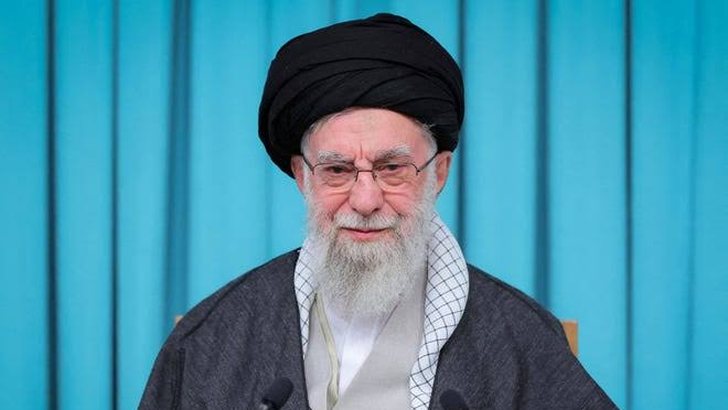
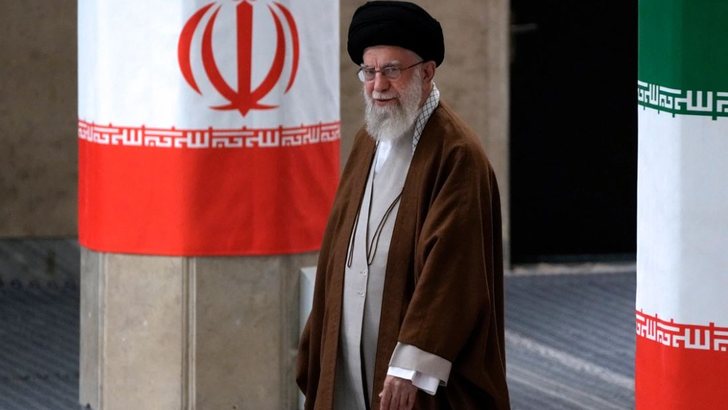
Veteran Iranian politician Ali Larijani, who announced the establishment of an interim leadership council on Sunday after the airstrike that killed Supreme Leader Ayatollah Ali Khamenei, reemerged last year as one of the most powerful figures in the security hierarchy.
He has managed a wide portfolio, from nuclear negotiations and Tehran's regional ties, to the violent suppression of internal unrest.
As an insider who comes from one of the country's most influential clerical families, Larijani had overseen Iran's efforts to reach a nuclear deal with the United States, just a month after Washington sanctioned him in January over allegations he led a deadly crackdown on anti-government protests.
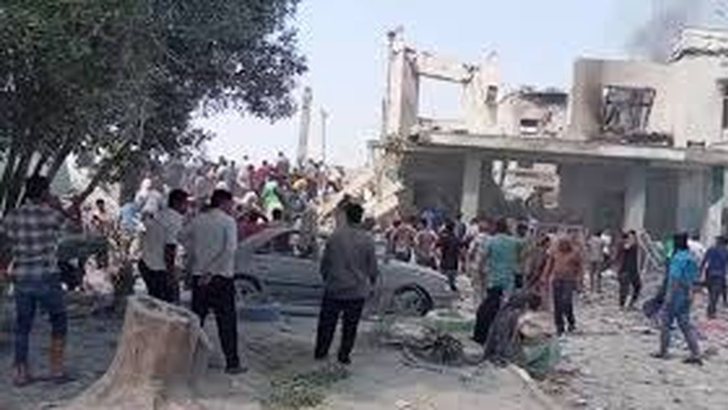
He accused the United States and Israel of trying to plunder and disintegrate Iran, warning “secessionist groups” of a harsh response if they attempted any action, according to state television on Sunday, nearly 24 hours after they launched a wave of attacks on Iran. Iran’s Armed Forces Chief of Staff, Abdolrahim Mousavi, was also killed in the attacks, broadcaster Iran TV reported.
Appointed in August as Secretary of the Supreme National Security Council (SNSC), Larijani has held senior positions throughout a career marked by loyalty to Khamenei and a reputation for pragmatic relations with the system's often rival factions.
His status as a trusted strategist of Khamenei was underlined last month by a trip to the mediatory Oman to prepare indirect nuclear talks with the US, while Washington was increasing its military forces in the Middle East in an attempt to force Iran to make concessions before the attacks.
Larijani has also made several trips to Moscow, a key ally, in recent months to discuss a range of security ties, in a further sign of his return to high-level diplomacy.
Larijani, who had led the SNSC 20 years earlier, returned to its leadership after last year's 12-day air war between Iran and Israel, which also involved the US, officially returning to the heart of Iran's security structures.
Some of his public statements on the nuclear issue have had a pragmatic tone, telling Omani state television last month that the issue was solvable and that, if the Americans' concern was that Iran not move towards acquiring nuclear weapons, that could be addressed.
However, after anti-government anger erupted in January, his role on the security council was condemned by Washington. According to a US government announcement detailing sanctions against him and other officials in response to the crackdown on protests, Larijani was at the forefront of efforts to suppress the series of demonstrations that swept Iran, being described by the Treasury Department as one of the first leaders to call for violence on Khamenei’s orders. Human rights groups say thousands of people were killed in the unrest, the worst since the 1979 Islamic Revolution.
Like other Iranian officials, Larijani expressed sympathy for the demonstrations caused by economic hardship, but condemned the armed actions that he claimed were instigated by sworn enemy Israel, calling for the separation of popular protests from “terrorist” groups.
A former member of Iran's Revolutionary Guard, Larijani served as Iran's chief nuclear negotiator from 2005 to 2007, defending what Tehran sees as its right to enrich uranium, and once likened European incentives to abandon nuclear fuel production to "exchanging a diamond for a candy bar."
Iranian analysts at the time noted that he sought to persuade the West through diplomacy and was considered a pragmatist. While the United States and Israel believe Iran aims to build a nuclear weapon, Tehran insists its program is purely peaceful. Larijani was parliament speaker from 2008 to 2020, a period during which Iran reached the 2015 nuclear deal, from which President Donald Trump withdrew during his first term in 2018, Reuters writes.
Larijani has warned that Iran's nuclear program "can never be destroyed" because the technology it has discovered cannot be taken back, a stance he reiterated in September 2025. He has made repeated visits to Moscow and met with President Vladimir Putin, helping Khamenei manage a key ally who serves as a counterweight to Trump's pressure.
He was also tasked with advancing negotiations with China that led to the 25-year cooperation agreement in 2021. Although he failed in the 2005 presidential race and was disqualified from the Guardian Council in 2021 and 2024 for reasons related to living standards and family ties abroad, he remains a central figure.
Born in Najaf, Iraq, in 1958, Larijani moved to Iran as a child and has a doctorate in philosophy, while his brothers have also held senior positions in the judiciary and diplomacy. Most recently, one of his daughters was fired in January from a medical teaching position at Emory University in the US, following protests by Iranian-American activists angered by his role in suppressing demonstrations that month.